

 |
Harmonica Reviews: Fender Blues Deluxe And OIBTECH Double Tremolo
I got my first harmonica as a young teenager, a standard Hohner marine band and kept that one for almost 10 years. Later on in the early 70s I went through a period, similar to guitar GAS and tried pretty much every type that could be bought in a music store or by mail. That included other marine bands, blues type harps, various types of chromatics, double reeds, echo harps, etc. The main reason for this eclectic journey, as opposed to diving deeper into, say for example, blues harp like most American players, was how the instrument was introduced to me.
Many guitar players first started after hearing Rock or Blues and I'm sure more than a few American harp players started after hearing blues players ranging from Sonny Terry if you were a folkie to Little Walter or Paul Butterfield if you were in a blues and rock bag. As a young teenager my main music, and this was during the Beatles era, was primarily folk because my second and third grade teachers were all 60s folkies. I was certainly beginning to be aware of the Beatles because you saw them on Ed Sullivan on Sunday night but in terms of learning harmonica, it was from a folk or European tradition and so I tended to visualize playing sea shanties, folk melodies or European genres like polka, etc.
Later on in the early seventies, when I began to be exposed to blues, it didn't change my life in the sense of finding what I wanted to do with a harmonica. For one thing, it was never my main instrument but always a very fun thing to have for a lot of different reasons. Hearing blues harp players merely added a new color to the palette, so to speak. I did play blues harp here and there, as needed and tended to gravitate towards the echo and double reed type harmonica because those had a tone I was more accustomed to. So even when I was playing Blues numbers, I would use an echo harp.
I remember hearing a live recording of Rod Stewart and his band and after a blues number that featured a harp, he said "that's a harmonica, the cheapest instrument you can buy." You could tell by his tone of voice that it wasn’t meant as an insult; he was simply saying what is still true, in spite of the typical western world tendency to make everything expensive.
Some harp articles will tell you that in order to get a truly decent harp, you had to spend at least $40. Now, I'm not going to judge harp players because I'm not an expert at it like a Little Walter or even your typical bar level musician playing blues but I have played the instrument all my life and do know one thing; the basic appeal from a is that it is and was an inexpensive instrument with a pleasant learning curve that a person could make a lot of music with, both solo and accompanying others.
I'm sure the reasons for the opinions on harmonica prices vary but basically a first line harp, like a a Hohner, will set you back a pretty penny although luckily, is still incredibly cheap compared to a guitar. One can buy the best if they can afford it and it won't cost a lot of money (relatively speaking).
By the same token, like with guitars, once the name brands moved up into the premium price stratosphere, then capitalism always allows for other companies to come in and fill the entry level vacuum left by those brands. In other words, even though the experts may sneer and turn their nose up at them, there are still inexpensive harps that one can buy for a few bucks, just like the good old days.
So in modern times there’s still a large price range with the usual spread of opinion about good and bad, economy versus premium and what it apparently takes to have a top flight instrument. For example, top notch harmonicas are more “airtight,” which may be a hard concept to grasp for beginners given that you're blowing a lot of air through the thing in the first place.
Also, like with guitars, a lot of the remarks about durability, crummy or good reeds, all that talk, has to be tempered with how the instrument is actually going to be used. In other words if you're a hobbyist, you're almost certainly not going to use an inexpensive harp in a way that will blow the reeds out. That's something that's more likely to happen to a gigging musician.
For example, I remember when the original Hohner Golden Melody harps first came out and players I knew had mixed opinions on them. Some liked the smoother sound and the subtle tones one could get from the type of reeds used and others criticized the lack of durability. I had to agree a bit with the latter after quickly blowing out two Golden Melody harps before it became obvious that the design wasn't, at least at that time, set up to take a lot of hard playing. In retrospect it was a design that still needed to be perfected for professional level play.
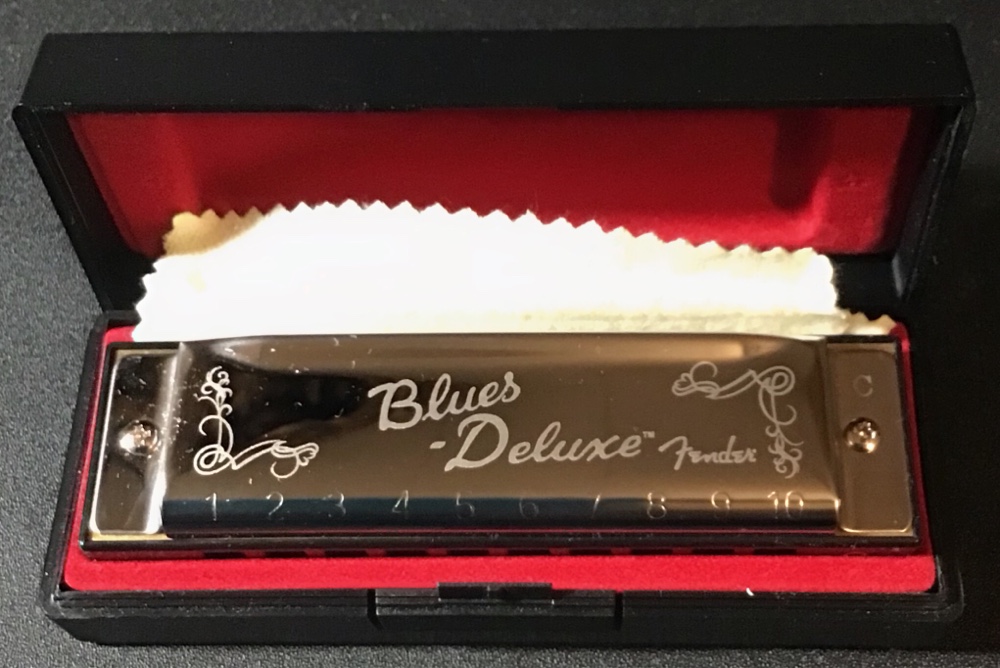
Getting back to the point of knowing what you intend to do with the harmonica before buying; two of my current harps are those that I bought because they provided what seemed to me good value for the price. In the case of the Fender Blues deluxe, a ten hole diatonic type that's about 22.00 on Amazon, the price was right and it was:fun to have a Fender harmonica to go with my telecasters. In my mind, the Deluxe sounds similar to the old Hohner marine bands, or at least as I remember them from the 60s and 70s. It's clear to me that if you're not blowing them out hard in a club, this harmonica will last you quite a while.
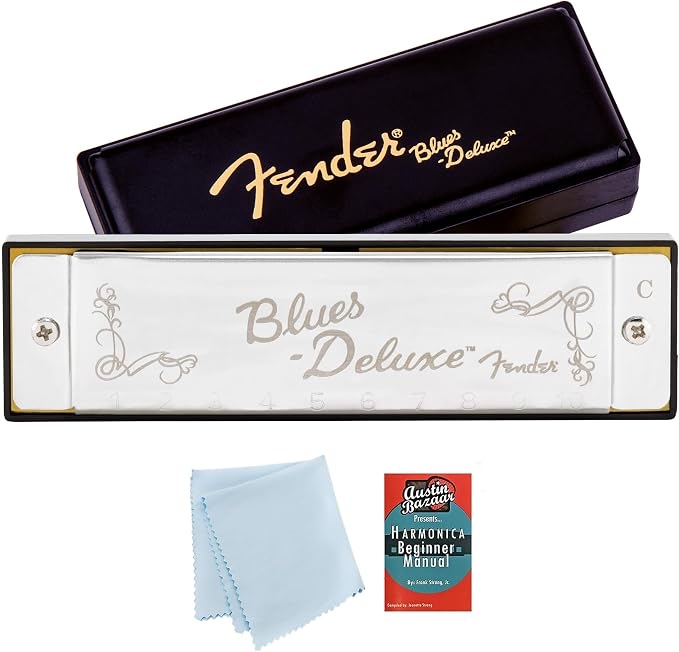 |
Also the plastic comb makes it much easier to keep clean and until you're proficient, it's a lot easier on your mouth. As far as the tone for blues or whatever, it's probably best to do as you do with guitars and check out a variety of players on YouTube and elsewhere so you can hear it played at different levels of skill. However, the Fender Blues Deluxe sounds good for the price and like I said, unless you're going to start playing hard for hours on end, this should be all the harp you need.
Also, one thing to keep in mind about the harmonica, particularly the diatonic type. Given the note spacing, it's basically impossible to play a wrong note so your learning curve will not only be easy but quite pleasant.
As far as the basic tone and sound, I'm sure you'll hear a lot of different opinions but coming from someone who has always had a harmonica in his possession since his early teens, this one sounds fine. As far as its application as a blues harp, quite a bit of that can depend on the type of microphone you use to amplify the sound. So, I wouldn't put it all on the harp; like with guitar and amps, there's a lot of factors to consider. However, compared to some very inexpensive harmonicas I've heard and played, this Fender definitely has better tone.
The OIBTECH Double Tremolo Harmonica is actually cheaper now, I originally paid 26.00 and it's now in the 20.00 range. As you can see from the picture it's a nice looking harmonica with a good case and accessories. Again, being diatonic it will be a harmonica with a pleasant learning curve where you can't play any bad notes.
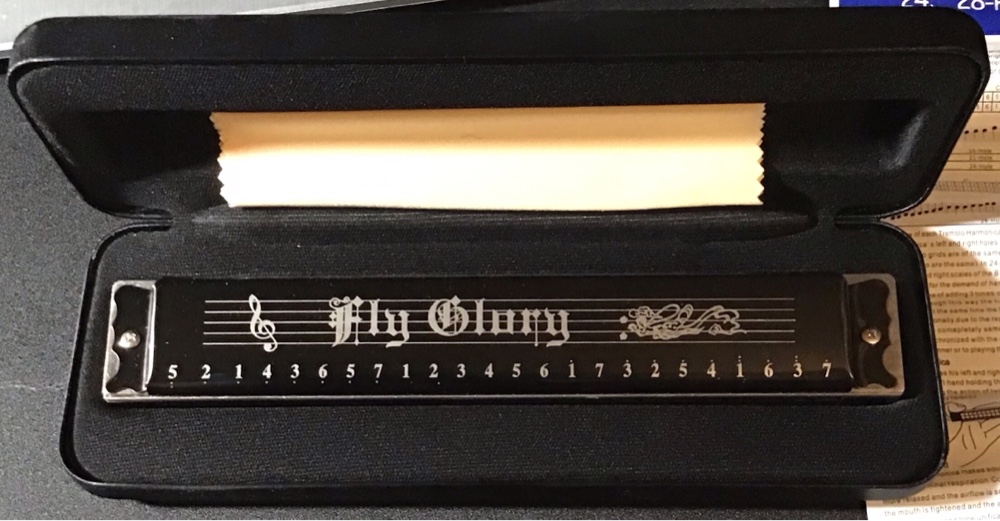 |
From what I can see, one reason for the lower price is that whoever makes this particular harmonica probably subcontracts out to others because this is a very common type that seems to be in the same price range with a lot of other very similar looking brands. In this case, you'll have basically what's called double tremolo but it's a double reed design to give you a, well, slight tremolo or vibrato, which has a very pleasant effect, particularly if you're playing quietly. The sound is a hair bit thinner than a Hohner but that can be adjusted with technique.
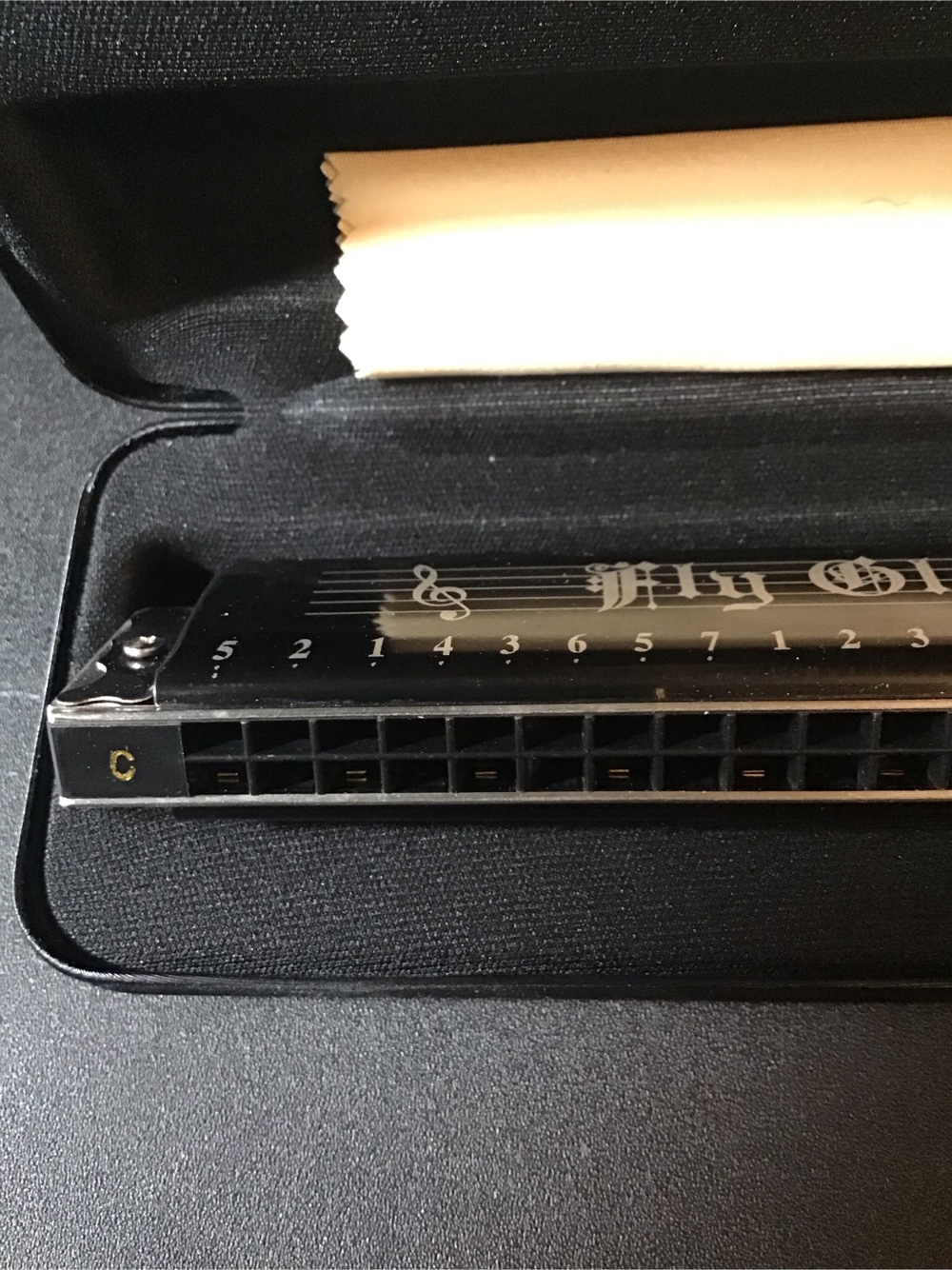 |
One way to put it is that it has more of an accordion effect, which makes this type popular in Europe because the range of harmonica music there is wider than you'll hear in the States. There’s more advanced skills involved with all types of harmonicas, like judging reed quality, being able to disassemble the harmonica to clean or replace reeds, that sort of thing. In the beginning, I would treat it like playing a guitar or banjo; just start off and learn, have fun and if you feel like going into it deeper, you can learn all those finer points.
It's one of those types of harmonicas where, depending on where you live, particularly in the United States, somebody might steer you towards a marine band or chromatic type because the reference point will be blues and jazz.
If you want to explore the harmonica, it's like any other instrument; it doesn't hurt to explore all of the types of music produced by this very fun instrument. You might find that you prefer to play polkas, which incidentally has a secondary application in Celtic music. You never know where your heart will go.
Al Handa
August 2026
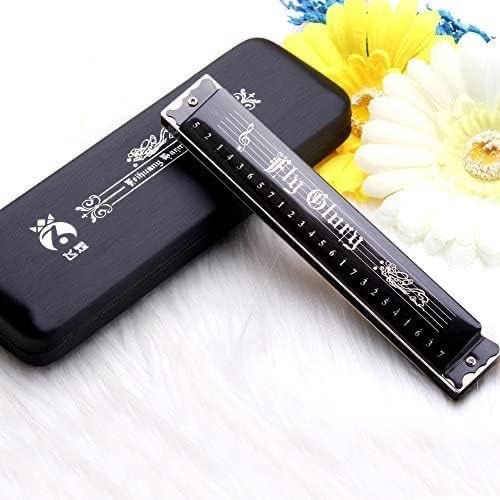 |
OIBTECH Double Tremelo
24 Holes
Major Diatonic
Double Tremelo
Key: C
Color: black
Dimensions: (17.7cm x 2.9cm x 2.3cm) (L x W x H)
weight: 308g
 |
 |
 |
 |
 |
 |
 |
 |
 |

