The Delta Snake Review

The Delta Snake Review

Translate

Showing posts with label Fender. Show all posts

Tuesday, August 18, 2026

Harmonica Reviews: Fender Blues Deluxe And OIBTECH Double Tremolo


Harmonica Reviews: Fender Blues Deluxe And OIBTECH Double Tremolo

I got my first harmonica as a young teenager, a standard Hohner marine band and kept that one for almost 10 years. Later on in the early 70s I went through a period, similar to guitar GAS and tried pretty much every type that could be bought in a music store or by mail. That included other marine bands, blues type harps, various types of chromatics, double reeds, echo harps, etc. The main reason for this eclectic journey, as opposed to diving deeper into, say for example, blues harp like most American players, was how the instrument was introduced to me. 

Many guitar players first started after hearing Rock or Blues and I'm sure more than a few American harp players started after hearing blues players ranging from Sonny Terry if you were a folkie to Little Walter or Paul Butterfield if you were in a blues and rock bag. As a young teenager my main music, and this was during the Beatles era, was primarily folk because my second and third grade teachers were all 60s folkies. I was certainly beginning to be aware of the Beatles because you saw them on Ed Sullivan on Sunday night but in terms of learning harmonica, it was from a folk or European tradition and so I tended to visualize playing sea shanties, folk melodies or European genres like polka, etc. 

Later on in the early seventies, when I began to be exposed to blues, it didn't change my life in the sense of finding what I wanted to do with a harmonica. For one thing, it was never my main instrument but always a very fun thing to have for a lot of different reasons. Hearing blues harp players merely added a new color to the palette, so to speak. I did play blues harp here and there, as needed and tended to gravitate towards the echo and double reed type harmonica because those had a tone I was more accustomed to. So even when I was playing Blues numbers, I would use an echo harp.

I remember hearing a live recording of Rod Stewart and his band and after a blues number that featured a harp, he said "that's a harmonica, the cheapest instrument you can buy." You could tell by his tone of voice that it wasn’t meant as an insult; he was simply saying what is still true, in spite of the typical western world tendency to make everything expensive. 

Some harp articles will tell you that in order to get a truly decent harp, you had to spend at least $40. Now, I'm not going to judge harp players because I'm not an expert at it like a Little Walter or even your typical bar level musician playing blues but I have played the instrument all my life and do know one thing; the basic appeal from a is that it is and was an inexpensive instrument with a pleasant learning curve that a person could make a lot of music with, both solo and accompanying others. 

I'm sure the reasons for the opinions on harmonica prices vary but basically a first line harp, like a a Hohner, will set you back a pretty penny although luckily, is still incredibly cheap compared to a guitar. One can buy the best if they can afford it and it won't cost a lot of money (relatively speaking). 

By the same token, like with guitars, once the name brands moved up into the premium price stratosphere, then capitalism always allows for other companies to come in and fill the entry level vacuum left by those brands. In other words, even though the experts may sneer and turn their nose up at them, there are still inexpensive harps that one can buy for a few bucks, just like the good old days. 

So in modern times there’s still a large price range with the usual spread of opinion about good and bad, economy versus premium and what it apparently takes to have a top flight instrument. For example, top notch harmonicas are more “airtight,” which may be a hard concept to grasp for beginners given that you're blowing a lot of air through the thing in the first place. 

Also, like with guitars, a lot of the remarks about durability, crummy or good reeds, all that talk, has to be tempered with how the instrument is actually going to be used. In other words if you're a hobbyist, you're almost certainly not going to use an inexpensive harp in a way that will blow the reeds out. That's something that's more likely to happen to a gigging musician. 

For example, I remember when the original Hohner Golden Melody harps first came out and players I knew had mixed opinions on them. Some liked the smoother sound and the subtle tones one could get from the type of reeds used and others criticized the lack of durability. I had to agree a bit with the latter after quickly blowing out two Golden Melody harps before it became obvious that the design wasn't, at least at that time, set up to take a lot of hard playing. In retrospect it was a design that still needed to be perfected for professional level play. 

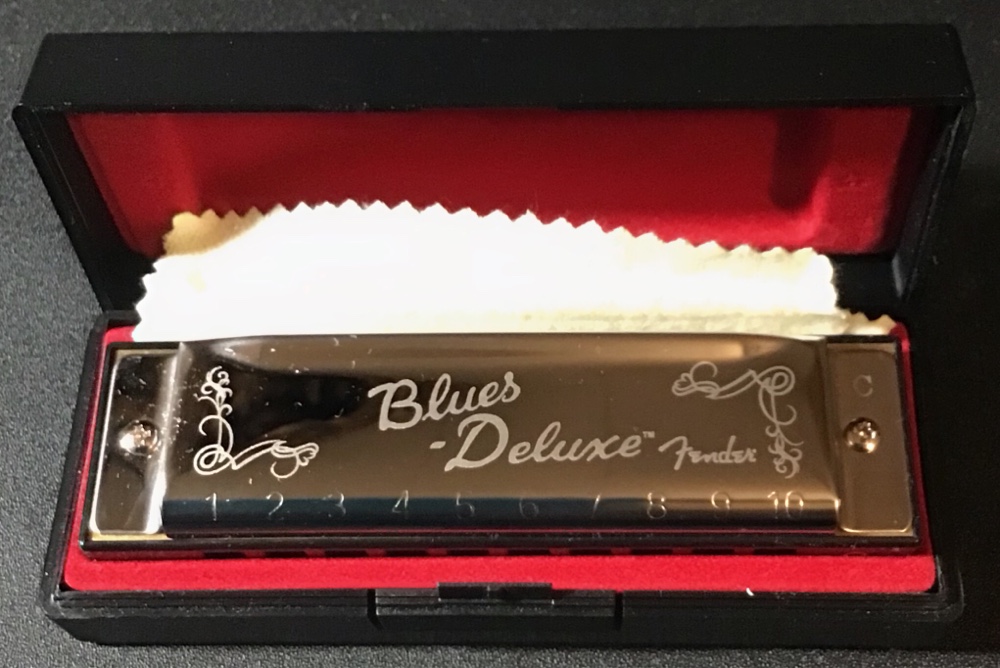
Getting back to the point of knowing what you intend to do with the harmonica before buying; two of my current harps are those that I bought because they provided what seemed to me good value for the price. In the case of the Fender Blues deluxe, a ten hole diatonic type that's about 22.00 on Amazon, the price was right and it was:fun to have a Fender harmonica to go with my telecasters. In my mind, the Deluxe sounds similar to the old Hohner marine bands, or at least as I remember them from the 60s and 70s. It's clear to me that if you're not blowing them out hard in a club, this harmonica will last you quite a while. 

Also the plastic comb makes it much easier to keep clean and until you're proficient, it's a lot easier on your mouth. As far as the tone for blues or whatever, it's probably best to do as you do with guitars and check out a variety of players on YouTube and elsewhere so you can hear it played at different levels of skill.  However, the Fender Blues Deluxe sounds good for the price and like I said, unless you're going to start playing hard for hours on end, this should be all the harp you need. 

Also, one thing to keep in mind about the harmonica, particularly the diatonic type. Given the note spacing, it's basically impossible to play a wrong note so your learning curve will not only be easy but quite pleasant.

As far as the basic tone and sound, I'm sure you'll hear a lot of different opinions but coming from someone who has always had a harmonica in his possession since his early teens, this one sounds fine. As far as its application as a blues harp, quite a bit of that can depend on the type of microphone you use to amplify the sound. So, I wouldn't put it all on the harp; like with guitar and amps, there's a lot of factors to consider. However, compared to some very inexpensive harmonicas I've heard and played, this Fender definitely has better tone.

The OIBTECH Double Tremolo Harmonica is actually cheaper now, I originally paid 26.00 and it's now in the 20.00 range. As you can see from the picture it's a nice looking harmonica with a good case and accessories. Again, being diatonic it will be a harmonica with a pleasant learning curve where you can't play any bad notes. 
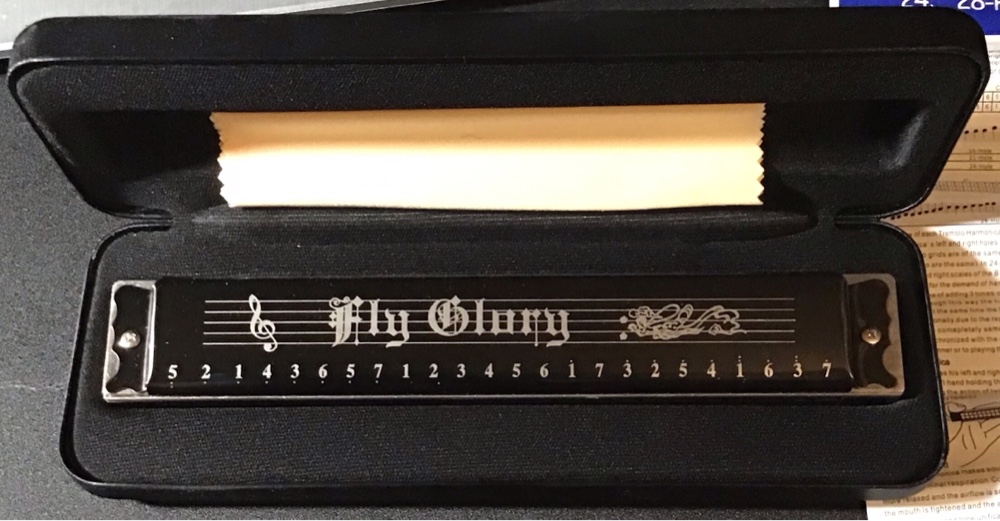

From what I can see, one reason for the lower price is that whoever makes this particular harmonica probably subcontracts out to others because this is a very common type that seems to be in the same price range with a lot of other very similar looking brands. In this case, you'll have basically what's called double tremolo but it's a double reed design to give you a, well, slight tremolo or vibrato, which has a very pleasant effect, particularly if you're playing quietly. The sound is a hair bit thinner than a Hohner but that can be adjusted with technique. 
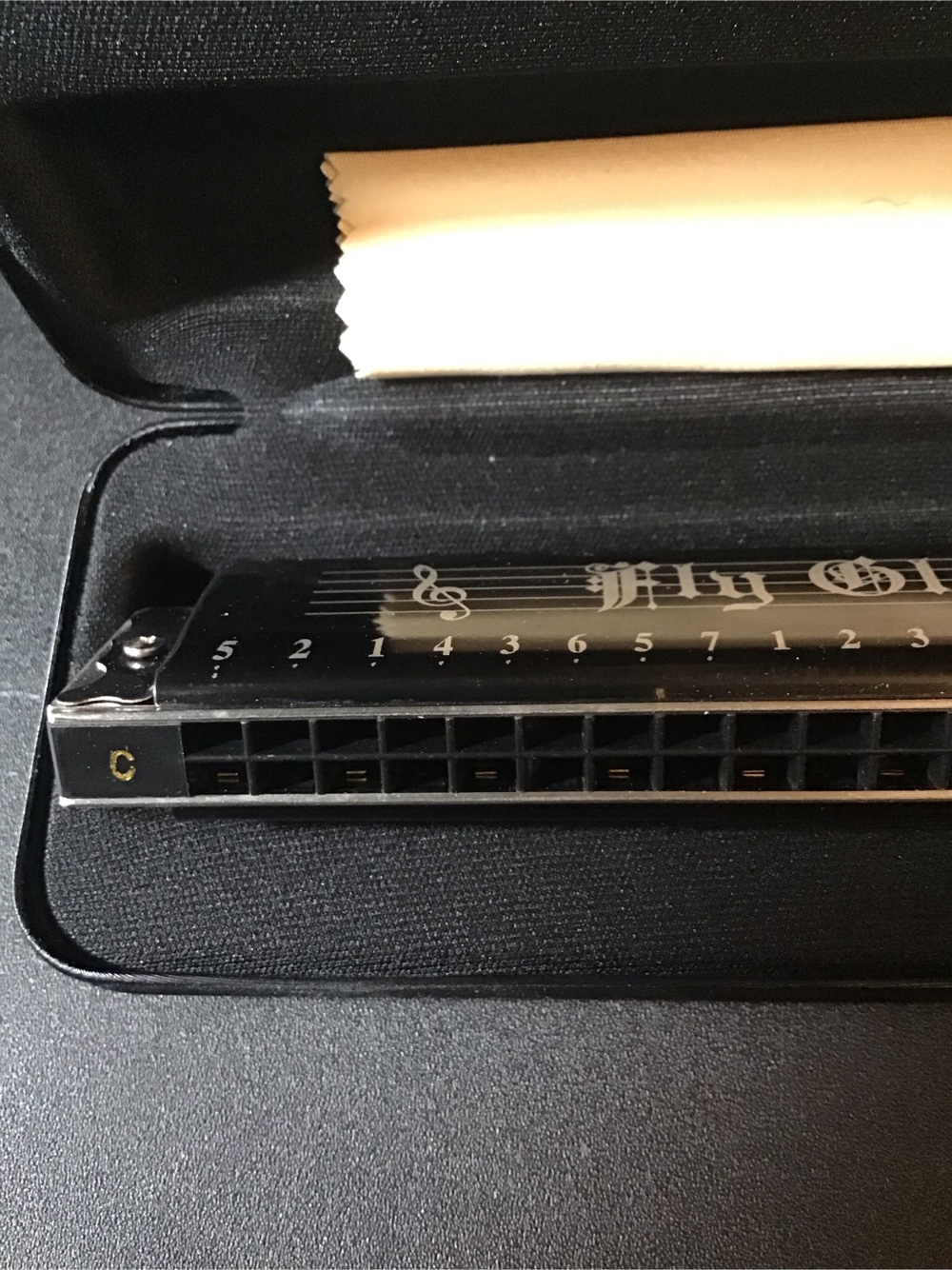

One way to put it is that it has more of an accordion effect, which makes this type popular in Europe because the range of harmonica music there is wider than you'll hear in the States. There’s more advanced skills involved with all types of harmonicas, like judging reed quality, being able to disassemble the harmonica to clean or replace reeds, that sort of thing. In the beginning, I would treat it like playing a guitar or banjo;  just start off and learn, have fun and if you feel like going into it deeper, you can learn all those finer points.

It's one of those types of harmonicas where, depending on where you live, particularly in the United States, somebody might steer you towards a marine band or chromatic type because the reference point will be blues and jazz. 

If you want to explore the harmonica, it's like any other instrument; it doesn't hurt to explore all of the types of music produced by this very fun instrument. You might find that you prefer to play polkas, which incidentally has a secondary application in Celtic music. You never know where your heart will go.

Al Handa
August 2026


OIBTECH Double Tremelo

24 Holes
Major Diatonic
Double Tremelo
Key: C
Color: black
Dimensions: (17.7cm x 2.9cm x 2.3cm) (L x W x H)
weight: 308g



Tuesday, April 23, 2024

Review: 2007 Fender Classic Player '60's Strat

Review: 2007 Fender Classic Player '60's Strat

The Fender Classic Player '60s Strat is one of the three Custom Shop designed and Mexican-made (and it should be pointed out, assembled, not all manufactured) guitars. You can refer back to my reviews of the Baja Telecaster and '50s Strat for comments about the background of this guitar's manufacture and context.

This particular strat was designed by Fender Custom Shop master builder Greg Fessler, and it essentially is as described. Its outward appearance is that of a vintage '60s Strat but with Custom Shop electronics.

Oddly enough, the neck doesn't address the key complaint about the '50s model neck. Which is that it's too thick. This guitar has a 12" C neck with medium jumbo frets, and it's a familiar profile to most modern players. Familiar, but thicker than usual.

The advantage is that it spaces the strings better, and makes it equally easy to play chords or clean leads. It's an ideal surf guitar for that reason, and for those who fingerpick. Also, if you play half chords and such, this neck will open up a new world.

The maple neck has a rosewood fretboard, which will also give the player a softer sound than maple. What you lose in bite, you gain in nuance. 

The pickup and switching system is the same as the '50s model. There are five positions, with 2 and 4 being hum canceling instead of out of phase. This is an improvement over the original with only three positions and the out-of-phase being achieved by monkeying around with the switch (leaving it stuck between the standard positions).

Where it differs is in the pickups. The Custom Shop '69 single coil with grey bobbins is used, and thus the sonic range fits squarely in the '60s. The sounds can range from classic surf, Jimi Hendrix, rock blues, late '60s Clapton (with a midrange booster), Stevie Winwood, and so on.

It's a brighter-sounding strat than many modern players are used to. However, it's bright without being tinny, and it has a spank in the tone that modern versions don't have. Imagine Traffic's classic “Dear Mr. Fantasy,” a quintessential '60s Fender song, and you'll have an idea of the tone.

Fender has gone for the vintage look on this one, with Gotoh button pegs, single-ply pickguard (which seems sort of cheap), and aged knobs. The tremolo is a 2-Point Synchronized Tremolo with Stamped Steel Saddles.

Even nicer, the three-tone and sonic blue finishes are absolutely off the coolness scale. The sonic blue needs to be seen to appreciate how pretty it is. Too bad Fender couldn't have added sea foam green, it'd have made this model into a sales monster.

When you add up the plusses, great vintage looks (made cheaper by a new state-of-the-art facility in Mexico), and Custom Shop electronics, it's a steal at 800.00. There are some differences between the American Strat and this one, but not enough to pay 400.00-600.00 more and not get the customized electronics.

The difference between the older Mexican Fenders with poplar bodies and cheap pickups, and these Player Series guitars is huge. These guitars are closer in value to their American counterparts than Epiphones are with Gibsons. Only the most stubborn would be unable to see past its Mexican manufacture.

If you get one of these strats, you'll soon be enjoying your own Summer of Love.

- Al Handa
  2007

Note: This review first appeared on the ePinions.com site in 2007. This and other reviews were short takes that accompanied the link to a business that sold the guitar. As a rule, the guitar had to be at least examined and played by the reviewer (and ideally owned). In my case, a severe case of GAS made it possible to have at least owned the reviewed instrument for a short while. I'm reprinting these as having another source on a guitar never hurts, even if the reviews aren't definitive. Other than minor corrections, these short takes are unchanged from the original text. I figure that it might be helpful to keep the older perspective.


AVAILABLE ON ALL MUSIC SITES


Please check out and listen to my music on Spotify, YouTube, Apple Music and other music sites. Please add any cuts you like to your playlists!


Sunday, April 14, 2024

Review: 2013 Squier Vintage Modified Telecaster Special Electric

Review: 2013 Squier Vintage Modified Telecaster Special Electric

The Squier Vintage Modified Telecaster Special Electric, with a white blonde finish, is one of many variations that seemingly copy the almost endless variety of “frankenfenders” or “parts Fenders” that are as much as a part of the Fender landscape as the stock ones.

Unlike Gibsons, which tend to have only the pickups and metal hardware changed, Fenders tend to have necks, bodies, and all manner of things mixed and matched. Which was, in a way, Leo Fender's vision of an electric guitar anyway.

One of the things that Fender has been doing with its Squier line over the past few years is introducing a wide variety of variations on the classic Telecaster model. In this case, a pair of Duncan-designed pickups, with the neck one being a Jazzmaster pickup for an “extra smooth” sound.

The use of a Jazzmaster front pickup is really more of a marketing thing. The fact is, the Tele with its standard front pickup is often used for jazz already, so changing that pickup to another type for smooth sounds really doesn't change a whole lot. However, Jazzmasters and Jaguars are what the young players are using so it's a nice update to the design.

Another attraction is the Duncan-designed pickup. Seymour Duncan has a great reputation as one of the best boutique pickup makers, and a bridge pickup designed by him would be better than the standard stock pickup by Fender (at least in the Squire line).

Technically, that is. One has to keep in mind that this is a 300.00 guitar, and while Duncan may have designed the pickup, it was actually manufactured overseas. It sounds pretty good, but put in a stock American Fender back pickup instead and you'll be amazed at the difference.

The body is basswood, which is a common wood for economy guitars, and does the job. The fabled 80s Japanese Stratocasters generally used the same wood, and have a great reputation even today. 

Where most inexpensive guitars fail the snob test is at clean or low volume. The clean tone is OK, it's resonant, but not in a compelling way. Sounds nice, in other words, but not in a way that would warm the heart of an old-time Fender user. On the other hand, a good amp can do wonders for the clean tone.

In the case of this guitar, the obvious intent is to introduce the classic Telecaster to a younger generation that will probably use it to grunge out or wack around at high volume, and who'll have little interest in trying to get a “classic” tone. It helps that the rear pickup is hotter than the usual Squire rear pickup.

One feature that should appeal to young and old alike is that it uses a Jazzmaster-style neck profile. In other words, slimmer and for many, easier to play. The normal tele neck can feel like a baseball bat for some, and certainly for a young player, so this is a fine update that should be popular. Other tele's that feature slimmer necks, like the Baja model, use a slimmer neck, and are popular with a large segment of the Fender crowd.

The basswood body adds an additional bonus, it makes for a lighter guitar. An American or Mexican tele with an alder body will be very close to a Gibson Les Paul in weight, in other words, heavy. I found this version to be very playable, and very comfortable to hold. Given its features and decent construction, it's a bargain at 300.00.

It's hard to criticize a 300.00 Squire that's been put together this well, and more than a few experienced users may well buy these for backup, stage use (to keep their expensive ones home and safe) and of course, the classic Fender enthusiast hobby of endlessly modifying the guitar.

Oasis built a million-dollar sound around the very cheap Epiphone Dot. This guitar may not do that, but is good enough to make a new player forget that it's a cheap guitar. That alone, is worth a million bucks.

- Al Handa
  2013

Note: This review first appeared on the ePinions.com site in 2013. This and other reviews were short takes that accompanied the link to a business that sold the guitar. As a rule, the guitar had to be at least examined and played by the reviewer (and ideally owned). In my case, a severe case of GAS made it possible to have at least owned the reviewed instrument for a short while. I'm reprinting these as having another source on a guitar never hurts, even if the reviews aren't definitive. Other than minor corrections, these short takes are unchanged from the original text. I figure that it might be helpful to keep the older perspective.

The Quitturz by Al Handa


AVAILABLE ON KINDLE UNLIMTED


AVAILABLE ON KINDLE UNLIMTED


Here's info on some of my Vella books:


The Quitturz (title not changed on ad yet)


https://www.amazon.com/kindle-vella/story/B09PC3L6PC


I, Ivy


 https://www.amazon.com/kindle-vella/story/B0B3RCBT4D


The Forbidden Lost Gospels Of Murgatroyde


 https://www.amazon.com/kindle-vella/story/B0BJ2TW4P1


The Boogie Underground Think Tank: How To Survive The End Of Civilization


 https://www.amazon.com/kindle-vella/story/B0BG6LNXTG


The Adventures Of Queen Khleopahtra: Ruler Of Egypt, Time Traveler, and Literary Detective


 https://www.amazon.com/kindle-vella/story/B0BJC122G7


Please check out and listen to my music on Spotify, YouTube, Apple Music and other music sites. Please add any cuts you like to your playlists!

Saturday, April 6, 2024

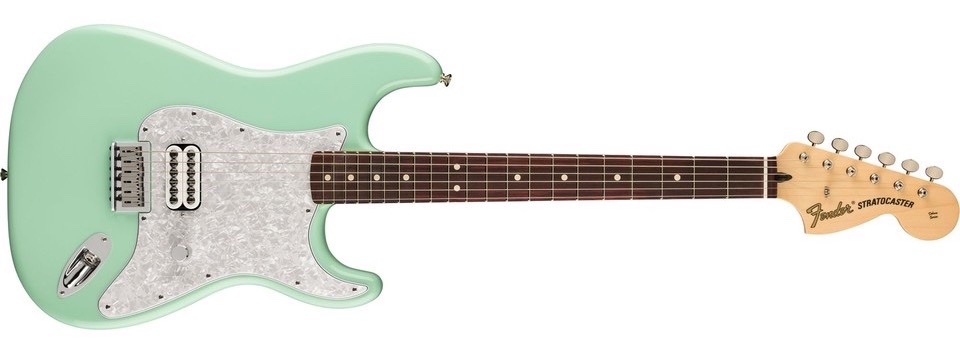
Review: 2005 Fender Tom DeLonge Stratocaster


Review: 2005 Fender Tom DeLonge Stratocaster

The Fender Tom DeLonge Stratocaster was introduced in the early 2000's, and as far as MIM Artist Series guitars were concerned, a success. Even after it was discontinued, it's still perceived as a must have guitar to its cult.

That cult, of course, were mainly fans of Blink-182, one of the best post-Green Day Punk bands, with a distinctive and very aggressive guitar sound. The sound could best be summed up as very bright and distorted chord voicing, with fast single note fills mainly on the bass strings. That, and a knack for hooks not normally found in latter day punk music.

I should note that I was, and still am a big fan of the group. In fact, my daughter's graduation present was tickets to a Blink-182 concert (and a couple of others).

I did draw the line at buying a new Tom Delonge Strat. It's not a bad guitar on paper. It has wonderfully cool colors, pearloid pick-guard, alder body and maple neck (with rosewood fretboard) construction, and a genuine US made monster of a pickup, the Duncan Invader. I've used one on a tele, and it's one of the loudest pickups ever made. Mean looking too.

The pickup is mounted at a hardtail bridge position, and only has a volume control. This is fine if you're playing the guitar at concert volume or overloading a small amp. Comments about its versatility for all kinds of rock abound on the web, but the “try before you buy” rule applies here. It only does all the other forms of rock if you want it to sound like Blink-182 doing it.

I do think that it would be a good surf guitar and definitely a great guitar for punk. Which is no surprise, it was designed for it. I found it to be a great player, with a very fast neck, and the one I tried, a sea foam green one, had a very nice coolness factor. Sure, it was mainly for playing loud, but there's lots of guitars out there that don't sound good loud (just loud if you know what I mean). I found myself whacking away on it for the longest time. It's loud fun, the same way a Gibson SG sounds fun at max volume.

The single volume control isn't as limiting as it seems. You can always control the tone from the amp, but making sure you have a good enough amp can turn into a hidden cost if you try to make this your main axe. This guitar will only be as versatile as your amp.

It's definitely a second or third guitar unless you play punk. At punk volume and distortion though, just about any guitar will do. On a cheap amp, I didn't find it to be significantly different than the Squire version with its Duncan Detonator pickup, or a couple of other guitars I've messed around with.

Like I said earlier, it was one of the more successful of the MIM Artist Series. In terms of construction, it does stack up well with the Jimmy Vaughan, and does what it does better than the Muddy Waters Telecaster.

What got me interested in writing a review for it was that since it's a discontinued model, the price now varies wildly. That always creates an opportunity to reassess a guitar. What may not be a good deal when new can be a real find on the used market. There are newbies who will try to sell the Squire model by saying it's the Fender version, but you can see the real deal range from 350.00 on up. It's a common mistake, so be sure you're not buying a Squire at regular Fender prices.

The price can depend on who's selling it. Many of the sellers will treat it as a collector's item and ask 500.00 and up. Which was the price range when it was new. Others will sell lower, and that's where this cool but single-minded guitar becomes attractive.

Kind of like the old economy Fender Tele with the bridge pickup. A similar idea was explored with a strat-derived model with a racing stripe, but that fizzled out. This DeLonge strat is different. A popular artist did help design it, it does do what it does very well, and it looks great. At 300-400 dollars, it certainly beats having a Squire.

The Danelectro reissues, for example, have dropped drastically in my area and often can be had for around 200.00. But this model seems to be staying in the same range as the new Deans and Jacksons.

Is it worth getting? When it was new, yes, but only to a cult following. Personally, I'd love to have one, but not at its current market price. I'd prefer to trade for one or get a beat up one on the cheap.

Part of me knows I'll never buy it even in the 350.00-400.00 range as I haven't played in a punk band since the late 70s. Yet the other part of me is glad to see such a cool guitar keep its value. After all, one of these days I'll probably get a good deal on one, and it'll mean that my tele and strat will be in good company.

- Al Handa

  2007

Note: This review first appeared on the ePinions.com site in 2013. This and other reviews were short takes that accompanied the link to a business that sold the guitar. As a rule, the guitar had to be at least examined and played by the reviewer (and ideally owned). In my case, a severe case of GAS made it possible to have at least owned the reviewed instrument for a short while. I'm reprinting these as having another source on a guitar never hurts, even if the reviews aren't definitive. Other than minor corrections, these short takes are unchanged from the original text. I figure that it might be helpful to keep the older perspective.


The Quitturz by Al Handa


AVAILABLE ON KINDLE UNLIMTED


AVAILABLE ON KINDLE UNLIMTED


Here's info on some of my Vella books:


The Quitturz (title not changed on ad yet)


https://www.amazon.com/kindle-vella/story/B09PC3L6PC


I, Ivy


 https://www.amazon.com/kindle-vella/story/B0B3RCBT4D


The Forbidden Lost Gospels Of Murgatroyde


 https://www.amazon.com/kindle-vella/story/B0BJ2TW4P1


The Boogie Underground Think Tank: How To Survive The End Of Civilization


 https://www.amazon.com/kindle-vella/story/B0BG6LNXTG


The Adventures Of Queen Khleopahtra: Ruler Of Egypt, Time Traveler, and Literary Detective


 https://www.amazon.com/kindle-vella/story/B0BJC122G7


Please check out and listen to my music on Spotify, YouTube, Apple Music and other music sites. Please add any cuts you like to your playlists!


Tuesday, April 2, 2024

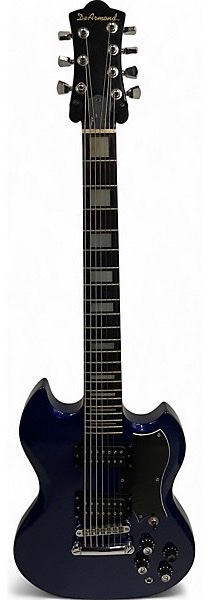
Review: 2006 DeArmond S-67 Seven String Electric


Review: 2006 DeArmond S-67 Seven-String Electric

The DeArmond S-67 was created to give beginners and intermediates an entry level seven string, a type of guitar that was popular in 2000 for the hybrid metal/rap/thrash music that was in vogue back then.

The seven-string guitar has always had a cult following with some jazz players who utilized the extra bass string to create more complex chords and basslines, but it was never common in rock. The extra string on the DeArmond is intended to be tuned down to D or even lower, giving someone who was cranking out powerful chords that extra bottom, and some “churn” as one rakes the bottom strings. The heavy Gibson SG-like body adds the right atmosphere for the edgy sound this type of guitar was intended to create.

The S-67 has an agathis body, a bolt-on nato neck (often called an Asian type of mahogany) and average hardware. It’s pretty heavy, but the pickups are excellent DeArmond passive humbuckers. The street price was around 280.00, but when Fender took over DeArmond and put their inventory on fire sale, the price dropped to 200.00 (or even lower).

I should digress a moment and explain the DeArmond mystique. DeArmond pickups have always been esteemed, and the brand name was associated with Guild, one of the great 50-60's guitar makers. When Fender took over DeArmond, the guitars were sold off at amazingly low prices, and thus the name has come to denote a quality guitar that is a bargain.

It should be noted that this guitar didn't drop that much in price except to become rare, and so it's important to realize that is a case of a guitar that's still priced close to it's real value (unlike it's fine X-500 hollow body jazz guitar) 

The guitar was an interesting reversal of what someone would do with, say, an Epiphone. An Epiphone tends to be a well-made guitar for the price with the best possible woods used, but the costs seemingly cut on the electronics. Thus, many who buy one upgrade to new pickups.

The S-67 is a pretty cheaply made guitar but with its pickups already upgraded. This makes the guitar sound much better than it would have with cheaper stock pickups. DeArmond pickups are almost always an upgrade over most stock pickups. At its current average price of 200.00 or so (I wouldn't pay much more for one), it's a good one-dimensional tool when you want to thrash out some really bottom-heavy metal.

Also, given that DeArmonds are essentially undervalued guitars (being all cut-outs by Fender), it's hard to go wrong with one, particularly a used one obtained at an even cheaper price. The one I got was 200.00 new, and 180.00 after some haggling. Also, given the “aura” that DeArmonds have, the guitars do tend to go fast when up for resale. After all, it's difficult to come up with a list of electric guitars in the 200.00 range that are better in terms of pickups and basic package. 

However, the thing to keep in mind is that the guitar is very much a period piece, and designed to play music that is a sub-genre of metal. Its clean tone is very average, even with DeArmond pickups, and anyone buying should know it's intended to be played both loud and aggressively (otherwise, the seventh bass string doesn't add much to the sound).

To be fair, it's a well set-up guitar, and the fatter neck is offset by good, low string action and decent frets. The guitar stays in tune well, and the pickups perform well at high volume. You can generally find these guitars at a pretty good price, and given the pickups, if you intend to play music requiring this type of guitar, it's as good as any that are much more expensive. Also, the DeArmond brand has that image of a fine guitar that's a bargain, so it's a cheap guitar with a certain “cool” to it. 

So, what do you get for the money? Seven strings, wood you'd find on a pretty cheap guitar, but plenty of it and crafted well, and pickups you'd be happy to have on just about any guitar in the 600.00 and below range. 

Not a bad deal, but be sure you need that seventh string, and more importantly, know what you're supposed to do with it.

- Al Handa 

  2006 

Note: This review first appeared on the ePinions.com site in 2013. This and other reviews were short takes that accompanied the link to a business that sold the guitar. As a rule, the guitar had to be at least examined and played by the reviewer (and ideally owned). In my case, a severe case of GAS made it possible to have at least owned the reviewed instrument for a short while. I'm reprinting these as having another source on a guitar never hurts, even if the reviews aren't definitive. Other than minor corrections, these short takes are unchanged from the original text. I figure that it might be helpful to keep the older perspective.


The Quitturz by Al Handa


AVAILABLE ON KINDLE UNLIMTED


AVAILABLE ON KINDLE UNLIMTED


Here's info on some of my Vella books:


The Quitturz (title not changed on ad yet)


https://www.amazon.com/kindle-vella/story/B09PC3L6PC


I, Ivy


 https://www.amazon.com/kindle-vella/story/B0B3RCBT4D


The Forbidden Lost Gospels Of Murgatroyde


 https://www.amazon.com/kindle-vella/story/B0BJ2TW4P1


The Boogie Underground Think Tank: How To Survive The End Of Civilization


 https://www.amazon.com/kindle-vella/story/B0BG6LNXTG


The Adventures Of Queen Khleopahtra: Ruler Of Egypt, Time Traveler, and Literary Detective


 https://www.amazon.com/kindle-vella/story/B0BJC122G7


Please check out and listen to my music on Spotify, YouTube, Apple Music and other music sites. Please add any cuts you like to your playlists!

Monday, April 1, 2024

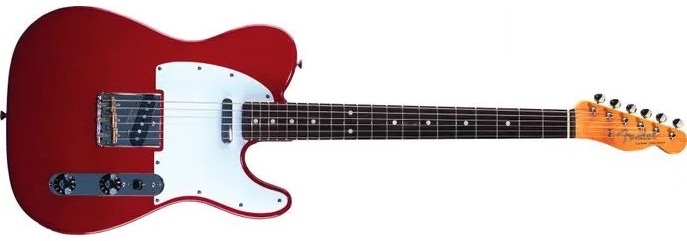
Review: 2004 Fender MIM Muddy Waters Artist Series Signature Telecaster


Review: 2004 Fender MIM Muddy Waters Artist Series Signature Telecaster

If you wanted to name a guitar after a blues legend, probably none would be as powerful an association as Muddy Waters, an artist of almost mythical status. One of the guitars most associated with him was a candy apple red telecaster, with a 50's style body, Fender amp knobs instead of the stock metal ones, and an extra-large custom-made neck. In an interview with Johnny Winter, he said that many other players found it hard to play due to its thick strings and high action. The reason? It was the guitar that gave him that distinctive single note slide sound that characterized his solos.

In 2000, the Fender Custom shop put out a limited run of 100 special edition “Muddy Waters Tribute” telecasters, which garnered excellent reviews. At around the same time, the company released a lower cost version on its “Artist Series” called the Muddy Waters Telecaster. It was made up of American parts that were shipped to Mexico to be assembled and painted. As such, it's one of the higher end models from that country, but with an average street price of around 600.00. Not bad compared to an American made.

Obviously, it couldn't be released as it was in the custom version, with higher action, pre-made scratches and dents (I don't know about you, but I find it silly to pay a king's ransom for a scratched-up guitar). You'd be paying a lot just for labor. 

It's a nine-pound guitar as it is, heavy even for a tele, and a beefy neck with high string height simply isn't going to sell to the average guitar player. So, a 60's style “C” neck, with a nice rosewood fretboard was used, with medium jumbo frets and good vintage “ping” style tuning pegs. One interesting thing about the pegs is that the tuning ratio is a bit higher, so tuning is fast yet accurate.

The 50's style body is thick and made of ash. It's a solid plank, and for me it recalled the days back when I played a 1971 maple neck model and carrying it even a short distance was serious business. I bought mine used in a Gator case, which makes it a relatively lighter package. It's no accident that Fender includes a custom gig bag with it instead of a case.

The bridge is a 50's style three-piece brass type, with molding that will strike some as being cheap or primitive. I would have to agree, but keep in mind, the idea was to duplicate as much as possible what was stock on Muddy's guitar back then.

The pickups are a mixed bag. The neck and bridge “classic” pickups are running at around 6.9 ohms with staggered Alnico V magnets. What I've noticed is PU adjustment is important, and if improperly placed, can sound too thin and strident. By the same token, find its sweet spot, and you'd be hard pressed to hear the difference between the Muddy and an American made.

Keep in mind, it’s a 50s style Tele, so it’s going to sound different to those who are used to hotter pickups (though, for some, it’s a definite plus).

The sound is versatile, covering a range of jazzy sounds (thanks to the thick, dense body), biting blues, and a back pickup that makes that country pinging sound easy. Using it for slide (the way Muddy did) will give you a different tone, a biting, stinging sound as opposed to the thicker Elmore James roar.

The finish is a bright red polyester, which isn't exactly classic, but realistically, easy to keep clean and tough to scratch. Also, it makes the guitar look just like the original, and at this price range, that's more than good enough. 

With a guitar that is already a legend in itself, they couldn't have picked a better namesake. Fender took the trouble to put more quality and vintage vibe than they normally would in a Mexican model, and as a result, to this day, it's one of the more sought-after models in the used market.

As if that wasn't enough, one more touch gives inspiration when you strap on this impressive and fun guitar. As you look down, there's the Muddy Waters signature on the neck plate, and if you're like me, you'll feel a connection to a real hero of the blues.

- Al Handa

  2006

 Note: This review first appeared on the ePinions.com site in 2013. This and other reviews were short takes that accompanied the link to a business that sold the guitar. As a rule, the guitar had to be at least examined and played by the reviewer (and ideally owned). In my case, a severe case of GAS made it possible to have at least owned the reviewed instrument for a short while. I'm reprinting these as having another source on a guitar never hurts, even if the reviews aren't definitive. Other than minor corrections, these short takes are unchanged from the original text. I figure that it might be helpful to keep the older perspective.


The Quitturz by Al Handa


AVAILABLE ON KINDLE UNLIMTED


AVAILABLE ON KINDLE UNLIMTED


Here's info on some of my Vella books:


The Quitturz (title not changed on ad yet)


https://www.amazon.com/kindle-vella/story/B09PC3L6PC


I, Ivy


 https://www.amazon.com/kindle-vella/story/B0B3RCBT4D


The Forbidden Lost Gospels Of Murgatroyde


 https://www.amazon.com/kindle-vella/story/B0BJ2TW4P1


The Boogie Underground Think Tank: How To Survive The End Of Civilization


 https://www.amazon.com/kindle-vella/story/B0BG6LNXTG


The Adventures Of Queen Khleopahtra: Ruler Of Egypt, Time Traveler, and Literary Detective


 https://www.amazon.com/kindle-vella/story/B0BJC122G7


Please check out and listen to my music on Spotify, YouTube, Apple Music and other music sites. Please add any cuts you like to your playlists!