The Delta Snake Review

The Delta Snake Review

Translate

Tuesday, August 18, 2026

Harmonica Reviews: Fender Blues Deluxe And OIBTECH Double Tremolo


Harmonica Reviews: Fender Blues Deluxe And OIBTECH Double Tremolo

I got my first harmonica as a young teenager, a standard Hohner marine band and kept that one for almost 10 years. Later on in the early 70s I went through a period, similar to guitar GAS and tried pretty much every type that could be bought in a music store or by mail. That included other marine bands, blues type harps, various types of chromatics, double reeds, echo harps, etc. The main reason for this eclectic journey, as opposed to diving deeper into, say for example, blues harp like most American players, was how the instrument was introduced to me. 

Many guitar players first started after hearing Rock or Blues and I'm sure more than a few American harp players started after hearing blues players ranging from Sonny Terry if you were a folkie to Little Walter or Paul Butterfield if you were in a blues and rock bag. As a young teenager my main music, and this was during the Beatles era, was primarily folk because my second and third grade teachers were all 60s folkies. I was certainly beginning to be aware of the Beatles because you saw them on Ed Sullivan on Sunday night but in terms of learning harmonica, it was from a folk or European tradition and so I tended to visualize playing sea shanties, folk melodies or European genres like polka, etc. 

Later on in the early seventies, when I began to be exposed to blues, it didn't change my life in the sense of finding what I wanted to do with a harmonica. For one thing, it was never my main instrument but always a very fun thing to have for a lot of different reasons. Hearing blues harp players merely added a new color to the palette, so to speak. I did play blues harp here and there, as needed and tended to gravitate towards the echo and double reed type harmonica because those had a tone I was more accustomed to. So even when I was playing Blues numbers, I would use an echo harp.

I remember hearing a live recording of Rod Stewart and his band and after a blues number that featured a harp, he said "that's a harmonica, the cheapest instrument you can buy." You could tell by his tone of voice that it wasn’t meant as an insult; he was simply saying what is still true, in spite of the typical western world tendency to make everything expensive. 

Some harp articles will tell you that in order to get a truly decent harp, you had to spend at least $40. Now, I'm not going to judge harp players because I'm not an expert at it like a Little Walter or even your typical bar level musician playing blues but I have played the instrument all my life and do know one thing; the basic appeal from a is that it is and was an inexpensive instrument with a pleasant learning curve that a person could make a lot of music with, both solo and accompanying others. 

I'm sure the reasons for the opinions on harmonica prices vary but basically a first line harp, like a a Hohner, will set you back a pretty penny although luckily, is still incredibly cheap compared to a guitar. One can buy the best if they can afford it and it won't cost a lot of money (relatively speaking). 

By the same token, like with guitars, once the name brands moved up into the premium price stratosphere, then capitalism always allows for other companies to come in and fill the entry level vacuum left by those brands. In other words, even though the experts may sneer and turn their nose up at them, there are still inexpensive harps that one can buy for a few bucks, just like the good old days. 

So in modern times there’s still a large price range with the usual spread of opinion about good and bad, economy versus premium and what it apparently takes to have a top flight instrument. For example, top notch harmonicas are more “airtight,” which may be a hard concept to grasp for beginners given that you're blowing a lot of air through the thing in the first place. 

Also, like with guitars, a lot of the remarks about durability, crummy or good reeds, all that talk, has to be tempered with how the instrument is actually going to be used. In other words if you're a hobbyist, you're almost certainly not going to use an inexpensive harp in a way that will blow the reeds out. That's something that's more likely to happen to a gigging musician. 

For example, I remember when the original Hohner Golden Melody harps first came out and players I knew had mixed opinions on them. Some liked the smoother sound and the subtle tones one could get from the type of reeds used and others criticized the lack of durability. I had to agree a bit with the latter after quickly blowing out two Golden Melody harps before it became obvious that the design wasn't, at least at that time, set up to take a lot of hard playing. In retrospect it was a design that still needed to be perfected for professional level play. 

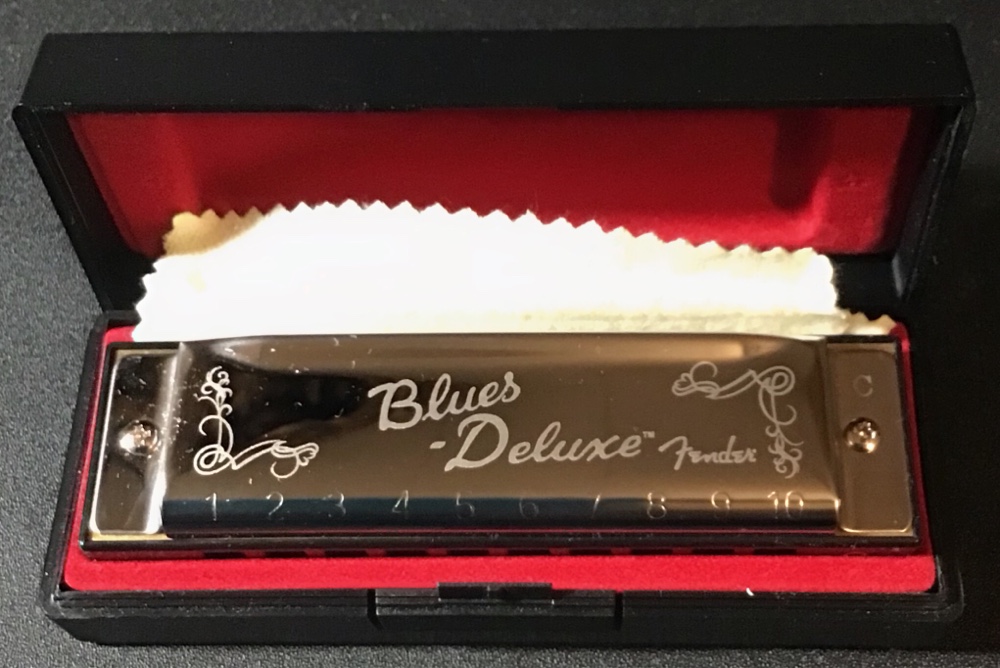
Getting back to the point of knowing what you intend to do with the harmonica before buying; two of my current harps are those that I bought because they provided what seemed to me good value for the price. In the case of the Fender Blues deluxe, a ten hole diatonic type that's about 22.00 on Amazon, the price was right and it was:fun to have a Fender harmonica to go with my telecasters. In my mind, the Deluxe sounds similar to the old Hohner marine bands, or at least as I remember them from the 60s and 70s. It's clear to me that if you're not blowing them out hard in a club, this harmonica will last you quite a while. 

Also the plastic comb makes it much easier to keep clean and until you're proficient, it's a lot easier on your mouth. As far as the tone for blues or whatever, it's probably best to do as you do with guitars and check out a variety of players on YouTube and elsewhere so you can hear it played at different levels of skill.  However, the Fender Blues Deluxe sounds good for the price and like I said, unless you're going to start playing hard for hours on end, this should be all the harp you need. 

Also, one thing to keep in mind about the harmonica, particularly the diatonic type. Given the note spacing, it's basically impossible to play a wrong note so your learning curve will not only be easy but quite pleasant.

As far as the basic tone and sound, I'm sure you'll hear a lot of different opinions but coming from someone who has always had a harmonica in his possession since his early teens, this one sounds fine. As far as its application as a blues harp, quite a bit of that can depend on the type of microphone you use to amplify the sound. So, I wouldn't put it all on the harp; like with guitar and amps, there's a lot of factors to consider. However, compared to some very inexpensive harmonicas I've heard and played, this Fender definitely has better tone.

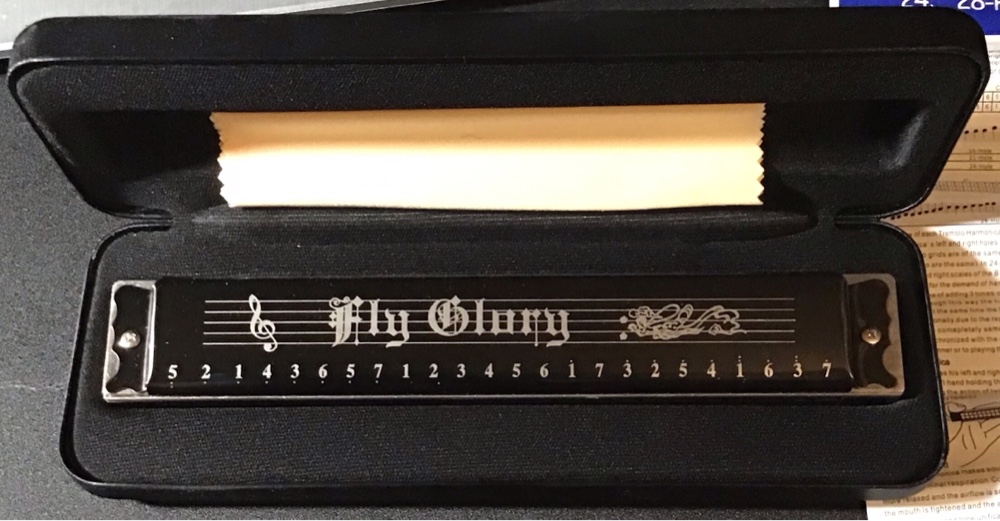
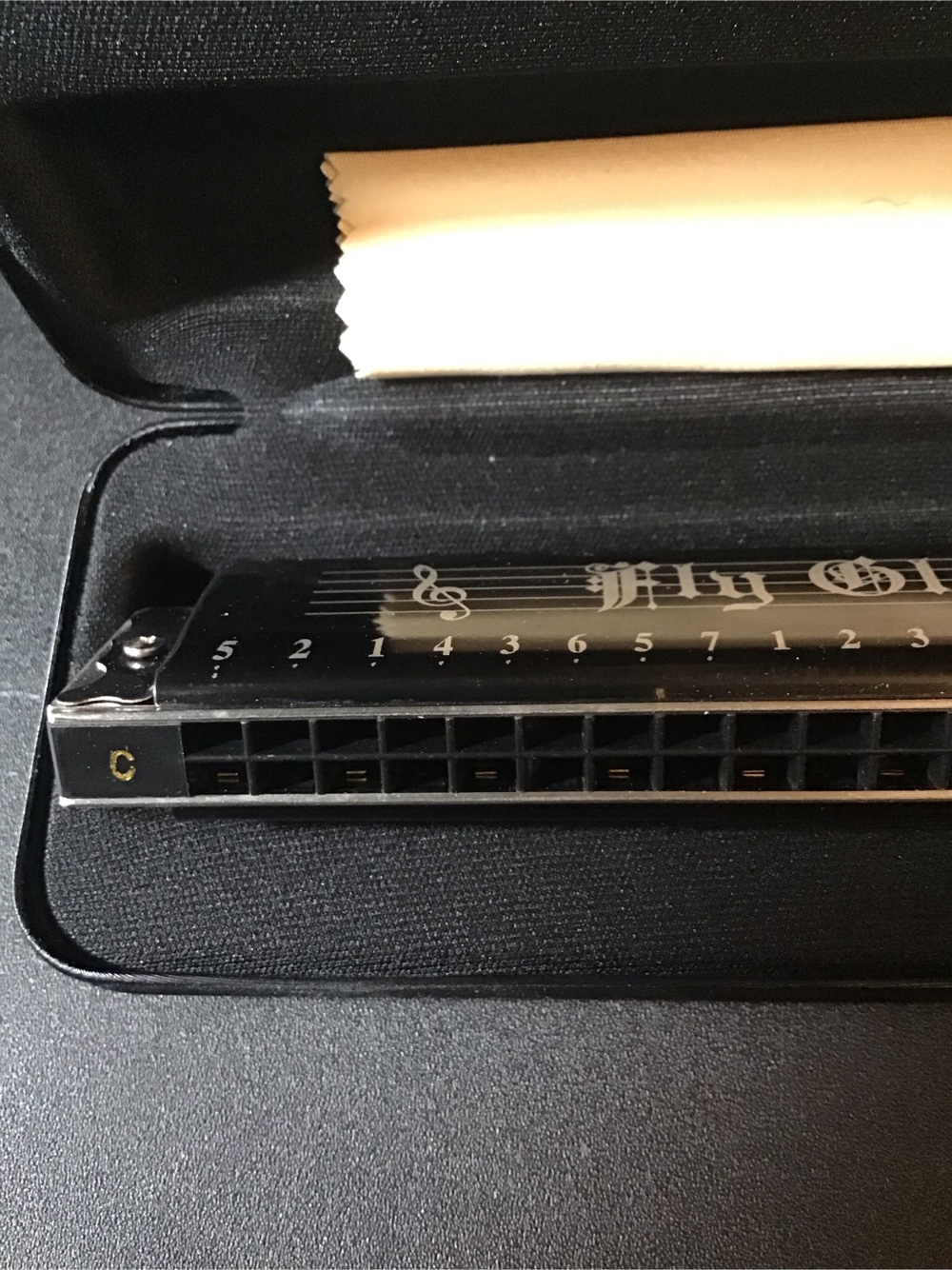
The OIBTECH Double Tremolo Harmonica is actually cheaper now, I originally paid 26.00 and it's now in the 20.00 range. As you can see from the picture it's a nice looking harmonica with a good case and accessories. Again, being diatonic it will be a harmonica with a pleasant learning curve where you can't play any bad notes. 


From what I can see, one reason for the lower price is that whoever makes this particular harmonica probably subcontracts out to others because this is a very common type that seems to be in the same price range with a lot of other very similar looking brands. In this case, you'll have basically what's called double tremolo but it's a double reed design to give you a, well, slight tremolo or vibrato, which has a very pleasant effect, particularly if you're playing quietly. The sound is a hair bit thinner than a Hohner but that can be adjusted with technique. 


One way to put it is that it has more of an accordion effect, which makes this type popular in Europe because the range of harmonica music there is wider than you'll hear in the States. There’s more advanced skills involved with all types of harmonicas, like judging reed quality, being able to disassemble the harmonica to clean or replace reeds, that sort of thing. In the beginning, I would treat it like playing a guitar or banjo;  just start off and learn, have fun and if you feel like going into it deeper, you can learn all those finer points.

It's one of those types of harmonicas where, depending on where you live, particularly in the United States, somebody might steer you towards a marine band or chromatic type because the reference point will be blues and jazz. 

If you want to explore the harmonica, it's like any other instrument; it doesn't hurt to explore all of the types of music produced by this very fun instrument. You might find that you prefer to play polkas, which incidentally has a secondary application in Celtic music. You never know where your heart will go.

Al Handa
August 2026


OIBTECH Double Tremelo

24 Holes
Major Diatonic
Double Tremelo
Key: C
Color: black
Dimensions: (17.7cm x 2.9cm x 2.3cm) (L x W x H)
weight: 308g


Monday, August 17, 2026

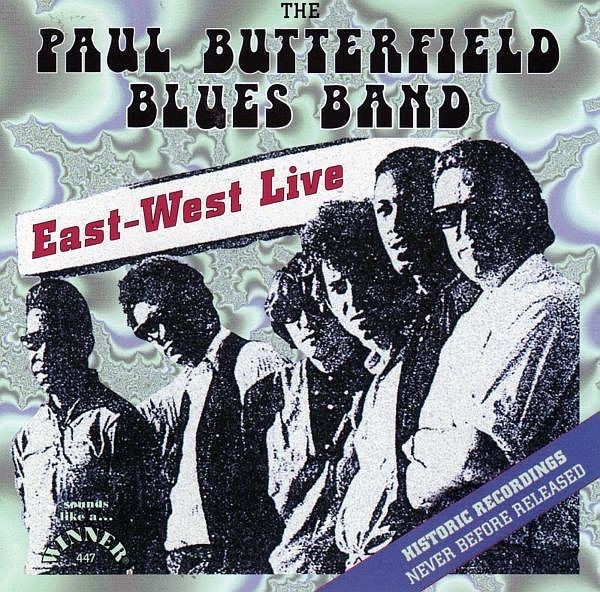
Classic Album Review: East-West Live - Paul Butterfield Blues Band (Winner Records)


ClassicAlbum Review: East-West Live - Paul Butterfield Blues Band (Winner Records)


Note: This review originally appeared in the Delta August 1997 Snake E-zine.


One of the nicer things about the latest surge in interest about the blues has been the increased attention to the contributions of the Butterfield Blues Band. A great deal has been written about that

legendary band, including in the Snake (see my review of "Strawberry Jam") so I'll focus on a narrower aspect of that great band's talent highlighted here in this CD from Mark Naftalin’s Winner Records label. I should note that the Strawberry Jam CD is also from Winner Records.


In rock, and even blues to a large extent, musicians and bands tend to be remembered by their songs.  This can overlook a key aspect of the blues, which is that it is in the main an improvisational art form not unlike jazz. The tendency to focus on studio performances can accidentally make a blues classic a sacred text, to be performed note for note, or with close adherence to the style.


In baroque music, for example, Bach compositions are often played to a known arrangement, when in reality, the composer often improvised new variations when playing live, and on the score, would write in alternate routes the musician could take. Over time, classical lost that improvisational spirit, and presuming to change a Mozart piece could get a player in trouble with the critics and fans.


Thus, to some, the idea of a CD with three versions of the same song could seem redundant. To some, it could seem like a Beatle release with several versions of "Hey Jude (which I must admit, would seem redundant to me ;-)). However, "East-West" wasn't just a rock or pop song.  It was also a vehicle for improvisation that had a far reaching effect on the rock scene of the 60's beyond even the psychedelic bands. John Fogerty, a master of the rock single, even mentioned in an interview that seeing the Butterfield Blues Band play "East-West" was what gave him the idea for the extended version of "Suzy-Q" that was his band's

first hit.


Even a cursory listen to the three versions here will make it obvious that the music here had a freedom one associates with jazz (but is indeed always present in great blues). The early versions are closer to the studio version and the last is a nearly half-hour exploration that moves into a realm one couldn't really pin down as pure rock or blues.


It's more of an evolution and exploration, in which the last becomes the most free in a sonic sense. By 1967, the band had played it for over a year, and some of the sections show them collectively exploring and producing sounds where individual intention and sound merged into a single sonic idea as opposed to people taking turns soloing. By the same token, the same cuts have moments of total individuality, which move the others to literally live in that moment and move with it...Or not, for that matter, which created some interesting textures and rhythmic tension.


That being said, the earlier versions do have their attractions. Although more restrained, the performances have the beauty of the original studio themes and ideas being put into a fuller and freer context. There is much melodic intensity in the early cuts, so in the end, each of the performances have to be taken as much as unique moments in time as progressions towards some perfection. After all, in the case of "East-West," what would constitute a "perfect" version?


One thing is also obvious; one of the true stars of this CD is the rhythm section. Although there has always been a great deal of focus on Butterfield and Bloomfield, none of these cuts would have worked without a great band, anchored by a great rhythm section. This isn't unusual.  The great STAX recordings were due in no small part to the great studio band of Booker T and the MG's. Atlantic's classic soul sound was more than partly defined by the great Muscle Shoals band, and the same for Motown and Hi-Rhythm for that matter.


Given the freedom that Bloomfield, Butterfield, Naftalin, and Bishop enjoyed in these performances, one can see that an unsympathetic rhythm section could have pulled these jams down to the level of an atonal boogie or bad psychedelic noodling. If these versions have such life, it was also due to a bassist and drummer who could provide a pulse and continuity that was both an anchor, and a free path where new textures could be explored.


Obviously, those textures and ideas could stand alone, but we're also talking about what the average listener will enjoy also, so talking about pulse is also about what sounds good. A great rhythm section can do that, provide a vehicle for musicians to improvise and explore, and be that bridge for the average listener.


So, while this CD is a both a document and celebration of a blues band that is now seen as the legendary unit that it was, it is also a tribute to the work of bassist Jerome Arnold and drummer Billy

Davenport. A rhythm section as great as any that ever played, in a band that was as great as any.   


Al Handa

August 1997


Classic Album Review: The Turning Point - John Mayall (Polydor)


Classic Album Review: The Turning Point - John Mayall (Polydor)

Note: This review originally appeared in the May 1995 Delta Snake E-zine and is reprinted here with some minor changes.

John Mayall has always been John Mayall, but the pigeonholing he's endured must have been trying. At times, he's been described as the purist who kept the true Blues alive while other English artist turned up the amps, a great bandleader who was overshadowed by his pupils, or Blues artist whose  output ranged from brilliant to mediocre, often within the confines of a
single record.

One thing that is important to note, is that he grew up on American Jazz, and that an early influence was Alexis Korner, who was a traditionalist, which is to say, understood that 20's and 30's Black music incorporated both a Blues and Jazz tradition. This, in my opinion, is the source of a lot of misunderstandings about his later music. Too many writers have used his later work with the Bluesbreakers as the main reference point, and thus have explained or misunderstood his later music in that context.

The correct way to see his music is that the Bluesbreakers period was merely one of many phases he went through, and that the music he made with Clapton, Green, and Taylor, although the most celebrated, wasn't the core of his outlook on the Blues. His later jazz-influenced work wasn't a departure, but a return to an earlier point of reference. 

His recording career began with a couple of 45s, one of which was the brilliant "I'm Your Witchdoctor," which was a Bo Diddley-derived Blues rocker that staked out territory later mined by the Stones. However, he veered back towards hard Blues in a now famous partnership with Eric Clapton, who had then just left the Yardbirds (who he felt were going in a "pop" direction). The resulting album was, and still considered a classic of British Blues. Also, the series of records made with Peter Green and Mick Taylor were also great, and Mayall began to become as famous for the numerous sidemen who came through his various Bluesbreaker line-ups as for his music.

In 1969, he surprised his many fans by making what seemed to be a radical move towards jazz, and even more shocking, not using a drummer. The record was "The Turning Point," in which Mayall led a quartet consisting of himself, John Almond on flute and saxes, John Mark on guitar, and Steve Thompson on bass. At the time, it was considered a big deal to use a bassist to carry the rhythm. Also, the low key quality of the music was considered was departure from the ever increasing volume of the rock-flavored Blues of the time.

In retrospect, that was a myopic view, as drums have never been a requirement to play Blues, and jazz artists have been playing Blues for as long as the genre ever existed, so even Mayall's new jazzy sound wasn't that revolutionary. That is, in the great scheme of things. In the rock world, it did seem to be. The record consisted of eight tracks, most of which were long jazz-blues grooves anchored by a steady bass. The overall feel was that of a low-key after-hours jam. So describing the music track by
track doesn't describe what was really going on.

The first two numbers seem to blend together, consisting of grooves that Mayall and Almond improvise over. The feel is spacious, and at times sounds like an early 70's Traffic cut, but with a definite Blues underpinning. The third number, "I'm Going To Fight For You J.B." is about the great Chicago Bluesman J.B. Lenoir, and is done as a slow, rolling Blues. It opens with a Delta feel, then gradually Almond comes in over a Chicago style bottom and the mood shifts and builds.

The side ends with "So Hard To Share," which opens with a medium tempo R&B; style bass figure, and then moves subtly into a lyric Jazz-Blues when Jon Mark's rhythm guitar shifts to fast chording. "California" goes into a bass walk and the jamming becomes intense, then the pace slows with "Roxanne." The record closes with the frenetic "Room To Move," which is still an AOR staple. It's a harp boogie, in the pre-war style, in which Mayall goes on a tear and shows what a harmonica can do without distortion and other devices.

This is a record that still surprises me now and then, with some solo or texture missed in earlier listenings suddenly coming to light. It was one of his most successful outings, both artistically and commercially, and influence his direction for the next few years. When looking back at an old album, one can see that there's two reasons for a record to be esteemed at the time. One, the symbolism of the music, which in this case was the seemingly radical departure from the directions set by Cream and Fleetwood Mac. Second, how well the music stands the test of time.

"Turning Point" stands the test of time because in the end, although the symbolism of doing without a drummer was more of a stylistic change, the jazz direction worked because the quality of musicianship was very high. More importantly, Mayall in reality knew jazz very well, and knew how to create a Jazz-Blues fusion. The record was really a change in direction, and not simply an experiment. So, for that reason, the title of the record is more about a bend in the road than a departure.

The Turning Point Tracks:

1. The Laws Must Change
2. Saw Mill Gulch Road
3. I'm Gonna Fight For You J.B.
4. So Hard To Share
5. California
6. Thoughts About Roxanne
7. Room To Move

Al Handa
May 1998


Sunday, August 16, 2026

Classic English Blues Albums - Early 60s: A Short History, Johnny Kidd And The Pirates, Rolling Stones, Yardbirds, Pretty Things, Steampacket, John Mayall And The Blues Breakers With Eric Clapton


Classic English Blues Albums - Early 60s: A Short History, Johnny Kidd And The Pirates, Rolling Stones, Yardbirds, Pretty Things, Steampacket, John Mayall And The Blues Breakers With Eric Clapton

Note: This was the first part of an informal survey of early English Blues and Blues Rock albums. It was written in 1997 for the Delta Snake E-zine and reprinted here with only a few minor edits.

An Unsystematic Retrospective by Al Handa, perhaps as a cynic might say, his Desert Island list for the British Blues. Needless to say, the opinions expressed are the author's only, and have no pretensions of being a scholarly text. The idea, as always in the Snake, is to discuss music and entertain. In this case, to look again at some classic records and see if the perspective has changed in the 90's. However, although I do want to avoid a pure academic history of English Blues, it is helpful to discuss the general history a bit. Much of that discussion is done in the reviews, as each record gave me an opportunity to discuss context and such.  But a short overview is provided.

Al Handa
1997


History Of The English Blues:

An Overview:

As recorded in countless books and magazines, the history of the English Blues is generally seen as a progression from the work of Alexis Korner and Cyril Davies in the late 50's to their 60's rock boom. Korner in particular was a driving force, starting from his discovery of the Blues as a fan and as a player.mHe first heard Jimmy Yancey as a teen, which inspired him to play the Blues. After playing various gigs, he teamed up with Cyril Davies in 1954, and in addition to performing as a duo, brought over American Blues artists to perform in England.  This helped fuel a Blues boom.
   
The two began recording in 1957, and in 1962 formed a loose revue type group called Blues Incorporated. It had a revolving membership of the best musicians in British Blues, which included at one time just about all of the major players in the English Blues and rock scene. That included members of the future Stones, Humble Pie, Small Faces, Manfred Mann, Colosseum, and Long John Baldry. It also inspired another Blues enthusiast, John Mayall.
   
Around that time, there was another musical movement, the so-called "skiffle craze," that included what were basically young musicians playing old jug band type music.  From that scene came future Beatles, Kinks, etc. 

Obviously, that's probably an oversimplification, and if nothing else, an overly rock-centric view.  Nonetheless, it is pretty much the direct line to the British Blues as most of us know it. What this retrospective is about, is showing that the scene from the 60's on, was an interestingly diverse one.  This is best examined by discussing some of the best (not necessarily the first) of each of the prominent and not so well known Blues groups that were spawned in that scene.
   
One point to keep in mind; the Blues at that time in England could chart, unlike in America. Many of the Blues groups had top ten hits, so more than a few famous rock bands started off as Blues groups as much for it being a route to success as for conviction.  Sincerity is neither here nor there in the marketplace, but you might find it interesting to see how many of the young rock and roll musicians started off by playing Blues tunes.

Although much is made of Robert Johnson, both his myth and music, you will also see that several other Blues legends were arguably more influential in the English Blues scene, and thus by association, influences on modern rock. Artists like John Lee Hooker and Elmore James spawned groups that focused on their style, and the line of evolution runs right to the modern day. That aside from the Eric Claptons and John Mayalls.
   
For example, one of the most influential records was recorded on a small tape recorder in a room, by an acoustic guitarist who combined English Folk and country Blues techniques. That man was cited as a primary influence by such legends as Jimmy Page and Neil Young. 

So, unsystematic and anecdotal as this series of review will be, you'll see that the English Blues scene was actually quite diverse. Also, this may be a chance to discover some new artists to check out and enjoy.  In a sense, you're seeing my own exploration and journey. I hope you'll experience at least a bit of the thrill and excitement that came over me when I first heard these people.

The series will run in two parts, with the first set of reviews running in this issue, and the rest in the October issue. I haven't made an attempt to be comprehensive, and more might be added at the last minute in the second part (than those listed later).  If you have a favorite that should be examined, let me know and I'll try to get that artist in.

Al Handa
1997


JOHNNY KIDD AND THE PIRATES:  "Shakin' All Over"  (1971 Starline)

One of the most documented eras in Beatle history was their stint at the Star Club in Germany. Less known is the band they replaced there, which was Johnny Kidd and the Pirates. The leader, one Frederick Heath, was the one constant. He originally performed under his real name, then in 1958 switched over to Johnny Kidd (and the Pirates) and began recording for EMI.
   
Kidd started off as a rockabilly type, also doing R&B, pop, and whatever EMI producers had him do.  His first 45, "Please Don't Touch," hit 26 on the British charts.  His output from then on varied widely, but in 1960 wrote what he thought would be a B-Side to his latest pop single.

That song was "Shakin' All Over," a tough R&B; rocker that ended up as the A-side, and was the first original rock song from England to become a standard throughout the world.  The most famous version of the Pirates included Mick Green on guitar, who created a style that combined rhythm and lead work that influenced Peter Townsend of the Who (who opened for the Pirates early in their career) and more than a few guitarists in the late 70's English pub rock era (which spawned Elvis Costello, Dr. Feelgood, etc).
   
Johnny Kidd, with the Mick Green-era Pirates also recorded two other English classics.  One, a very tough cover of Bo Diddley's "I Can Tell," which is a dead ringer for the late 70's Fabulous Thunderbirds sound (back in 64!) and the immortal "Need A Shot of Rhythm and Blues."
   
In the mid-60's, Heath formed the New Pirates, and was killed in a car crash before this new unit could get off the ground. The group toured for about a year afterwards, then split up.  One member, the bassist Nicky Simper went on to become a founding member of Deep Purple.
   
Johnny Kidd and the Pirates weren't a major influence on the British Blues, but definitely to the young rockers who shaped both the 60's and 70's.  Also, his major hits, like "Shakin' All Over," and "I Can Tell," showed that a lot of the Blues rock being done now by younger bands isn't all that new or necessarily as exciting.
   
The Starlight is one of many reissues of the late 50's, early and mid-60's singles you can find, and probably the best.  A great deal of what the Pirates recorded  were pop and standards, but this set has most of what is essential.  For many listeners, "I Can Tell" and "Need A Shot of Rhythm and Blues" will be a revelation.


YARDBIRDS:  "Five Live Yardbirds"  (1964 Columbia)

This was the first record by this fabled band, and released during their Eric Clapton era. It's definitely the most Blues oriented of their output, and in many ways, the most fun.  It's a rowdy, loose, and energetic record (more so due to the speeding up of tracks to make all the songs fit on an LP).  

Their first actual recording was as a backup band for Sonny Boy Williamson, who toured England in the early 60's, but that tape wasn't issued until later.
   
The Yardbirds’s main gimmick, or innovation during this particular era was their use of the "rave-up," which was a gradual rise in volume until the whole band was literally making this wall of sound and noise, that then suddenly ended and the song would continue. It was, in essence, an attempt to move the improvisational passage into a pure energy mode. Not unlike the free jazz movement in a sense.

It was also during this period that Clapton developed his “slowhand" moniker, which meant that the music here is often frenetic and wild. The version of "Smokestack Lightning," for example, moves much faster than the original, and has a couple of rave up climaxes that a hardcore Wolf fan might;find irritating (although I've read that this version was one of Wolf’s favorite covers).
   
The leader of the group was a singer and harp player named Keith Relf. He wasn't an outstanding singer, but was certainly a talented harp player in the Sonny Boy Williamson mold. Although later versions of the group tend to be classified by the lead guitarists who came and went (Clapton, Jeff Beck, Jimmy Page), Relf also influenced the direction.  

In 1968, he formed Renaissance and played one of the earliest examples of what would be called progressive rock. Relf once said in an interview that his favorite time was when Eric was in the group. The pop direction of their second record, which was why Clapton left, wasn't a particular favorite of Relf's either.
   
As such, the listener can hear this group during the time everyone was happiest and committed and it does show in the music here, which was recorded live at the Marquee in London.  It was a harder edged sound than the Stones during the same era, and more prescient of the the Blues rock to follow. They certainly could cut the Stones live during this time.
   
One might consider it odd now, but this era of Yardbirds was considered a fairly radical and progressive Blues sound at the time. It certainly sounds more Bluesy now, given the changes the Blues has undergone since the 80'


ROLLING STONES:  "Rolling Stones Now!"  (1965 London)

This was probably the most R&B; and Blues oriented LP the group ever made. It wasn't their doing per se, being a collection of EP and single tracks collected for their third American LP release. However,  it hangs together well even today. This record featured the first classic lineup of the Stones: with Brian Jones and Keith Richards on guitars, Mick Jagger on vocals, harp and keyboards, Bill Wyman on bass, Charlie Watts on drums, and Ian Stewart on organ and piano.
   
The Stones have never strayed completely from the Blues, but this record still reflects Brian Jones's musical leadership. Which meant that their basic aesthetic was that they were a Blues band. By the time Jagger and Richards joined up with Brian (and Ian Stewart, who played with Brian originally), he was already becoming a young star of the London Blues scene.  After a short stint in Alexis Korner's Blues Incorporated, Brian went off to form his own
band and advertised for new members. One of which who responded was the pianist Stewart.
  
By this time, Charlie Watts had joined Korner, with the future glimmer twins occasionally sitting in on gigs.  As history would have it, the three met and began playing together with Dick Taylor as the bassist, and Mick Avory (later with the Kinks) on drums. They named themselves the Rolling Stones, after the Muddy Waters song.
   
Their first gig was at the Marquee Club in London in 1962, and a few weeks later, Taylor had left and was replaced by Bill Wyman (who was chosen because he had all his own equipment!).  Mick Avory also left and Tony Chapman briefly held the spot until Charlie Watts finally joined the group.
   
This lineup began an 8 month residency at the Crawdaddy Club and their increasing popularity attracted the attention of Andrew Loog Oldham, who became their manager.  Andrew did two things that eventually changed the dynamics of the group; he moved them into the pop realm as the bad-boy counterpart of the Beatles (a fake rivalry, given that both groups knew each other and were good friends) and he pushed Jagger and Richard to compose original songs.
   
Under Brians's leadership, they were a Blues group, and in 60'snEngland, the guitarist was often the star. On their first American tour, Jagger in particular noticed a difference; that in the States, the singer was the front man. Thus, the Stones gradually became a group fronted by Jagger. Mick responded by juicing up his now famous stage act, which was a far cry from his original practice of sitting on a stool to sing.
   
Also, the boom created by the Beatles put a premium on original songwriters and Jones was never able to compose a song. Thus, as time went on, Jagger and Richards determined the musical direction. By the time this LP came out, that power balance had already shifted, and these covers were put out mainly to keep the product coming out.  In most cases, the songs had already been released in England, and in the case of "Little Red Rooster," had been an earlier UK number one that was banned from America at the time due to it's suggestive lyrics.
   
In a sense, this record was reflective of the Stones as they began, which was an English Blues and R&B; group with Brian still dominant in their direction. That's really neither here nor there, unless you are a Brian Jones fan.
   
This set contains many of my own favorite early Stones Blues. "Little Red Rooster," is one of Brian's best performances on the slide and their "Down The Road Apiece" is one of the most swinging cuts they ever made.  Also worth a mention is their cover of BomDiddley's "Mona," and the cool original, "Off The Hook."
   
As the Stones progressed, they played more and more on their rebellious image, and explored many different directions in their music. However, this music reflects the era when their manager had to remind them at every photo session not to smile, and when their dreams were simply to become half as good as Muddy Waters

        
PRETTY THINGS:  "Pretty Things"  (1965 Fontana)

When Dick Taylor left the Stones, he formed the Pretty Things with Phil May, who looked rather similar to Mick Jagger. They recorded a series of hard, raunchy R&B; rockers that out-Stoned the Stones at the time. Some, like "Don't Bring Me Down" were UK hits, but none ever made an impact in America. However, in their own country, they became quite influential, a fact that David Bowie paid tribute to in his covers of "Don't Bring Me Down," and "Rosalyn."  Also, more than a few of the late 70's English punk groups cited them as an influence.
   
In 1967, they moved away from Black music influences, and became more of a Pink Floyd type outfit.  In 1968 they created the first "rock opera" called "SF Sorrow." This had an influence on Peter Townsend, who the next year composed "Tommy." Important as all that was, it was quite irrelevant to the Blues and the Blues rock scene in the UK. Thus while popping up here and there in rock history, their first two records remain their testament to early English R&B. 

This release contains their 1965 LP tracks (with some 1964 EP cuts I believe). These include their hits, "Honey I Need" and "Rosalyn,' their punky tribute to the Bo Diddley sound. Other classic cuts include a raucous "Road Runner" and a darkn"Judgement Day." Some might also find the Jimmy Reed cover, "The Moon is Rising" interesting.
   
If one looks around, one can find the reissue that packaged their first two records, and with that, have everything worthwhile that this underrated group put out. Dick Taylor may not have risen as high as the Stones did, but this was no Pete Best story. Taylor went on to rock the Blues as
well as anyone did in the mid-60's and the late 70's UK punk rockers found the Pretty Things as relevant, if not more so than the Stones.

STEAMPACKET:  "First of the Supergroups"  (1977 Charly)

The Steampacket was actually a sort of revue type show that was organized by singer Long John Baldry, with featured singers that included Rod Stewart (before "Maggie May"), and Julie Driscoll. The backup group was led by organist Brian Auger, which also included drummer Mick Waller, who stayed involved with Rod through his stint in the Jeff Beck Group and later solo records (that's Mick drumming on "Maggie May").
   
This was actually a 1965 demo tape made to shop around to get gigs, and later released by various labels to capitalize on Rod Stewart's fame. That isn't to say there wasn't a lot of talent besides Rod. The nucleus of Brian and Julie went on to record what some consider among the earliest jazz-rock fusion music, and Baldry had a long and respectable UK career.
   
What you get here is a sort of rock influenced soul rock, that comes off at times like fast Motown or Ramsey Lewis.  The instrumental numbers are pretty much straight ahead organ jazz, like "In-Crowd" and "Back At The Chicken Shack." The coolest number is a vocal number called, "Baby, Take Me," which is a bouncy Motownish number that has the vocalists trading verses. It stands up well with any of their later work, but admittedly, the majority of the stuff here is far from any of these artist's finest. Given their later levels of fame and talent, this was indeed a supergroup, but back then, it was all still potential.

   
JOHN MAYALL WITH ERIC CLAPTON:  "Blues Breakers"  (1965 London)

One of the oddest things that this legendary record did was give John Mayall, the leader of the Bluebreakers, a reputation as a Blues purist with many in the rock audience.  It was as pure a Blues record as he ever produced, but was actually an exception to an entire career in which he constantly experimented with the form in terms of content and execution.
   
He was, without a doubt, committed to the Blues, but his intent was always to explore. Some of his material wasn't at the level of his sources, but much of it was, at least on a different plane. In a sense, he approached the Blues with a jazz sensibility. Some of his most successful projects were experiments fusing jazz, rock and Blues, and in one, even went without a drummer (which in the English Blues at the time, seemed quite radical).
   
John's main strengths were as an instrumentalist, particularly as a harp player.  He could be a very strong singer, particularly when doing straight Blues, but in outings like "USA Union" and "Turning Point," his voice fitted the progressive Blues material perfectly.
   
Mayall had been performing for quite a while, and in 1965, Eric Clapton had joined his Bluesbreakers in an on and off way (with Peter Green and others filling in). The Bluesbreakers without Clapton had released a very rocking 45 called, "I'm Your Witch Doctor," which was a Bo Diddley'ish rocker similar to the early Stones. After this single, the group with Clapton back in, went into the studio and recorded this now legendary LP. It was a surprise hit and made the UK top ten. It was recorded at a time when Clapton was deeply into a purist trip, having left the Yardbirds who were moving in what he felt was a pop direction.  

Ironically, after that initial pop move, the Yardbirds moved into the direction with Jeff Beck that Clapton later explored with Cream. However, that's another story and will be pursued a few reviews down the page.
   
Looking back at the record (which like all young rock fans, I bought and adored), it still stands up pretty well. It now seems a bit too formal and stiff at times, although this tendency was countered by the often loose and very English rhythm section of Mick Fleetwood and John McVie.
   
Some of the cuts, like Otis Rush's "All Your Love," still sound powerful, and Clapton's work on the Freddie King instrumental, "Hideaway," compares well with his best work. His first vocal, Robert Johnson's "Ramblin' On My Mind," has a nice downhome feel due to Mayall's keyboard work, but seems a bit tentative given how his voice later developed.
   
My favorite cut was Mayall's version of "Parchment Farm," an old blues that Mose Allison did in a blues-jazz arrangement and a real harbinger of how his Blues would evolve as time went on. Other fun cuts are Clapton's guitar workout on "Steppin' Out" (which he would take to an extreme doing that same number with Cream)mand a still fine sounding performance by Mayall, "Have You Heard."
  
As it all turned out, this record was a kind of refreshing  retreat for both Mayall and Clapton and a blueprint for a later group formed by Fleetwood and McVie. I don't know if this one should stand as their Blues testament, but given its time and context, it was certainly an important record, and unlike a lot of early British Blues, is still a very listenable and powerful work.

Al Handa
1997


Saturday, August 15, 2026

Classic English Blues Albums: Mid-60s to Early 70s - Bert Jansch, Cream, Fleetwood Mac, Rory Gallagher, Animals, Ten Years After, Jeff Beck and more…


Classic English Blues Albums: Mid-60s to Early 70s - Bert Jansch, Cream, Fleetwood Mac, Rory Gallagher, Animals, Ten Years After, Jeff Beck and more…

This is a reprint of an article that originally ran in a 1997 Delta Snake E-zine. It’s republished here with a few minor edits.

Al Handa
Aug, 15, 2026


Editor's Note (1997):

This is part of the English Blues retrospectives.  This installment covers the middle part of the 60's to the early 70's. In most cases, the artists here were performing and even recording earlier but these were albums that were definitive, or helped me make a point about the era. Also, each are records I've actually heard or owned and the choices are part of a survey, not a definitive list or ranking.

The records cover a time when the blues in England often were chart successes, and were also beginning to splinter into different artistic directions. Some of the bands may seem like eccentric choices, but keep in mind that the following reviews are my own opinion and not gospel truth.  The critiques are based on my own listening and reading, and aren't a substitute for scholarly text on the subject.

Al Handa
Nov. 1997


BERT JANSCH:  "Bert Jansch"  (1965 Transatlantic)

Last year (1996) this reclusive guitarist did a solo acoustic stint at the 12 Bar Club in London, and spotted attending were current stars like members of Mazzy Star and Oasis, Jesus and Mary Chain, Squeeze, and many others well known to the modern and alternative rock crowd. Pretty impressive for an acoustic guitarist who first began recording in the 60's. His list of open admirers included Neil Young, Jimmy Page, Donovan, Paul Simon (in his early days), and Jimi Hendrix. In a recent Mojo Magazine, he was ranked number 42 all time for guitarists, and the second acoustic player behind Robert Johnson on that list.
   
Bert's impact in the American scene was greatest in the folk and rock scenes of the early 60's. His records were considered at the time as important as any of the early Bob Dylan releases. His music, which was a fusion of old English folk, jazz and blues, revolutionized how folk guitar was played in the 60's as much as any others (such as John Fahey). He certainly created a bridge that introduced acoustic picking into rock. Jimmy Page used his arrangement of "Black Mountain" as the prelude to the maniacal “Communication Breakdown," as one example.

This 1965 album, which was his first, was recorded for 100 pounds in his producer's kitchen (using borrowed guitars). It stunned many folk fans and guitarists in England at the time. No one had ever synthesized English folk with the blues and jazz guitar techniques from America in such a way before.
 
Jimmy Page said in an interview, "At one point I was absolutely obsessed with Bert Jansch. When I first heard that LP (1965) I couldn't believe it. It was so far ahead of what anyone else was doing.  No one in America could touch that." The key element of his style was an obvious blues and jazz feel, but his picking didn't follow the rhythmic pattern of the majority of raggy blues. Bert would pick out riffs and ideas, seemingly without an obvious structure, yet like a fast jazz guitarist, had a forward momentum that could be felt in the music. Unlike many English folk pickers of the time, he would bend notes and get that bluesy tone found only in America.

This disc contains much of his essence; folk, blues, and jazz all contained within a bohemian sensibility, with a rough, rugged voice on top of it all.  One of the cuts, "Angie," which was his version of a tune later done by Paul Simon, and another, "Needle of Death," which was later adapted by Neil Young for one of his songs.
   
In later years, he would also co-found the immortal Pentangle group, which also included a rhythm section formerly from Alexis Korner's Blues Incorporated. Pentangle became known as one of the classic folk-rock groups, but was quite as much jazz and blues oriented as it was folk in it's early days.
   
He never became the big star in the rock era as Jimmy Page, Hendrix, or other admirers, but certainly is considered one of the most influential guitarists of all time, and relevant even to the young stars of today. That's all irrelevant to the blues now, but at one time, he was as important to the English blues and folk scene as anyone around at the time. Fewer still can claim they took the blues further into another direction as he did, which makes his ranking behind Robert Johnson not so surprising to me (at least to the English Mojo readers). 

You may not have heard of this guy, but you've certainly heard his influence through many of his admirers over the last 30 years.


GROUNDHOGS (with John Lee Hooker and John Mayall):  (1968 Cleve)

The Groundhogs were a group founded by Tony McPhee, a guitarist who embraced the blues after seeing a gig by Blues Incorporated. He formed this group, and named it after a John Lee Hooker song, "Ground Hog Blues." They later landed a gig as John Lee Hooker's UK tour band in the mid-sixties, and did a second tour with him later. During this time, an obscure session was done with Hooker which was released in 1968.

Tony's group was never considered one of the first line blues acts in America but were very popular in England, hitting the charts at least three times. The main criticism was that they tended to be deliberate in feel and tempo, although for a lot of Hooker numbers, their echoed and expansive
sound often fitted the material perfectly.

This record, which has remained a cult item, isn't one of Hooker's best (or the Groundhogs for that matter), but it is superior to some of his Chess output (for an example). The set, which doesn't include a lot of Mayall, consists of a lot of slow and medium tempo Hooker songs and show very little variation in arrangement. It was a "tour album" in most respects, and probably recorded quickly.
   
That said, if one compares it to a lot of Hooker's early work, it has its good points. It has a mood to it that makes the slow blues sound even moodier and gutbucket and it works well as a blues record. It's certainly superior to other backup gigs that ended up as records, such as the Yardbirds with Sonny Boy Williamson (or the Animals).
   
The Groundhogs were far from the greatest, but certainly were among the first and even further from being the worst. Also, in the end, their blues stood up better in the 90's as blues than a lot of what was called blues back then. They were also an important link to Hooker's influence on English blues and rock also, and for that alone should make them noteworthy.                             


CREAM:  "Fresh Cream"  (1966 Atco)

This mother of all blues-rock power trios actually began as a fairly serious attempt to take the blues into new musical territory. Also, their later fame makes it seem like this was a sure winner at the time but in fact, that wasn't the case. It consisted of a guitarist who was becoming hot, but had only been on two records (both top ten in UK though) and two who had good reputations and track records as live musicians.
   
Their first record reflects an early exploration, being a collection of amped up blues and originals.  Their most famous, or infamous aspect, the long, often indulgent jams weren't in evidence here. One of the aims of this group was to move into a jazzier, or more improvisational mode. So, one could see Cream not so much as an attempt to become a blues band, but to explore how far forward the genre could be taken.  

That it became something else is neither here nor there. What's important is what they intended. This record, basically a process of getting to know each other, and beginning the exploration is one of their best. Certainly for the average blues fan, it has a few numbers that are of some real interest.
   
The critical reaction to this LP, particularly now, depends on whether you preferred their later rock-pop-blues-psychedelic synthesis or live act to hearing structured blues that were simply done in a louder, more rock oriented style.  In other words, some feel this is a pale reflection of their later work. Some like me, feel this one stands up better over the years as the numbers here, which include songs by Skip James, Willie Dixon and others, have a better structural integrity, and work better as songs. Most of the live stuff that's come out on reissues is really for the hardcore fans.
   
Originals like "I Feel Free," and "N.S.U." have tight, well thought out arrangements, and are performed energetically (as opposed to simply with more volume). One cover, a version of "Rollin' and Tumblin'" may not have the feel of, say, the Muddy version, but in rock-blues terms, is a fun ride. Only the Yardbird's "Drinking Muddy Water," compares in energy.
   
Although the music mix approximated that, say, of a group like Canned Heat, it had a noticeably more fluent feel and the vocals were among the first of the white blues genre where the singers didn't necessarily try to mimic the original Black vocalists.  As a result, the arrangements did achieve a feel of their own, and an attractive one at that.

The group eventually moved on to world wide fame, and their odd two sided identity on record: tight, rock style songs that were a true fusion, or loose, exploratory and often wild jams that tried to emulate the jazz method of stating a theme then moving on to improvisations. One element that influenced it, or derailed it, depending on your point of view, was technology.
   
Technology made it possible to stack Marshall Amps and put out a wall of sound that often sent the group off into sonic tangents where riffs would be varied only so slightly over and over, and pure sound often was explored. Nowadays, much of it would simply called loud, but one has to realize that back then, hearing all that sound and it's subtle overtones on stage had to be a seductive trail to follow. Also, it's what the crowds were screaming for, and they probably found that at the time, all those aims were identical.

Also, one has to be impressed by what this group achieved in two years, and to this day, we see that influence in Z.Z. Top and other power trios (and quartets). All that aside, their first record was in
most respects, pretty good progressive blues and still among the most listenable of their work even today.                          


ANIMALS:  "Animalization"  (1966 MGM)

The Animals are one of those groups that don't need much introduction or background. Formed by Eric Burdon and Alan Price, they were one of the top R&B bands to come out of the England  In fact, probably only the Stones were better or at least more popular.

   
They started off in 1964, and one of their earliest gigs (later released as an exploitation deal to cash in on their later fame) was as a backup band for Sonny Boy Williamson on a UK tour. In that, of which there's two versions (as backup, and as opening act), the better is their set by themselves, which at the time showed them as a swinging R&B; style act dominated by the organ jazz sound and Burdon's already powerful voice.
   
Their first big hit was, as we all know, "House Of The Rising Sun," but their best overall blues and R&B; record was this one, "Animalization," which was an American version of their UK release, "Animalisation." It was a powerful LP, and certainly as good as any Stones record of the same era. It has a couple of their best rock songs, "Don't Bring Me Down," and the burning "Inside Looking Out." The latter in particular was as powerful as any Kinks rocker. Also, this record had some of the best blues any English band ever did. Their versions of Hooker's "Maudie," and "Gin House Blues" were raw and authentic sounding, and "See See Rider" was explosive.

The group was dominated by two strong wills.  One, the vocalist Eric Burdon, and two, the organist Alan Price. Price ended up leaving and had a successful English career. Burdon kept the group in its R&B direction until hemwent solo (having some hits by himself, and one with War).
   
The group, the original lineup that is, has reformed a couple of times since then,p and each outing has been critically acclaimed. Each also has lasted as long as Eric and Alan could agree, or agree to disagree on direction. In any case, some of the best blues to ever come out of England were done by this group, and as a rock group, they had few equals. They don't always figure much in blues history due to their later history as a rock band but they were there for sure, and among the greatest.


TEN YEARS AFTER:  "Undead"  (1968 Deram)

Ten Years After was formed in 1967, and it's main star was a guitarist whose early musical experience was the clarinet. After a nice, but unspectacular first album, they hit both the UK and American charts with this live set that included their first hit, "I'm Goin' Home," a juiced up blues boogie that actually had a slight sense of swing to it.
   
After another top ten record, they made their American breakthrough at Woodstock with their electrifying version of "I'm Goin' Home." It was always a very fast number but before had more of a big band swing feel. In a later interview, the leader, Alvin Lee said they decided to crank it up more given the fact that the Who and other acts were there.

It worked, and their days as a top concert draw in America dates from that point. Later, they had a top 40 hit with "I'd Love To Change The World," which moved them out of the blues and jazz realm, and into a purer rock format. The main attraction of the group was always blinding jazz-like speed. Alvin Lee, the guitarist, in particular was astoundingly fast and hemcredited that to his days as a jazz clarinet player. If one listens closely, his solos are basically reed solos done on guitar, with an emphasis on scales.
   
This live set, which as I said earlier was their second record. It's considered one of their best, and still sounds pretty good today. Their first was more blues-like in orientation, with covers of Willie Dixon and others. This one has the two elements that made me a fan; speed and swing.
   
The set opens with a fast jazzy swing (in a rock context), and moves into hyperspeed with a frenetic version of Woody Herman's "Woodchopper's Ball."  Other highlights are a cool version of "Summertime," and of course their big hit, "I'm Going Home." It's not quite as electric and supercharged as the Woodstock version, but it's tighter here and the performance is
better.

This group came up in a time when blues were a common part of every English rock band's set, and in this case, some real and honest jazz influences. This music reflects a time when the group preferred to swing as opposed to rock and still is one of the best to come out of the 60's English rock and blues scene. They also came out in a time when everyone was moving out of the blues, or more accurately, where the blues and jazz led them.     
                                            

JEFF BECK:  "Truth"  (1968 Epic)

By 1968, this record was considered blues rock and many rock historians now credit this (along with the first Led Zeppelin) as being one of the forerunners of heavy metal. This is arguable as most early heavy metal was blues oriented, but it is a stretch.
   
Jeff had left the Yardbirds (who continued on with Jimmy Page as the guitarist) and this was more an extension of his own direction than an attempt to create heavy metal. However, it did end up being an archetype of the form; blues numbers either done straight or arranged for rock, and done at extreme volume. Add to the mix a vocalist like Rod Stewart, and you had what in retrospect was one of the supergroups of the 60's. 

Although descriptions of their first live gigs border on the comic (Stewart was so shy at the time, he'd start the concerts singing from behind the amps), it did seem at the time that Beck had taken the blues further than before. The record features a heavy version of "You Shook Me," the arrangement of which clearly influenced the Led Zeppelin version and probably the most copied rock version of "Rock Me Baby."  It has a pretty good live cut of a slow blues that was very overrated at the time (and used as proof that Rod was a great blues singer) and a few outstanding rock cuts.
   
These days, no one would seriously consider this an influential pure blues album but that ignores the context of when it was first released. At the time it did cause some excitement in the blues and rock scene, and it was an influential record. By the late 60's, the English blues had begun to schism and there was a "traditional" and "progressive" part, with the latter being where Clapton and Beck (and others) were heading.
   
However, in the 90's, it's safe to say that "Truth" is a rock classic that happened to have some blues cuts on it. It's considered among Beck's best work, although again, any of the blues claims were more a reflection of the real new development in the blues in the 60's; a change in the demographic so that the majority of fans were now white, and many with rock tastes. Tastes that were later reflected in articles and reviews of blues albums by rock writers.

Those new fans, and the critics who wrote to that audience began to comment more and more about the blues, and in retrospect, they were both incredibly naive on some points, and right on in some others. Naive that 60's blues were too often considered as good or even an improvement on the classics but correct in that these guys were simply playing a newer and updated version of the blues (the denial of which showed some blues fan writers as being nostalgics).

The other extreme was that no rock artist could play blues as well as the masters even with experience, and that any attempt to play the music was simply a tribute or pale copy. This is an idea that made it tougher on more authentic bands like Paul Butterfield Blues Band and Canned Heat.

"Truth" stands now as a rock classic, as I've said, and one can add that back in 1968, it did seem like a lot more to the blues. Time has made the music here irrelevant to the blues as we know it (and relevant to the rock and metal fans) but there's also no point in diminishing it simply because the blues didn't go where Beck was heading at the time. Certainly a good many rock guitarists did, so in one genre it stands immortal and in another, a footnote.  

In any case, on one hand; a classic, and on the other, one hell of a good try.                                                                 


FLEETWOOD MAC:  "English Rose"  (1969 Epic)

Fleetwood Mac has one of the most schzoid histories of any rock group in history. Given their popularity now in the pop-rock incarnation, it would be redundant to rehash that now. Suffice to say, the group was formed by three ex-Mayall Bluebreakers. That core of Peter Green, John McVie, and Mick Fleetwood, was joined by eccentric Elmore James disciple Jeremy Spencer, and later by Danny Kirwan. It was one of the first three guitar groups, although in practice Spencer tended to only play on slide guitar numbers (and would stand off to one side or leave the stage when not).

The group started off as a hard core blues unit, but with the guitar genius Peter Green on board, one figured this wouldn't last, and it didn't. After a blues oriented debut that was a UK smash, and some other experiments such as a session in Chicago, they released two important records in 1969. One, English Rose, was still pretty much rooted in the blues but had a few interesting variations and one totally different type of cut called "Albatross" that became a huge UK hit. The second, "Then Play On," used the blues as a root source but featured several cuts that totally broke the mold. It was clearly blues-oriented, but had elements of rock that gave the group its first first unique identity.
   
In terms of the blues, the most important of the two was "English Rose." It was a classic English blues record, but with some interesting rockers and departures from the usual form.  The most famous, was the instrumental "Albatross," an expansive and spacey work that featured the strange, often delicate guitar of Peter Green (and was a foreshadow of the next record, "Then Play On).
   
Just as famous was "Black Magic Woman," which Santana made into a huge American hit. This version is an archetype English blues with bashing drums and fiery guitar, but the rhythm was different than anything one would associate it with straight blues. It had a latin feel, but more percussive and pounding. Even today, I have a hard time deciding which was the better version, and in the end, one has to decide that both were masterpieces for their respective artists.
   
The slide player, Spencer, was eccentric, but on record often provided the most energetic and electric moments in his obsession with Elmore James. Throughout their early era, his covers such as "Shake Your Money Maker" and "Got To Move" tended to be the fire in contrast to Green's cool subtleties. His work in this LP is no different.
   
This is also a consistent set, with numbers like "Stop Messin' 'Round," "Jigsaw Puzzle Blues, and "Coming Home" among the many songs that could qualify as highlights. Most of all, the record has a solid blues feel and a tough, rugged quality that has kept its edge all these years.

Fleetwood Mac's early era has been overshadowed by the later California pop-rock stylings but whether you like Stevie Nicks or not, most blues fans will find it hard to not to like the tough and enthusiastic way this band rocked the blues way back then.                        


SAVOY BROWN:  "Step Further"  (1969 Parrot)

Savoy Brown was an anomaly in that they were always more popular in America than in their native England. One reason was due to constant touring, and the other in its dominant leader, guitarist Kim Simmons. The group changed lineups as often as any band Jeff Beck ever had, and the spinoffs included the 70's arena rock giants, Foghat.
   
Their originals were more in the blues rock vein, such as their hit "Train To Nowhere." However, their bread and butter in concerts was the boogie, and as much as any band, popularized it and took it to the ultimate and sometimes painful limit. For that reason, besides the fact that this is one of the discs by this group I've owned, this record defines their essence.  

It's got some great rock blues, such as "I'm Tired," but the love it or hate it centerpiece, "Savoy Boogie" is the meat of this record. Like any classic boogie, it's titled after the group (as mentioned just prior) and moves into a medley where often unrelated rockers and blues are ruthlessly hammered to fit the pounding beat. Also, it should be noted that like any classic boogie, it's really a copy of John Lee Hooker's classic boogie riff and uncredited. As much as Chuck Berry in the rock field, Hooker has been one of the most “quoted" in the blues field. In this case, the medley hammers to fit "Feel So Good," "Whole Lotta Shakin' Goin On," and "Little Q," which also includes a plea to the audience to keep on wanting to boogie.  
Given what I've seen in my youth at Winterland and other places, I imagine the mosh pitters of that era were quite willing to encourage the group to keep driving the boogie. A cynic might add that the moshers might not have been in any condition to exercise any modicum of taste, but hey, drums are drums.

I know I'm sounding facetious in my description, and do own up to have being guilty of having played that boogie over and over again. Which brings me the whole point of Savoy Brown; which was they may not been a great blues band, but they certainly were great populizers of the form and provided countless bar bands with a ready means to pad out club sets.
   
And if you're in the right mood, well, one has to admit, sloppy as it all was, it was a lot of fun.  Sort of the record you hide under the Robert Johnson box set, but it's sneaked out now and then when no serious blues fans are looking ;-)  Truly a guilty pleasure.
                                                            

JO ANN KELLY:  "Jo Ann Kelly"  (1969 Epic)

Jo Ann Kelly is one of those artists who seemed to be everywhere,p but not well known outside of the circle of blues musicians who she did sessions with. That list is impressive, and includes Fred Mc Dowell, John Fahey, T.S. McPhee, John Renborn, and Stefan Grossman (among others). Also, she appears on a few old British blues anthologies.

She was primarily an acoustic blues artist, who played slide and fingerpicked blues and generally performed solo, or in very small ensembles. This release was her first, a solo outing that featured several strong country blues, including Robert Johnson's "Come On In My Kitchen," and the classic "Louisiana Blues."  Although she never garnered much in the way of rock fame in the 60's and 70's, she recorded steadily until the late 80's and was well respected by her fans and peers.

Like many women artists of her era who chose to play in a genre other than pop or rock, she never got the opportunities afforded those of the Fleetwood Macs. In that respect, she was similar in fate to Ellen McIlwaine, who was another fine slide guitarist and singer that the industry at the time couldn't figure out what to do with. That may not be the industry's fault per se.  

In the UK, blues artists often charted and as such, were often treated as pop stars. Which meant that the more serious artists didn't often present American agents with an obvious winner in the pop chart sweepstakes.  Also, by the late 60's, artists like Mayall and Clapton were moving the blues scene in England away from the traditional anyway.

One thing for sure; if Kelly had come up during a later era, she could have been as big as an early Bonnie Raitt or Marcia Ball. In any case, this and other of her records show that the English blues scene had a few other things going on. If this record wasn't as influential as the Bluebreakers, it didn't mean that it wasn't a fine (and overlooked) example of British blues.           


LONG JOHN BALDRY:  "It Ain't Easy"  (1971 Warner Brothers)

Long John Baldry is an artist who has had a successful English career, but has never made an impact in the states. Baldry never wasn’t considered a first rate vocalist by US rock writers, which was a matter of taste, but in England, he was one of the most well liked and respected of the elder British blues and rock singers. He began his career in the 50's as one of the first folk and blues vocalists and in the early 60's, was a performer on the first British blues album, "R&B At The Marquee," and sang with Alexis Korner's Blues
Incorporated.
   
John then performed with, and later took over the Cyril Davies R&B All Stars, which featured Rod Stewart as a second singer. The mid-60's saw him involved with the Steampacket, moving on from there to fronting "Bluesology," which also featured a young Reg Dwight in his first prestigious gig (later known as Elton John). Oddly enough, though he wasn't a particularly strong vocalist, his main successes were pop ballads, with his 1967 "Let The Heartaches Begin," reaching number one in the UK. This lead to a string of pop hits which basically took him out of the blues and rock scene for a few years.

Although he's been around for several decades, his best blues and rock record was recorded in 1971. The producers were Rod Stewart and Elton John, and the result was blues-meets-Rod Stewart rock. One of the rockers was a minor American chart success called “Don't Try To Lay No Boogie-Woogie On The King Of Rock'n'Roll." It was a cool rocker, starting off with a great boogie woogie piano as Baldry narrated a story, then kicking into the smashing rock and roll cut that hit like a steam hammer. The material was well suited to his cool voice including a good version of Willie Dixon's "I'm Ready," and Huddie Ledbetter's "Black Girl." In more of a rock mode, there is a cool version of Rod Stewart's "Flying," and Elton's "Rock Me When He's Gone."
   
Baldry later moved to Canada, and continues to put out records with the most recent being the 1996 "Right To Sing The Blues," for Stoney Plain records.mInterestingly enough, as the years have
passed, the evaluation of his blues and R&B; talent has risen, and there is justice in that.                           


RORY GALLAGHER:  "Live in Europe/Stage Struck"  (1972 Polydor)

Gallagher will probably go down in history as the best Irish blues artist, and revered as one of the most tireless live performers. Although much of his music was rock oriented, all of it had a deep blues feel.  It's obvious that when composing annew song, he drew on that sensibility as a starting point. His interest in the blues began in childhood, where he became an avid collector of blues records. He began his musical career in the late 60's, forming a trio called "Taste" in London. The group produced three albums before splitting up, and in 1970, Rory began recording under his own name. With that change, his output increased, and until his untimely death came out with over 22 records and played in several high profile sessions.
   
Although this live one isn't considered his best, it does have the essence of what he was, which was an artist who preferred and was most comfortable with live audiences. As anyone who is familiar with his music would know, this was a wild set of performances including the breakneck "Bullfrog Blues." The set also has two of his finest original blues songs, "I Could Have Had Religion," and "Going To My Home Town."  Add to that his habit of adding old country blues to the mix, such as Blind Boy Fuller's "Pistol Slapper Blues," and you have the archetype Rory
Gallagher set list.
 
Rory remained a relatively moderate American draw and concentrated mainly on Europe where he was a star. He kept recording up until his untimely death in 1995 and although the music stopped, the estimation of his influence and greatness has kept growing.

Al Handa
1997