

 |
The Delta Snake Review: Oct. 17, 2026
Topics: Quitturz 2 update, cover reveal and diagram, three Godfathers of Punk short takes.
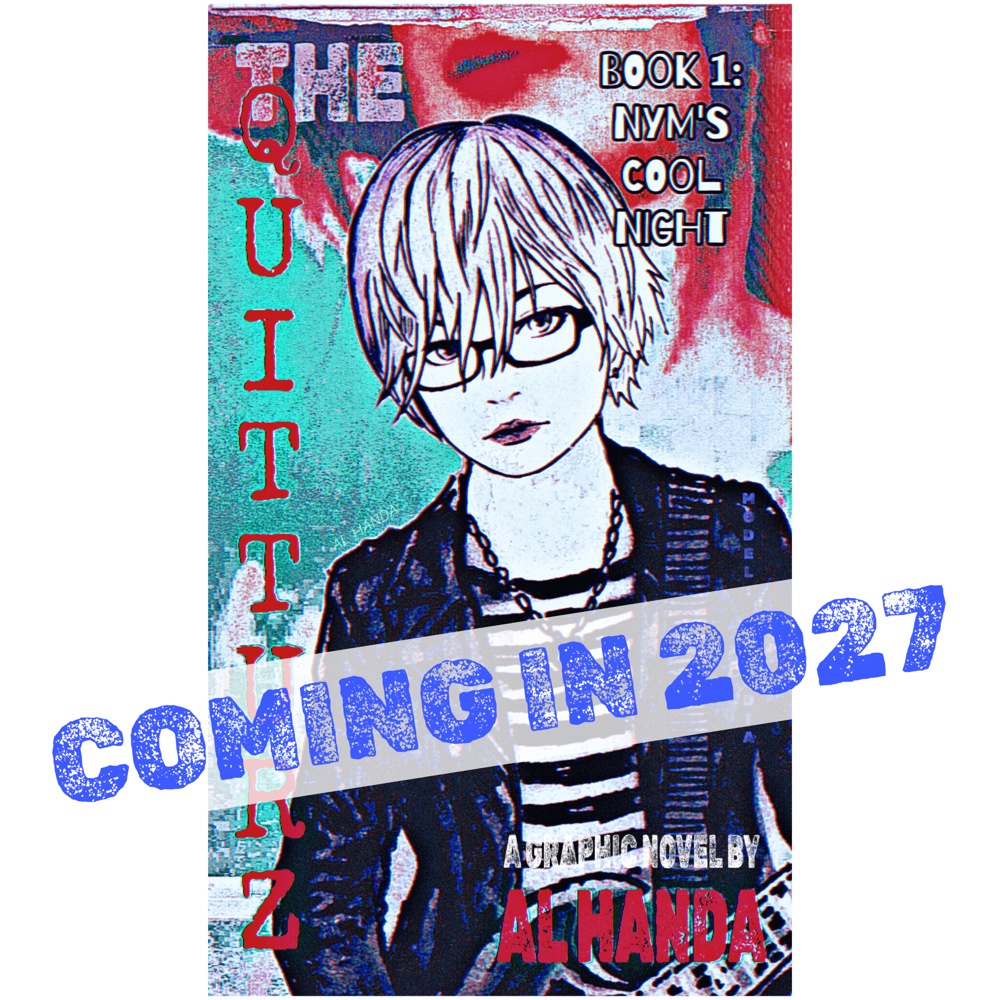
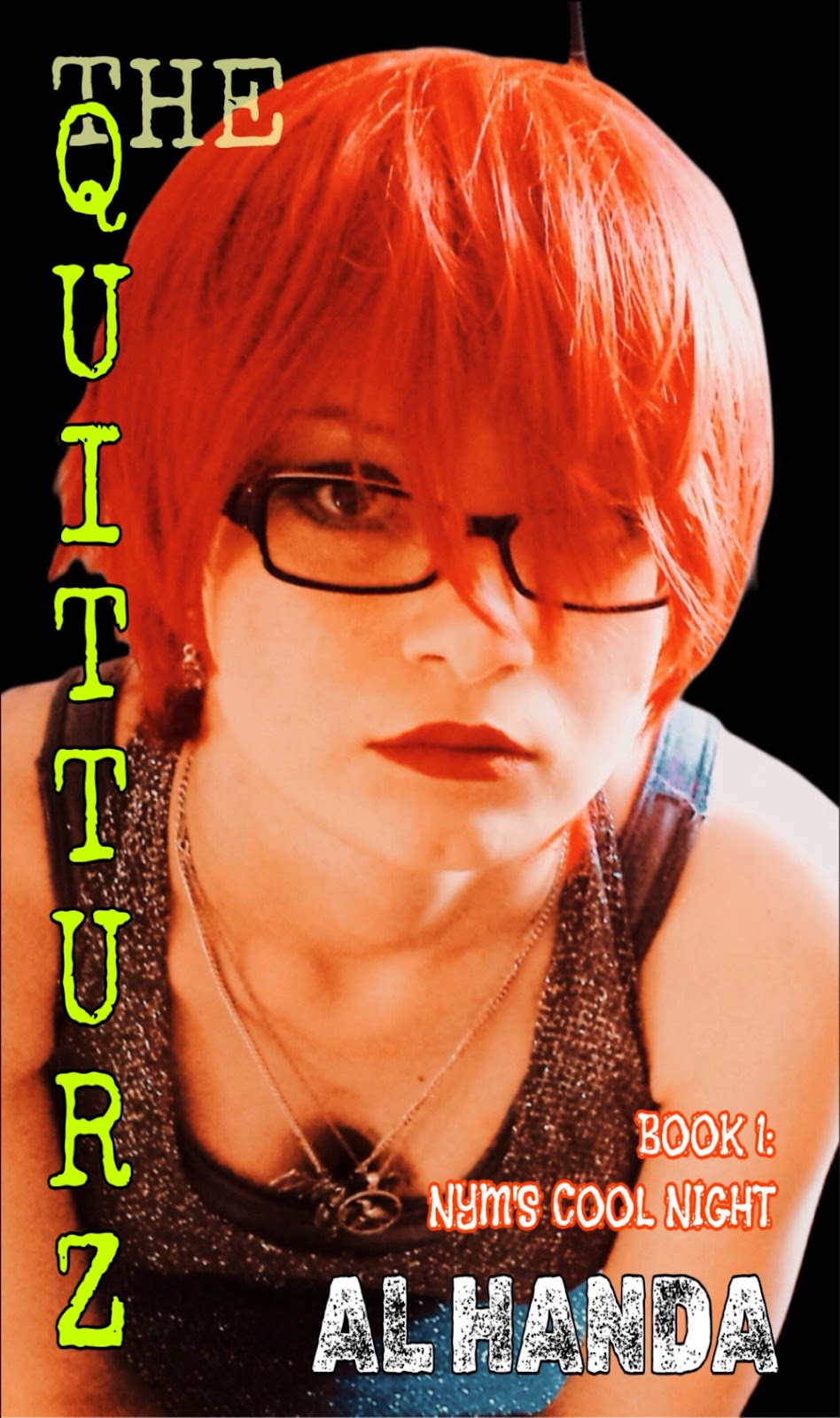
The Web comic is coming along. I've redone parts of the first 26 panels, mainly to improve continuity with the first Kindle novel cover, which features the model Klaudia. I want the graphic novel version to be a continuation of the first book, even if I have done the usual “Hollywood” thing and butchered parts of my own novel in order to avoid making the story too predictable for anyone who’s read the original book.
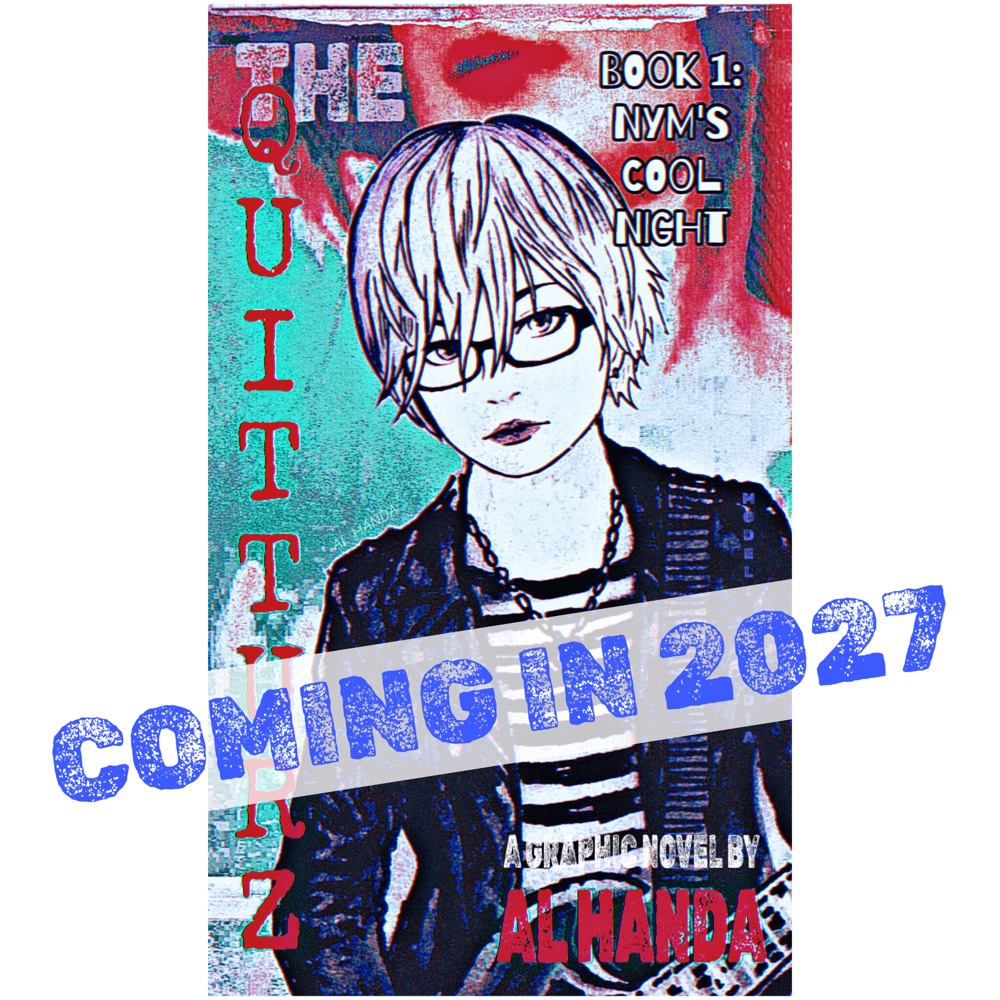
As you can see from the final webcomic cover, the main character looks the same as on the cover of the first novel. The two ebooks will have the same title, with one identified as a graphic novel. The reason is that the first part of the webcomic is going to reprise parts of the first book for continuity before moving into the 80s.
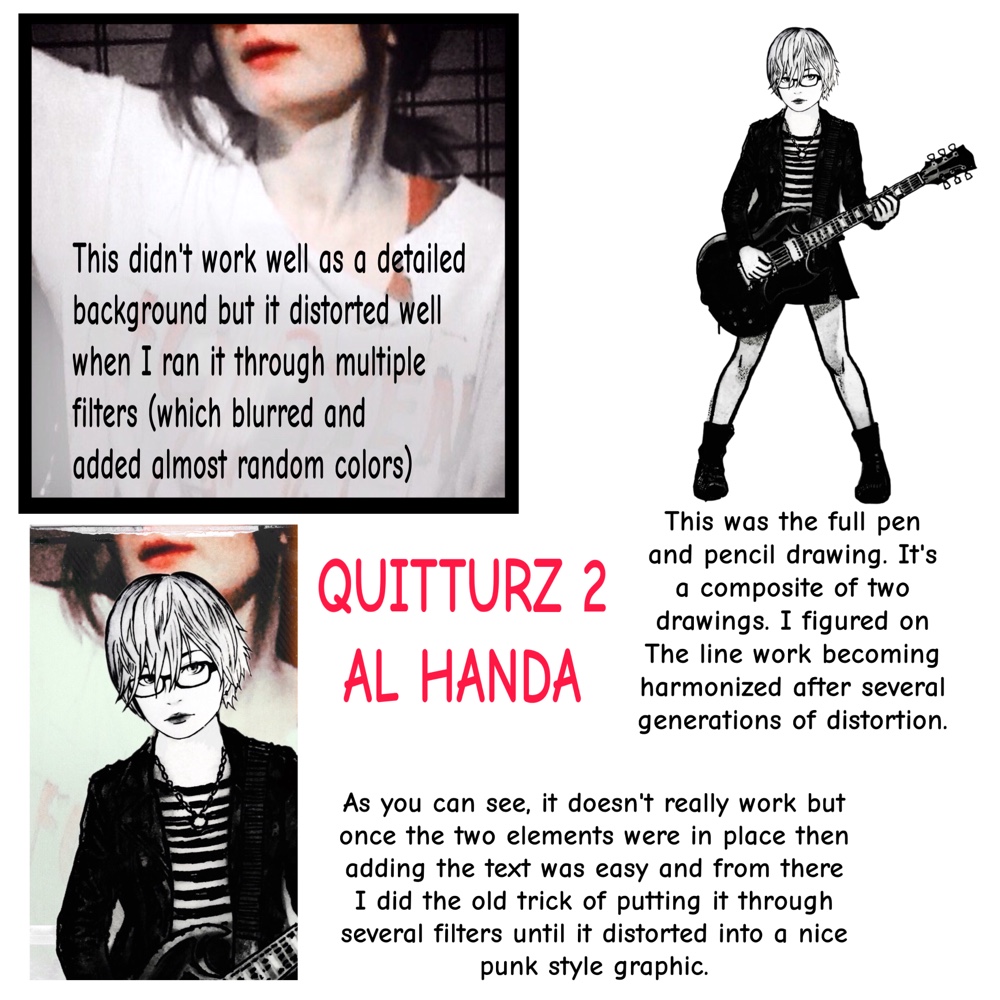
The construction of the cover is a pen and pencil drawing based on the Klaudia photo from the novel. I drew a full pose in case I wanted to use it again. The pieces were put on a sample sheet with comments like with the sample poster project, which is on the back burner until I’ve figured out whether I want the illustration to show the Quitturz headlining.
I'm planning to drop a week's worth of panels (or so) as a starter and then publish two or three times a week after. I’ll keep three weeks ahead of time, but don’t necessarily want to build up two or three months worth like they recommend on some sites. I’m doing this because I enjoyed doing serial fiction on Kindle Vella, so I want to enjoy the flexibility to evolve the plot on the fly in front of an audience.
True Godfathers of Punk: Punk Rock Short Takes
The short takes will cover a wider range because the Quitturz 2 graphic novel will also cover the 80s.
Punk is often about immortal moments and short statements that say it all. So, some of the series will be succinct short takes without filler or slop.
Dez Paul Cadena
This punk guitarist/vocalist was with Black Flag 1980-1983, Misfits 2001-2015, guest appearances or contributor with Redd Kross and Husker Du (Zen Arcade album) and recently with Jon Caspi and the First Gun.
What makes him a true godfather is his 1980 vocals with Black Flag, a combination of jock shout, hoarse blast and one of the funniest exaggerated punk voices to ever record that influenced later hard-core singers. His vocals in "Police Story" and "Six Pack" made him an 80s archetype and inspiration to all singers who only have a super loud-off knob.
Husker Du "Zen Arcade"
An early example of 1984 hard-core punk with real range, from acoustic to flat out electric. Songs like "Something I Learned Today," the haunting acoustic "Never Talking To You Again" and the hypnotic Bo Diddley meets the electric drone of "Hare Krishna" made this a rare double album with no filler that transcended its genre to become a rock classic on many top 100 lists of all time great albums.
Mitch Easter
Mitch has always been a good artist and in particular did some good work with the “Let’s Active” group but it’s his work as the early producer for groups like R.E.M. and Game Theory that’ll cement his contribution to the “power pop” and “jangle pop” styles that was such a big part of the highly influential 80s college circuit. He produced albums like R.E.M.’s “Chronic Town” and Game Theory’s “Lolita Nation” that are still on my playlists in 2026. In fact his 1988 song, “Forty Years” is still on my own personal top 100 songs of all time.
Al Handa
Oct 17, 2026
#punk #newwave #postpunk #webcomic #AI #kindle #mitcheaster #huskerdu #blackflag #dezcadena #janglepop
 |
 |
 |

