The Delta Snake Review

The Delta Snake Review

Translate

Showing posts with label banjo. Show all posts

Saturday, May 11, 2024

Review: Rogue Starter/Travel Banjo (synthetic rim model)

Review: Rogue Starter/Travel Banjo (synthetic rim model)

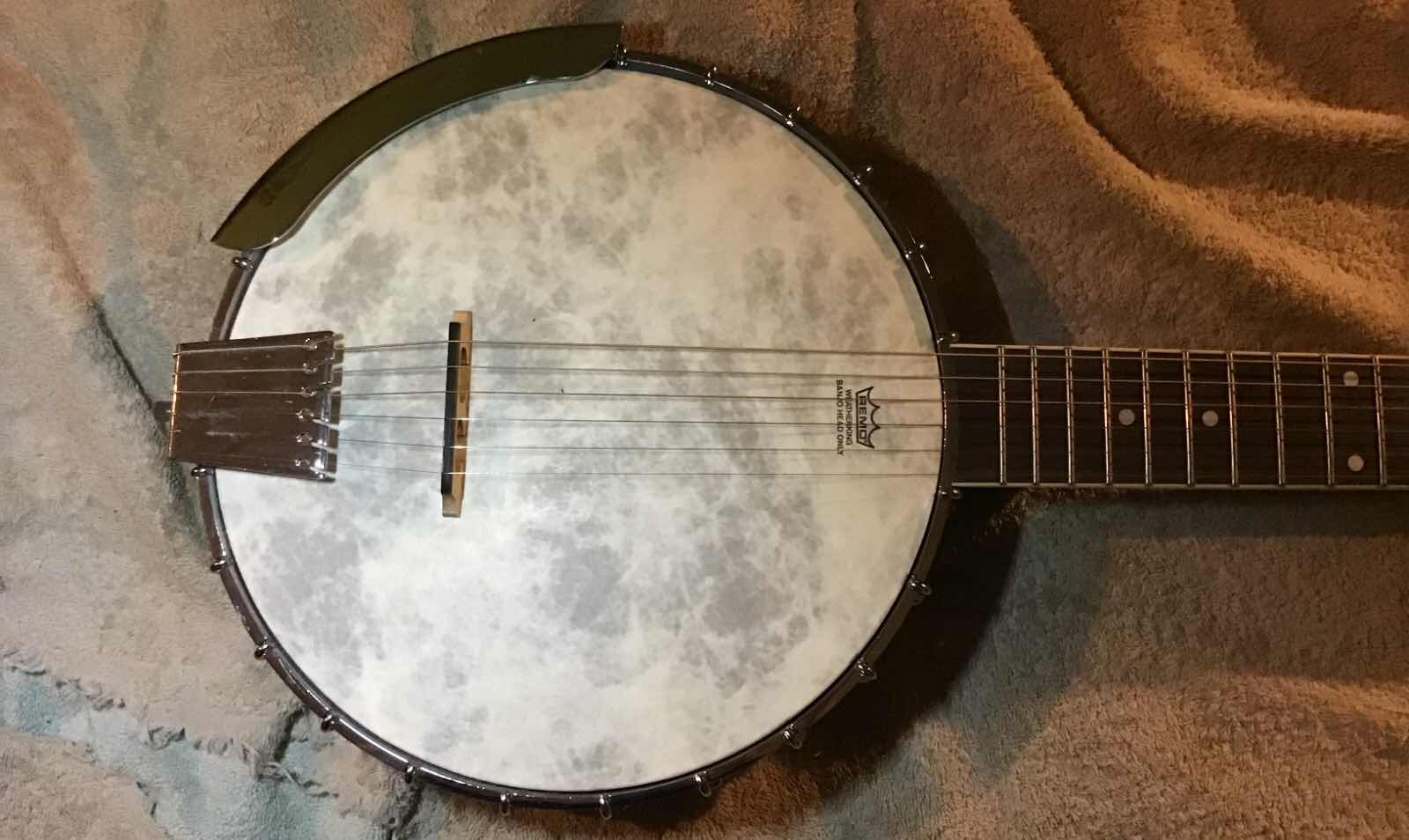
The Rogue Starter/Travel banjo is a product of an interesting company called Saga. Their specialty is inexpensive, but nice instruments under the logos of old-time brands like Regal. The Rogue brand covers more standard instruments like guitars and banjos (the Regal brand covers resonators, etc).

What makes this particular model interesting is that it is a revival of an old type of Kay banjo that used a bakelite rim, and to this day is considered one of the few decent beginner banjos.

The history of beginner (and intermediate) banjos hasn't been a glorious one. The banjo is a simple instrument, and if it was manufactured on the same scale as guitars, the top-of-the-line ones would cost maybe 800.00. 

Unfortunately, the opposite is true. The types of inexpensive banjos varied, with the most common being the aluminum-rimmed type (the ones with square teeth along the edge, taking the place of the flange). Those were actually OK for the price, particularly for bluegrass models which had to be very loud. (I'm having to oversimplify a bit, as bluegrass banjos are another category separate from the type I'm reviewing).

Offsetting the economy of aluminum was a list of faults that included metallic sound, overly thin necks, cheap metal tailpieces (which affect the sound), cheap frets, lousy intonation, and lousy tuning pegs on guitar-style headstocks (to this day, still the mark of a cheaper banjo).

I should note that guitar headstocks are nothing to be embarrassed about. It's a fact that guitar-style pegs work just as well, but the old downward pegs are just more traditional and allow easier tuning changes during some bluegrass songs.

It's not that companies wanted to make lousy beginner banjos. It's just that making one in the 200.00-300.00 range was difficult, even for the Japanese and Koreans.

The best beginner banjos tended to be the “open back” type, without the sound chamber (resonator) attached. Simpler, and the sound was different. Most used these for folk and mountain music, which needed a lighter, more “plunkier” sound.

One of the best of these was the old Kay bakelite, which instead of a wood rim, used one of the then-new synthetics. It did chip easily, but oddly enough, it was a superior material to aluminum and cheaper wood rims (or pots). To this day, a Kay bakelite banjo is very collectible.

The Rogue is a refined version. It uses a more modern plastic synthetic, which is more crack and chip-resistant and has better metal hardware. Obviously, the rim is less prone to warping due to moisture, etc.

The sound is similar. Using light gauge strings, the sound is feathery light and has a nice plunky tone. Tighten up the head, and the sound will sharpen a bit, and still keep that quality. It's also very light and easy to hold, and thus very easy to play. Children and small men and women will find this a perfect fit.

Like most cheapies, intonation is the main flaw. If the action is set right on this one (for a banjo, a bit on the high side) then you'll have a good tone up to around the 12th fret, which isn't bad. As you go higher up some notes are good, some are a bit off. When you get good enough to be able to adjust your bridge, you can minimize intonation problems later, but it won't ever be as good as a 1200.00 model.

I should also note, that for old-time banjo styles like clawhammer, you'll rarely need to go racing up the neck anyway.

For around 160.00 you get a banjo highly suitable for learning, which will sound as good later as you learn to play better. It's eminently suitable for mountain styles like clawhammer or frailing style (whose practitioners prefer cheap banjos) and for use later on as a travel type. If the dealer is an honest one, then you'll get the free gig bag also, and it's a nice one.

A few years ago, the Deering Goodtime banjo made the beginner category competitive again and still is a standard at around 320.00. However, the competition has caught up, and Epiphone, Fender, Rogue, Washburn, and others have very good, and often cheaper offerings.

If your need is a banjo with a nice sound suitable for solo work and learning, that will double as a travel banjo later on, the Rogue is as good as you'll find. With its revival of the old Kay bakelite style banjo, heck, it's even got some snob value.

- Al Handa
  2006

Note: This review first appeared on the ePinions.com site in 2006. This and other reviews were short takes that accompanied the link to a business that sold the guitar. As a rule, the guitar had to be at least examined and played by the reviewer (and ideally owned). In my case, a severe case of GAS made it possible to have at least owned the reviewed instrument for a short while. I'm reprinting these as having another source on a guitar never hurts, even if the reviews aren't definitive. Other than minor corrections, these short takes are unchanged from the original text. I figure that it might be helpful to keep the older perspective.


Please check out and listen to my music on Spotify, YouTube, Apple Music and other music sites. Please add any cuts you like to your playlists!


Podcast Episode 3 now live on Spotify and Apple. 


https://podcasters.spotify.com/pod/show/alhanda/episodes/On-The-Road-With-Al--Ivy-Episode-3-e2k5k0q

Topics:

The Godfather by Mario Puzo, Three Musketeers by Dumas, and the Robin Hood myth.

Some thoughts on Travels With Charley by John Steinbeck, On The Road by Kerouac Scroll Version, and The Road by Jack London.

Music:

My Dog Dreams And Becomes A Mermaid Techno Mix, Sunday's Moon and Nigel Raga by Handa-McGraw International.

Taylor's Blues by Mark McGraw


 Also by Al Handa:


Thursday, April 4, 2024

Review: 2013 Gretsch G9470 Clarophone Banjo Ukelele

 Review: 2013 Gretsch G9470 Clarophone Banjo Ukelele

The Gretsch G9470 Clarophone Banjo ukelele is part of the company's Roots Collection, which is a low to mid-priced line that replicates the feel of their old vintage models. In this case with styling that hails back to the 20s and earlier.

The current popularity of ukuleles hasn't included this type, which remains more of a rarity or specialty instrument, though this style has always been around. The main reason is that banjos are viewed as archaic now, and a uke version more so.

It's been said that music is really a cycle where things tend to come back around, perhaps changed by technology. Ukeleles were once popular in pop music in the 20s and 30s, and so its current resurgence isn't really a big surprise.

Another good example is the 12-string guitar, which until Leadbelly and Pete Seeger popularized it again, was considered to be an instrument that was dying out. All it takes is a new generation to discover an instrument for it to come back. In the case of this Gretsch, it probably won't be the next big thing, but these things will never go away either. Vintage banjo ukes remain one of the few bargains in rare instrument market, and the newer models remain small, but steady sellers.

Banjo ukes had their day back in the 1800s when the banjo was still one of the most common instruments. Back then, it wasn't unusual to have banjo orchestras, with types of banjos that no longer exist today (same with mandolins), and in a small ensemble, this type was probably used as a “voice” or part of the overall show.

Banjo ukes can vary a great deal in sound, but it does have the recognizable plunk of its big brother. It's sharper sound also makes it very suitable for solo work and single note solos that can cut through a group of instruments better than a regular ukulele can.

The Gretsch was made with volume in mind, with a maple plywood rim and maple neck. The sharpness of the wood is offset by the use of a more expensive Fiber Skin head which will tend to produce a more plunky tone. The rim also has 12 brackets, which is a nice amount which will give the player a lot of control over the head tightness, and thus the tone.

That control has it's downside, which is that if you don't know how to adjust a banjo head (or be able to recognize if one is out of adjustment) then a first look at the uke can produce a negative impression. The one I tried out was adjusted right, so the tone was bright and clear. By the same token, I've tried banjos, for example, that had a loose head that sounded dull and echoed. Anyone trying out this instrument will have to take that into account.

The problem is that if the head is adjusted wrong, it probably won't be corrected in the store. If it sounds dull and too plunky, buying it with the idea that you'll adjust the head later can literally be an act of faith. When trying out any banjo uke, if it sounds bad to your ears in the store, walk away if the store won't or can't adjust it.

The basic idea is that when buying any instrument, the sound you hear is the sound you should buy. That's why so many guitarists who buy guitars with the intention of changing the pickups end up in an endless cycle of trying out new configurations. You could buy the uke (or banjo) and adjust the head and find that it’s still a poor sounding instrument.

I wouldn't dwell on this in a review except that the one flaw I've found in the Gretsch Roots collection instruments is that many of the ones I've tried out were poorly adjusted, particularly the banjos.

The best way to test the Gretsch Clarophone is to try it out along with regular ukes to see which sound you like the best. It won't be as resonant and sweet, but you might find that it has a great sound for use in folk, blues, and some types of jazz. Whether it comes off as a novelty instrument will depend on how you use it.

Most “novelty” instruments are used to play silly or humorous songs, but both the regular and banjo ukes have a real and legitimate musical history, and both have a sound well suited to playing good music.

The final consideration is the brackets along the rim. Some might find that those will poke and stick on clothing, particularly with T-shirts at the beach. Also, after about a couple to a few weeks, your ears will become good enough that you'll want to adjust the head to a sound that's more to your liking. For a casual player, that might be more thinking than you'll want to do with a pleasure instrument.

I found the Gretsch Clarophone a nice entry in the banjo uke market. In fact, I liked it better than some that were more elaborate in construction due to its vintage wood styling. It's plunkier tone is not as suited to jazzier numbers, but it has a solid mojo for folk and blues type numbers. Personally, I like these things better than regular ukuleles.

The construction is very good, with 12 brackets, good styling and competent tuners on a good playing neck. It's small, but it's clearly not a toy. Obviously, it can be a nice travel instrument and some of the sounds it can create recall the old vintage banjos of the 20s, when gut strings were in use. 

Another good point about banjo ukes. It's a try before you buy instrument, particularly if you're looking for an entry into the world of playing music. One advantage of a banjo uke has is that it's always been easier to make a good quality banjo type instrument than a guitar type (like the uke), and for this price, you may find that the sound and quality are better than regular ukes in this price range. Plus, ukes have been around long enough that price has come into the equation, and like guitars, you'll get a lot of advice to buy expensive ones (and a little contempt on the internet for the cheaper models).

The Gretsch Clarophone is what it is, and it's a decision between your ears and the banjo uke without a lot of experts (both real and imagined) telling you what's good or bad. Take it from a guy who prefers banjos to acoustic guitars, there's a ton of ukelele players out there, but with this Gretsch you can walk out of the store as one of a kind.


- Al Handa 

  2013

Note: This review first appeared on the ePinions.com site in 2013. This and other reviews were short takes that accompanied the link to a business that sold the guitar. As a rule, the guitar had to be at least examined and played by the reviewer (and ideally owned). In my case, a severe case of GAS made it possible to have at least owned the reviewed instrument for a short while. I'm reprinting these as having another source on a guitar never hurts, even if the reviews aren't definitive. Other than minor corrections, these short takes are unchanged from the original text. I figure that it might be helpful to keep the older perspective.


The Quitturz by Al Handa


AVAILABLE ON KINDLE UNLIMTED


AVAILABLE ON KINDLE UNLIMTED


Here's info on some of my Vella books:


The Quitturz (title not changed on ad yet)


https://www.amazon.com/kindle-vella/story/B09PC3L6PC


I, Ivy


 https://www.amazon.com/kindle-vella/story/B0B3RCBT4D


The Forbidden Lost Gospels Of Murgatroyde


 https://www.amazon.com/kindle-vella/story/B0BJ2TW4P1


The Boogie Underground Think Tank: How To Survive The End Of Civilization


 https://www.amazon.com/kindle-vella/story/B0BG6LNXTG


The Adventures Of Queen Khleopahtra: Ruler Of Egypt, Time Traveler, and Literary Detective


 https://www.amazon.com/kindle-vella/story/B0BJC122G7


Please check out and listen to my music on Spotify, YouTube, Apple Music and other music sites. Please add any cuts you like to your playlists!


Thursday, March 14, 2024

Review: THE WASHBURN BA-6 SIX STRING BANJO


Note on picture: I have the truss rod cover off to do some adjustments to the neck.

GEAR REVIEW: THE WASHBURN BA-6 SIX STRING BANJO

Six-string banjos have been around since the 19th Century. One of the most popular bluesmen of the 1920s, Papa Charlie Jackson, played one. 

The older name for a six-string banjo was "banjitar" or "ganjo" The closest modern equivalent is the four-string type mainly used in old-style jazz or Celtic folk.

The four-string was a familiar rhythm instrument in 20s jazz because it could play chords, and most importantly, it was loud enough to be heard in an age without electric amplifiers.

The banjo, along with the fiddle, was once the primary African-American instrument and used in "string bands," which were the early precursor to what is now called bluegrass or old-timey music.

The six-string version has become more popular in the last few years and there's now a wide range of models in every price range, but in the 70s and 80s, an inexpensive one made by Dean was the most commonly used.

I played five strings back then, so it seemed like a way to add more range to my sound, but the main problem with the Dean was that it was considered a banjo for guitar players who wanted to add that sound to their palette, so to speak, and built cheaply to be cheap.

In other words, it was inexpensive and did the job, but it didn't sound very good to a banjo player.


If you want a decent banjo sound, it's best to invest the time to learn the five-string, or if you want that "plectrum sound," an inexpensive vintage four-string can be easily found on the used market. 

The main advantage of the Washburn six is that guitar players don't need to relearn anything. They can use the same chords and get a banjo-like sound. The Dean was good as an extra instrument that could add some range to a guitarist's sound and if bought used, an inexpensive alternative. 

Higher-grade models were available from other companies, but none were big sellers.

The six-string banjo made a comeback in the last few years due to a couple of factors. One was that musical celebrities like Keith Urban, Taylor Swift, John Fogerty, and Taj Mahal started playing the type. People do buy what celebrities use (see yellow foil pickups and cheap Silverstone guitars).

Also, the banjo market became competitive as almost every known manufacturer entered the market. Like guitars, they entered a Golden Age where decent quality could be available at every price range.

In other words, no one is letting anyone else control the market; if six-string banjos become relatively popular, other manufacturers will jump in and offer their own models (or rebranded units made to spec from overseas factories).

All this hasn't changed the primary use of the model; it's still basically an auxiliary instrument to add range to repertoires, and it's generally played with a pick (plectrum style).

I got a Washburn BA-6 for Christmas a couple of years back and was surprised at the price and quality. My only other experience was with the Dean back in the 80s, which was competent but not outstanding.

The first thing I noticed was the BA-6 had a mahogany rim and neck, which tends to have a warmer sound than maple. That's better for someone using a guitar pick, and that's my preferred wood for a five-string.

I've previously owned Washburn guitars and banjos and have always liked the brand. It's a company that's made acoustic instruments for a long time, and the quality shows even in their import models.


There are two sets of players who'd be curious about this model; banjo and guitar players. As a rule, both have different views because the two instruments are played differently. For example, even the four-string banjo has different fingering for the basic chords.

The BA-6 is around 460.00 without a case, which is a fairly significant investment for an extra instrument that may not be used much.

For a banjo player, that fifth-string drone isn't there; you'll be playing bass strings instead with your thumb; without a thumb pick, the sound can get muddy. Also, the stock guitar strings aren't very suitable for fingerstyle, and in my case, I restrung it with a mixed set to create a very light group that works well for fingerstyle (on a banjo).

For guitar players, the modern profile neck will make them feel right at home. It's well made, and after setup will play as well as a guitar.


Note: The double coordinator rods attach the neck to the rim

Uh, the setup. That's where a guitar player will have to take a little time to learn about their new banjo because, after all is said and done, it's still a banjo.

Of course, you can adjust the neck with the truss rod, but the neck angle is adjusted by the coordinator rods under the head. That sets the basic string height along with the wood bridge, and after that, the sound is fine-tuned by adjusting the 24 brackets (it's tuned like a snare drum) to get the desired tension on the head.

Also, ensure the bridge is in the correct position, height, and angle for intonation and that the tailpiece is adjusted correctly.

If that paragraph sounds confusing, then make sure the banjo is set up by a tech that understands banjos.

There's another important decision; the string height affects tone; the lower the action, the less volume and tone. If you're used to an electric guitar, the action on a banjo can feel higher than on an acoustic guitar. However, using a pick adds volume, so adjust to what you want and work on the tone.

My point isn't to confuse or throw out a lot of jargon. Just understand that a banjo is a pro-level instrument that takes an investment of time to learn.

The plus side; all that means you have great control over the sound of even the cheapest banjo. I haven't even mentioned the types of heads you can use on the rim, tone rings, bridge woods, tailpiece types, etc.

In the case of the BA-6, you have a Remo Weatherking head optimized for bluegrass, which is good for country-type music on a six-string. In simple terms, it's a brighter-sounding head. You might consider adding a metal pick or finger picks to your collection to get even more twang.

Since I wanted more of a traditional banjo sound, I used the four main strings from a .009 banjo set and added a light .024 and .036. First, start with the stock guitar string set, see what you think, and then make changes.

When I first got it, I went ahead and restrung it like a 5 string and it sounded fine. So that told me that this was a fundamentally good banjo, but I found that it has better potential as a six.

I like the neck. It's very playable, and guitar players will have no problem transitioning. In addition, it compares well to any guitar in that price range.

This Washburn BA-6 isn't a casual instrument. It's priced too high for that. Instead, it's a serious instrument; it doesn't have the faults of the inexpensive ones of the 80s and will respond to the care and preparation put into it. 

Don't buy it out of curiosity; research it, and if your aims are casual, consider buying a used, inexpensive five-string and learning the basic chords.

I've played the banjo all my life and found that this one gets as much playing time as any of my other instruments. I had to learn to respect it, but once I did, it's adding a lot to my sound and there's still a lot of potential there. 

- Al Handa
  December 2022

If you're interested, I have some banjo numbers on my Electric Fog Factory YouTube channel.


Please check out and listen to my music on Spotify, YouTube, Apple Music and other music sites. Please add any cuts you like to your playlists!

Tuesday, February 10, 2015

The True Path For Beginner Banjo Players

I'm not going to claim that this is a concise guide, or even a coherent one. This is simply advice from a person who's played banjo for over 30 years and has probably made every mistake a beginner could ever make on buying the instrument.

I did quite a few banjo reviews on ePinions.com before it went under, and generally concentrated on the low end and mid-priced banjos. The main reason was because I found myself often disagreeing with a lot of the advice I read on the Internet on various banjo sites and forums.

For one thing, there's opinions that were written years ago and don't reflect the market today. Particularly with prices on vintage banjos, that sort of information goes out of date within a year.

Also, the market has become very competitive. Companies have gotten into every price level, so the amount of choice can start getting confusing to a beginner. Which is good, you can shop by budget now, not by what you need to spend to get a decent, playable banjo.

I'm going to do this particular blog entry from the top down. I'm going to give you advice first, then ramble on about the various reasons after.

Rule number one, the sacred first step:

Never simply buy the best banjo you can afford. 

That's one of the most common statements you'll see from "experts" and other cork sniffing types, particularly in America where money and brand seems to be the apparent true mark of quality.

If all you can afford is a $600 banjo, then the assumption that you'll play that banjo, sell it, and then upgrade to a expensive type simply isn't going to happen for the overwhelming majority of banjo players.

In actual fact, the first banjo you buy, if it's in the mid-range price bracket, is the one you'll probably end up with, or that's the price bracket your next banjo will be or only slightly higher.

If you're somebody who can afford a premium banjo, which tends to be over $1000, and the last thing you should do if undecided on whether you really will like playing is to buy a high-end one.

The main reason is it's not entirely certain you're going to get your money back if you decide to sell it. It's not like a guitar, where there's millions of guitar players. There's less banjo players, and there's even less banjo players who will pay a premium price for a used one, and many of the ones that do will mainly go for vintage ones.

So whether you're rich or poor, and in my eyes both are equal in terms of banjo playing, that is to say, both deserve to enjoy the pleasure of playing one, the first step is the most important.

Which is to buy a banjo that's inexpensive enough that you can get most of your money back (an inexpensive banjo is like a pickup truck, you can always find a buyer), and that it fits the style of music you want to play.

Rule number two, don't just go buy a banjo, no matter how much advice you got first:

The first thing you should do is think about what kind of music you want to play. If you don't know, then go on Spotify or YOUTUBE and listen to all the banjo music you can. You'll find it there's a variety of banjo styles, the most popular being Bluegrass, and folk/old time/claw hammer being the second.

You can ignore this advice if you already are a fan of a particular genre of banjo playing, but anyone else should not only listen to the various types of banjo music, but listen to a lot of it over a period of time. What sounds good at first can start to sound a little boring if you've heard 100 more of the same type of song.

The reason is simple. If you want to become a Bluegrass player, then your first banjo should be of a Bluegrass type, which in this era can be bought at every price level.

Buying what everyone tells you is the best beginner banjo can possibly stick you with the wrong kind with the wrong sound.

Rule number 3, buy the correct type banjo for the music you want to play at the best value (cheap as possible) that feels easy to play:

I'll use Bluegrass or resonator style banjos as my example.

The first priority is to get a banjo that feels comfortable, and feels easy to play (mainly the strings not being too high). By comfort I mean get one that's as light as possible so it's easy to hold and play.

That's why rule number one is so important. A first class professional bluegrass banjo will feel as heavy as a bowling ball due to it's construction. There's reasons for that, but listing those out isn't important at this time.

Buying a used one at this stage may not always be the best thing to do. For one thing, the seller may be getting rid of the banjo because it was poorly set up and hard to play. 

It can be an excellent way to get a better quality banjo if you know what you're doing, or have a friend who can help you on this who has experience with banjos.

Unfortunately a lot of the big music stores don't carry a large selection of banjos, but this can work in your favor. Most will carry a small selection of beginner and intermediate banjos, which is what you're looking for anyway, and unlike buying online you can actually hold and play the instrument.

Rule number 4: never buy a banjo that needs a "set up."

You'll often hear this advice on the Internet, to buy a particular banjo and then go have it set up by a professional. 

That's extra cost. 

If you're like me, you basically want to pay one price for the instrument.

If the banjo you're trying out in the store feels hard to play, the strings are too high, the head is adjusted incorrectly so it sounds lousy, then resist the temptation to buy it and have it fixed. Just walk away and try another, or go to another store that cares enough to sell instruments that are ready to play.

If you're talking about guitars this advice is easy, with banjos I know that's not so easy. 

In fact, your only option may be the Internet. In which case don't simply buy from the biggest sellers, which I won't name, but check out the various websites and you'll find that there's more than a few companies that sell banjos online and make it a point to specify that the instrument you're getting has been set up correctly first.

It doesn't matter what the price is, the product should always be a playable instrument.

You'll hear advice on the Internet that banjos need to be at a certain price range to be playable, but that's not true. I've played $150 Epiphone beginner banjos that from a playing standpoint were better than some of the thousand dollar ones I've tried.

Even with the so-called superior US-made instruments, the quality and playability of each can vary from instrument to instrument.

There's also an important point to cover for those who want to start off with a bluegrass banjo. Most of the very inexpensive Bluegrass banjos will have the 70s Japanese style aluminum rims.

That type of banjo in the 70s had a very bad reputation, though most books I've read on the subject say that the rim itself wasn't the problem. In fact, the aluminum rim is probably the best combination of performance at a cheap price. The problem was those banjos had terrible necks, tuning pegs, hardware, and weren't or couldn't be adjusted to sound good.

That's why if you look at banjos on the Internet, quite a few of the inexpensive bluegrass banjo still use aluminum rims. For economy models, it's still a good rim design.

That type of banjo may draw derisive remarks from the snobbier set, and you may find that you prefer to get something a little more expensive, but if you play one that feels good and you like the sound, then by all means get it. 

Like I said earlier, the cheaper banjos are easier to sell later on if you decide you don't want to play banjo anymore or upgrade.

If you're willing to start at the 250.00 point range and go upwards, you can get a bluegrass banjo that's fairly accurate in terms of its construction (wood rim, tone ring, etc), like from Fender.

Another thing to note, if you find that you're going to play claw hammer style banjo, then you'll find that just about any banjo will work even if it's a little crummy. That's because old time banjo sounds better with higher strings and most of the melodies are in tunings designed to mainly play in the first position of the banjo.

Just remember, make sure it's a banjo that feels right from the start. Nothing else is important at this stage. Later on your ears will be able to tell that it's time to get a better banjo, or maybe you'll find that it's perfectly fine for your needs.

Rule number 5: if the banjo you like is a type or brand it's heavily criticized on the Internet or forum that you participate in, choose the banjo, and change your banjo friends.

Even in the most critical forums infested with fans of a particular brand or cork sniffers, you'll find voices or even groups of voices that will always say trust your ears and will be more enthusiastic about the fact that you're starting to play banjo rather than what you're buying.

I'm lucky enough to live in an area where there's at least four good music shops and two of them are excellent at selling acoustic instruments.

What I found in those two stores, is the attitude that playing the instrument is more important than what you're playing. Both are stores where I can walk in, tell them the price range, and they'll show me what they've got with a neutral attitude. Sure, they'll answer questions and give advice if you're asking, and like anyone else I often have questions about this or that banjo. 

But I've rarely heard the advice that what I'm considering is a piece of crap, and that I should buy one that is more expensive, etc.

I use banjos from a variety of price ranges, because I find certain ones work best for this or that type of song that I'm working on.

It is good to hear all the opinions on banjo, if you're researching a particular type you want to buy, particularly if your only option is the Internet. Personally, I like to read both the negative and the good because sometimes the criticisms are valid. 

The thing to keep in mind about advice and opinions about a banjo on the Internet, is that many of the people who give expert advice may or may not in fact be expert, may only be repeating stuff they read, the info is outdated and was posted years ago, and often from players who have no experience with the banjo they're criticizing.

Even if they do have experience with the banjo in question, what does it mean? A valuable but single opinion.

When I say experience with the banjo, I don't mean having played it for a few minutes in the store with all the noise and talking going on. When I try out a banjo in a store, I actually don't even play it for the first few minutes. I spend the first few minutes checking sound by just plucking the open strings and listening, playing notes one by one up the neck to check for intonation, etc, and if I don't like the tone and feel, I don't even bother playing it.

The fact is you may have to play a banjo for a week, or even a month really know it. After I change out a banjo head, for example, it can take more than a week of adjusting to get the sound right to my ears (that's just me though, others may find it easier or harder).

At the beginner or even some intermediate price ranges, your ears will eventually adjust to the banjo and you'll probably want a different or better tone. 

That's not something you're going to know right away. So the important thing is, make sure it feels good to play and the sound it makes is pleasing at the time, and always realize at this stage that your opinion is the most important.

Rule number 6: After the proper amount of research, deciding on how much to spend, filtering through all the advice, just go find that banjo and start playing.

In the 70s, it was much more important to research banjos and make sure you're getting the right one. For the simple reason there wasn't as many choices. Now just about every major manufacturer has a range of banjos on the market and the overall quality is generally very good.

The banjo started off as a very simple instrument, and basically still is. In the classic period of the 20s and 30s, the difference between a cheap banjo and expensive banjo was often the cosmetics. The company often used the same banjo model, or one that was very close, and simply added all the ornate decoration to make it a premium banjo. 

That's why so many of the old plain banjos, if in good playing condition, are often as good as the more expensive model from that era.

In other words, once you get past a certain price, which in America's about $1000, the actual amount of quality you get for the money starts to go down and becomes a case of diminishing returns. After you get past a certain price point, which are really getting is just a prettier banjo.

I've found that quite a few of the inexpensive or moderately priced banjo models are quite good, and if you're not going to become a professional or anything, will often do just fine as your only banjo.

The fact is that how good a banjo sounds follows the same rules as any other musical instrument. It's only going to sound as good as you make it.

But that's the beauty of music, after you've gotten past the point of worrying about the price and purchase of the banjo, the enjoyment and everything else you get from the instrument is free.

- Al Handa


AVAILABLE ON ALL MUSIC SITES


Please check out and listen to my music on Spotify, YouTube, Apple Music and other music sites. Please add any cuts you like to your playlists!


Sunday, May 11, 2014

Epinions Guitar Reviews and my life as " Ahand"

I did guitar and other instrument reviews for the Epinions site for several years. 223 to be exact, under the handle "Ahand."

The site is still there, but it's owner eBay, has more or less turned it into sort of mundane searchable catalog. Also the thousands of reviews that the members did and were paid royalties for are now just simply treated as consumer reviews like on Amazon and other sites.

All the writers were given the option to download their work, to keep and do what they liked with it, but the material was also left on the site for free use by eBay.

This isn't going to be an editorial about eBay's business practices, but since at least at the moment my reviewer page is still up, I thought I'd give you the link so you can go back and take a look at the variety of reviews that were written.

If you're in the guitars of all types, banjos, mandolins, and even ukuleles, you might find some of the reviews interesting reading. I always tried to put a paragraph of two of useful information into each review and not just talk about the product.

Ahand reviews on ePinions: