
The Delta Snake Review

The Delta Snake Review

Translate

Showing posts with label mandolin. Show all posts

Sunday, July 12, 2026

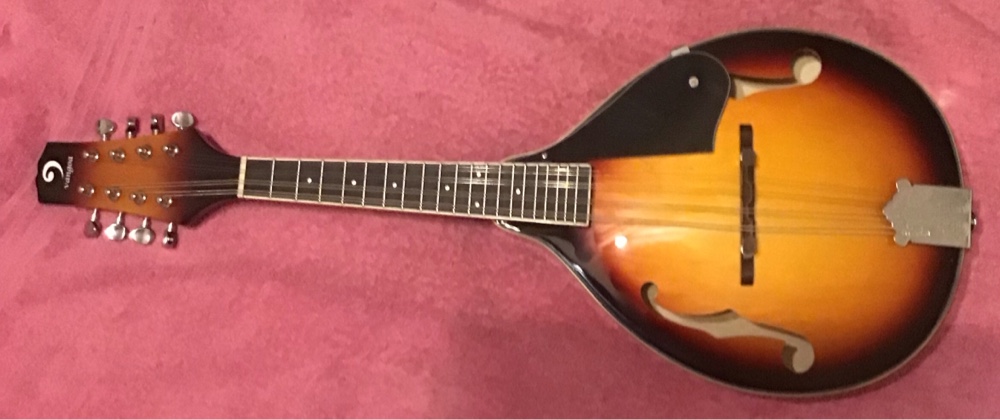
Review: 2025 Vangoa A Style Mandolin (sunburst)


2025 Vangoa A Style Mandolin (sunburst)


When guitar players on the internet talk about the resale value of instruments, one thing that's not mentioned as much is that, in my experience, the easiest instrument to get and then trade off or sell are inexpensive banjos and mandolins. 


I think one reason is because they make perfect second instruments and a lot of guitarists are always looking for an instrument that they can apply their string instrument skills to in order to diversify their sound. Mandolins in particular can be bought for as low as 60 bucks for one that can be actually played. That's not something I could have said about a cheap mandolin in the seventies.


That being said, I have to say that I've owned half a dozen in my life from a very inexpensive Rogue to a 1910 Gibson and some in between like the 1949 Martin. In most cases the mandolins were “A Style” of which there are a variety of shapes but generally have a round or oval hole as opposed to the type that have F holes like a violin and are especially popular for bluegrass.


The companies that make inexpensive banjos and mandolins sort of come and go and there's a lot of what they call “internet brands” that distribute primarily through online sites. Vangoa instruments are one of those that have become common and as a whole their reputation is very good. This brand could be said to be on the higher end of the low end, in other words not quite as cheap as, say an older Rogue at 60 bucks (though my estimate on that one is in 1990s dollars,) but not as good as an old Gold Star, etc.


I've said in other reviews that one reason why inexpensive instruments are so good these days is because companies have had over 50 years to perfect the manufacture of inexpensive instruments. Not much changes in the design so they basically do the same thing over and over again and successive companies do the same and certain economies come into place, like CNC machining, etc and so a $100 mandolin now would be probably much better than an equivalent back in the 80s.


I remember seeing a documentary on mountain music and one of the younger players was very proud of the fact that he had built his own mandolin out of maple and it was very obvious that he understood how to make that instrument because it looked perfect. He then played it and I guess unless you're a cork sniffer or expert on bluegrass, and can say otherwise, I have to say that he built a pretty nice mandolin and it sounded great.


That's why in the case of mandolins and banjos, I don't really get into a trip of telling people that they need to spend some minimum amount, the instruments are simpler to build than guitars. I should add that all instruments require good craftsmanship.


The reason I have a Vangoa A style in my collection is that it was given to me for Christmas. Gift instruments stay in my collection for a lot of reasons but most of all they tend to have great sentimental value and the people who bought the instruments took the trouble to research it and find the best value. 


This particular Vangoa costs about $140 and I don't know how it compares to other mandolins that are in the two to 300 range but it is certainly well made. In particular the action came only slightly high and I was able to bring it down by simply lowering the bridge a bit. So high marks to the company for making such a playable mandolin out of the box.


Those who have bought mandolins on the used market, particularly vintage ones, will know that finding a mandolin with excellent playing action isn't a given. The high tension of the strings alone can warp a neck within a few years.


If I were to describe the Vangoa sound, I would say it's a less refined open sound like the old Martin A. That being said, the Gibsons that I've owned in the past tended to have a smoother, richer sound, whereas the Martin reminded me of a small 12 string guitar, particularly because I play in drop tunings even on the mandolin.


I'm not that familiar with the mandolin in normal concert tuning, my preference is always to tune it to about the same tension I would a cuatro which is a 10-string instrument that's popular in the Latin American countries.


As far as those who might buy for bluegrass, which for an A style would probably be more in the realm of old timey or mountain music, they would be better off buying the type with F holes which has the type of sound and projection for that type of music.


While most Bluegrass players might prefer the f hole type, the A does have the requisites of a good mountain instrument which is a wider, richer tone and decent volume. The Vangoa projects very well and has a good decent tone. Sometimes with inexpensive mandolins you get one or the other but not both.


This review does require some description of specs and like a lot of economy mandolins are probably made of whatever the company can get a good price on but as a whole for the 2025 model, the A looks like it has a basswood body with a spruce top. The bridge is walnut and the tailpiece is competent, a more advanced player might prefer a better design but it's adequate.


One thing to remember when getting an inexpensive mandolin is that it's best to play it first because mandolins can develop bad action even in stores. There's not a lot you can do to adjust the action beyond some adjustment at the nut and bridge. If the neck has been pulled up from improper storage or not being sold for a long time in a regular guitar store, that's not something that's going to be fixed easily and certainly not worth repairing on an economy model like the Vangoa.


If you buy one online make sure it's from a company that has a good return policy like Guitar Center. The reason being is at this price range in particular, the neck that you play on is the one you're going to have to live with. 


However, my impression of the mandolin is positive; it seems as good as some mandolins I had in the 80s and 90s, for the reason, like I said, that a few decades down the line the manufacturers of these inexpensive versions have gotten better and better. Also many of these inexpensive instruments are made by companies that do a lot of subcontracting and as a result are quite competent.


If you look on the internet, on Amazon for instance, you can get a mandolin that's cheaper than the Vangoa and for someone who's using it as a second or third instrument it might be better just to spend less but if you do try this brand, my guess is you’ll like it. 


I should also note that this mandolin comes with a very nice gig bag and accessories.


What is definitely striking about these modern mandolins is that some of the problems that you would see in the '80s or even '90s aren't present in this new generation of inexpensive mandolins. So people have said that it's been a golden age for guitars and I think that applies to banjos and mandolins also.


Al Handa

July 12, 2026



Monday, April 1, 2024

Review: Gretsch Roots Collection G9300 Yorker Supreme Mandolin

 Gretsch Roots Collection G9300 Yorker Supreme Mandolin

One of the most interesting, and I would have to say, exciting new low-cost instrument lines is the Gretsch Roots Collection, a full range of acoustic instruments that will almost certainly end up in more than a few collections. Great vintage looks, almost all the money spent on wood and hardware instead of electronics and flash, and the company willing to put its brand on it (as opposed to giving it an economy line name).

In the case of the Yorker Supreme Mandolin, which has a release date of the 25th of February, some are already showing up in the larger Stores, which are giving this line prominence in the acoustic area.

The Yorker, a low-cost F-style mandolin is joining a very crowded field in the 239.00 range. You can get nice looking beginning mandos starting from 150.00 up, and in the Yorker's price range, many come with electronics.

The Gretsch isn't the only “vintage” looking one in the field, but it's natural mahogany finish does differentiate it from the competition. As a rule, manufacturers strive to make these look as nice as possible in terms of finishes, but Gretsch went the other way, and made it look sort of like an old 1920's Gibson Mandolin Junior, which still has a cult following in this country.

The Gibson was an oval sound-hole type, but the sound of the Gretsch is similar, if a bit sharper due to the F-holes, which probably wasn't an arbitrary design decision. F-hole mandos are the most common type for bluegrass and that's where the market is. That, along with the rock and folk guitarists who buy a cheap one just to add an extra dimension to their sound (an important submarket).

The all-mahogany construction does give it a darker sound, more vintage 40s and 50s than one with the more common spruce (or maple top) would. In the case of the beginner, this type of mandolin would be more forgiving in its tone, with its mellower sound smoothing out mistakes and less than confident fingering of notes.

Even nicer, the stock Grover pegs hold tune well and are a nice touch in one area where most cheap mandolins are weak. The rest of the materials are good enough, and the styling as far as an old-time look is concerned, first rate.

I personally found the Gretsch Yorker Supreme very likable. Its tone is more old time, yet it has a nice chop and cut sound for those who want to play bluegrass, and it's more to my taste. Keep in mind we're talking about a low-cost model, so my comments about the instrument are in comparison to its competition.

A nice amount of time spent playing it reveals that it's bluegrass sound is more along the lines of the older style of the 30s and 40s, and for the average beginner, will be more pleasing to the ears. The tone's a bit rounder than a normal F-Style might have, but you know, the one thing about music is that there aren't any hard and fast rules about which instrument does what best. 

Even if your preference is the next tier that starts around 500.00 (I know, they prefer to say 498.00), I would consider this model while trying out the costlier Epiphone or Fender spruce top types in that range. Decades of manufacturing in Asia have changed some of the older ideas about what is good or bad, and what used to be a nice cheapie to learn on can often turn out to be a nice keeper for someone who just wants to own one instrument and just have fun with it. Most buyers don't buy instruments as a first step in a constant upgrading process.

Although it's not as much a consideration at this price range, I would think about what kind of music you intend to play before buying a mandolin. These F-hole “A Style” body types are one of the standards for bluegrass and may not have the type of resonance one would want for Celtic or folk. I personally play an old oval hole Martin and have never really liked the F-hole mandolin, but I must admit, this one has me thinking that at this price range, a second one for a little variety might not be so bad.

The vast majority of classic blues, folk, bluegrass, and old-time music was created and recorded with inexpensive or home-made instruments. In other words, talent makes music, not instruments. With this well made and inexpensive Gretsch, you might have all the tools you need to make a few classics on your own.

- Al Handa

  2013

Note: This review first appeared on the ePinions.com site in 2013. This and other reviews were short takes that accompanied the link to a business that sold the guitar. As a rule, the guitar had to be at least examined and played by the reviewer (and ideally owned). In my case, a severe case of GAS made it possible to have at least owned the reviewed instrument for a short while. I'm reprinting these as having another source on a guitar never hurts, even if the reviews aren't definitive. Other than minor corrections, these short takes are unchanged from the original text. I figure that it might be helpful to keep the older perspective.


The Quitturz by Al Handa


AVAILABLE ON KINDLE UNLIMTED


AVAILABLE ON KINDLE UNLIMTED


Here's info on some of my Vella books:


The Quitturz (title not changed on ad yet)


https://www.amazon.com/kindle-vella/story/B09PC3L6PC


I, Ivy


 https://www.amazon.com/kindle-vella/story/B0B3RCBT4D


The Forbidden Lost Gospels Of Murgatroyde


 https://www.amazon.com/kindle-vella/story/B0BJ2TW4P1


The Boogie Underground Think Tank: How To Survive The End Of Civilization


 https://www.amazon.com/kindle-vella/story/B0BG6LNXTG


The Adventures Of Queen Khleopahtra: Ruler Of Egypt, Time Traveler, and Literary Detective


 https://www.amazon.com/kindle-vella/story/B0BJC122G7


Please check out and listen to my music on Spotify, YouTube, Apple Music and other music sites. Please add any cuts you like to your playlists!

Sunday, May 11, 2014

Epinions Guitar Reviews and my life as " Ahand"

I did guitar and other instrument reviews for the Epinions site for several years. 223 to be exact, under the handle "Ahand."

The site is still there, but it's owner eBay, has more or less turned it into sort of mundane searchable catalog. Also the thousands of reviews that the members did and were paid royalties for are now just simply treated as consumer reviews like on Amazon and other sites.

All the writers were given the option to download their work, to keep and do what they liked with it, but the material was also left on the site for free use by eBay.

This isn't going to be an editorial about eBay's business practices, but since at least at the moment my reviewer page is still up, I thought I'd give you the link so you can go back and take a look at the variety of reviews that were written.

If you're in the guitars of all types, banjos, mandolins, and even ukuleles, you might find some of the reviews interesting reading. I always tried to put a paragraph of two of useful information into each review and not just talk about the product.

Ahand reviews on ePinions: