 |
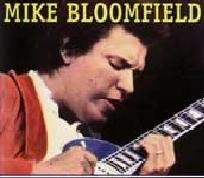
Classic Album Review: Mike Bloomfield “Greatest Hits” - 1996 (Classics 7609)
Reprinted from Delta Snake E-Zine Jan. 1996 Issue.
Note: in the 90s, many of Bloomfield’s Takoma and small label recordings were released and reissued to a sometimes mixed reaction. His fans enjoyed his work and others felt it was minor compared to his earlier work with Paul Butterfield, Bob Dylan and Electric Flag.
The Delta Snake E-zine in 1996 reviewed any Bloomfield album on its own merits. In this case, the reviewer, me, also used the opportunity to talk a bit about his earlier work to give this Takoma album some context. It’s reprinted here with minimal editing to retain its original tone and outlook.
I know there are more obvious choices for a “classic record” review, since this one is a midline reissue of one of his smaller label solo works, like on the Takoma label. However, these releases are not as well known as his historic work with the Paul Butterfield Blues Band, Bob Dylan, and Electric Flag, so this featured review may be of real interest to you.
The early parts of Bloomfield's career are pretty well known; two albums with the Butterfield Blues Band, a well received guest shot (one side) in Al Kooper's "Super Session" and "Live" records, session work with Bob Dylan (notably "Like A Rolling Stone"), and that great near-miss, the Electric Flag. During that time, he arguably became America's first rock "guitar hero," and was an inspiration to many a guitarist who later became famous in the 60's. To this day, he is an admired artist amongst players.
He was a superb technician, but the quality that made him such a legend was that passion and fire that was present in every solo. Each note, it seemed, was attacked and approached with the same care a singer would take with a vocal passage. He had that rare quality; a soloist one could both admire for his skills, and be awed by his intensity and passion.
This passion was fueled by uncompromising commitment and honesty. It's been written that Dylan, after the "Stone" sessions, offered him a gig with his band. Bloomfield turned down what probably would have made him a star on par with, say, Eric Clapton, for one simple reason; he wanted to just play the blues.
In 1973, he recorded a strong blues set with Dr. John and Nick Gravenites called "Triumvirate," after which his output became sporadic for a few years; a dry spell that continued until the time he came out with a record for Guitar Player Magazine in ‘76 titled, “If You Love These Blues, Play ‘Em As You Please.” The record was intended to be instructional, and even had spoken intro's to each song. Each song was a different style of blues, and covered a range that included 20's fingerpicking, to 50's Chicago. The record became very popular, and created renewed interest in his music. The playing was superb, and to this day is seen as one of his finest works, this writer included.
Bloomfield also began recording a series of solo albums for Takoma, the same label that John Fahey recorded on. Reviews were often mixed, mainly because the performances perhaps disappointed those who were expecting another "East-West" or Electric Flag. However, on the whole, most critics liked the more personal and intimate work he was now creating.
In interviews during that period, Bloomfield did make it clear that he had widened his explorations. Those Takoma releases now included some folk and country, and songs from the 20's that were obscure for various reasons, including some controversial lyrics (such as "Women Lovin' Each Other").
Also, his technical approach had changed somewhat. Bloomfield now often used his fingers instead of a pick, which gave him a tighter, funkier sound. The records now featured his singing, which was quite good from the start, and as time went on, often great. Overall, the music had a looser feel, more downhome and less intense in terms of rock dynamics. However, even the most casual listener would find that the guitar solos had merely changed context and feel. Mike's ability to grab your attention with just a few notes hadn't diminished a bit.
This is a reissue of one of those Takoma albums, the title of which, unfortunately, escapes me. The set is a combination of live and studio cuts, and was one of his best works. There is basically no documentation either, and the only reason I know it's from that era is that I recognize several of the songs.
The music begins with a loose version of "Hully Gully," which has a melody most fans of 50's music will recognize. This leads into the country-style "Wings Of An Angel," and Ernest Tubb's "Walking The Floor Over You," which is definitely country. Both of the country songs aren't done straight, of course, but have a definite blues feel, and feature some piano work by Mike. A laid back shuffle follows, "Junko Partner," which has a 20's jazz feel, and features a good vocal by Bloomfield.
A slow, but intense "Women Loving Each Other," ends the side. The song, which is about lesbianism, isn't actually very shocking by 90's standards, and the lyrics basically focus on the fact of it's existence, and not sensationalism. In fact, there's really no notable sense of judgement or opinion in the lyrics. What you will notice, however, is that the song features an excellent vocal performance by Mike, and that the guitar solo, which includes some slide, is as good as he's ever recorded. As it was picked with his fingers, the taut, tight notes will definitely appeal to those who like Albert Collin's music.
The set opens with a New Orleans style "Hully Gully," an arrangement with a pleasant looseness...a perfect bar blues. In sharp contrast, his guitar solo has a sharp attack, a good example of the better tone and feel he got playing with fingers instead of a pick. The approach gives the guitar a funkier tone, and you'd think it was some 60 year old bluesman playing.
The country-flavored shuffle "Wings Of An Angel" follows, although blues fans might be less put off by that description when I say it's country the way Jerry Lee Lewis would do it. The piano adds a honky-tonk feel in this number. In songs throughout the set, the interaction with Mike Bloomfield's guitar work is as close as anything Big Bill Broonzy did in the 30's. Which I imagine was the intention.
There's no mistaking the country in "Walking The Floor Over You," the old Ernest Tubb classic, although in this case, it's done New Orleans Barrellhouse style. A lightweight, but strangely catchy "Junco Partner,"
comes next. It's an odd blend of country, blues, and to these ears, a slight reggae feel. It might seem a bit light to those who prefer "Born In Chicago," but of all the numbers, it's the one that keeps playing over and over in my mind. I may have to revise my "lightweight" tag if that stays the case.
A very tough, "Women Lovin' Each Other" follows, and it was a song Mike talked about in an interview I read a long time ago. Not that he was into the subject per se, but the point he made was that there were a LOT of old
20's and 30's blues that covered off-beat and unusual subjects that haven't been discovered by the average fan. This was one song he found interesting, as its context is certainly different now, and already was becoming so back when he recorded this song in the late 70's, early 80's. The song itself is a great slow Chicago blues, with Bloomfield singing the lyrics with a raunchy energy, and punctuating it with some of his best ever slide work. Very tough slide.
The second side opens with "Don't Lie To Me," which is a fast blues with a boppish feel. It may remind some of a jazzy version of the "East-West" arrangement. His solo has a nice, sinuous quality to it, and would impress any jazzbo short of a fusion fan.
The bop leads into a type of blues arrangement that was fairly unique to Bloomfield during this period; which featured a fingerpicked opening of a 20's style blues, often in tandem with a piano, with a middle solo section that was single-note style, like a Chicago player would play. Obviously, some of you will note that it was a style that Hot Tuna did, and did well also, but their middle sections often went psychedelic or rock, while Mike's stayed within the blues realm. It was a great remaking of the Broonzy-piano duet style, with the addition of soloing from a later period.
A very downhome "Cherry Red," brings the tempo down, and changes the mood. It's a great slow blues, loose and laid back, with an "after-hours" feel. A slow barrelhouse blues comes next, and then the tape closes with "You Must Have Jesus," a fingerpicked rag that moves into a medium tempo blues, with single note soloing.
It's a tape that may dismay those who prefer his more intense early works. I can't really judge that, myself, as it's comparing apples to oranges. With the change in picking approach, and the variety of forms he explored in his famous "If You Love These Blues" record, a more eclectic approach was probably inevitable. Certainly fans of the very early blues (before 50's Chicago) will find much of this material quite listenable, and filled with as much passion and energy as the rawest Texas artist. It really comes down to what one considers the blues, I guess.
Mike, as far as I've ever read, lied about what he liked or didn't like. He found these explorations as satisfying as anything he'd ever done, and it shows in his singing and playing here. Frankly, the only thing I ever thought changed was that the volume knob was set lower. In all other respects, he was still one mean guitar player.
Approach these blues with the same open mind like he did, and you will find that the road from the Mississippi Delta to Chicago covered quite a lot of territory.
Al Handa
January 1996
(Rev. Aug. 6, 2026)
 |
 |
 |
 |
 |
 |
 |
 |
 |
 |