The Delta Snake Review

The Delta Snake Review

Translate

Showing posts with label guitar. Show all posts

Friday, April 12, 2024

Review: 2007 Epiphone “B.B. King Lucille” Electric Guitar


Review: 2007 Epiphone “B.B. King Lucille” Electric Guitar

I recently bought a used Epiphone B.B. King Lucille to replace a couple of my jazzboxes. The recent availability of Gabor Szabo CDs at my local used record store brought on a buying frenzy and the result was that my jazz ear went haywire.

That is to say, hearing Szabo with his old pickup mounted Gibson acoustic made me realize again that jazz guitar didn't begin and end with Wes Montgomery and Kenny Burrell. Also, my 20 year burnout with Blues was ending and I wanted a more versatile sound. 

The Lucille seemed to be the right candidate. Even more so, as I found one for 400.00 at the local guitar supermart. Yes, another impulse purchase needing justification. In my case, I bought the guitar to upgrade and so my experience with the Lucille is different. When I tried the guitar in the store, the pickups were fine. What I especially liked was that you could get that distinctive B.B. King sound on bent notes.

I kept the bridge pickup, and installed a Gibson alnico II Burstbucker in the neck. This did change the sound. The output was noticably brighter and fuller. Not surprisingly, this changed the performance of the Varitone switch. While the bridge pickup responds well to the settings, the neck frequencies mostly cut out and is best on bypass. Swapping out the Epiphone Varitone for the Gibson version would change this, as the capacitors would be more of a match. 

However, the neck pickup is going to be used pretty much in the same way as a jazz type, so changes in the basic tone will be done the old fashioned way; via tone control, pedals and of course, one's fingers. I'm not a big fan of multi-combination switchers anyway, you can do a lot more by just using more than one guitar and that tends to be cheaper than a custom shop electronics job.

In any case, the rear P/U works fine with the Varitone, so I have that capability where it's the most useful anyway. The reason is that most switching is at it's best when it can vary the range in terms of making a Gibson sound like a Fender and vice versa. The best pickup for that is always the bridge (for me, others may feel otherwise).

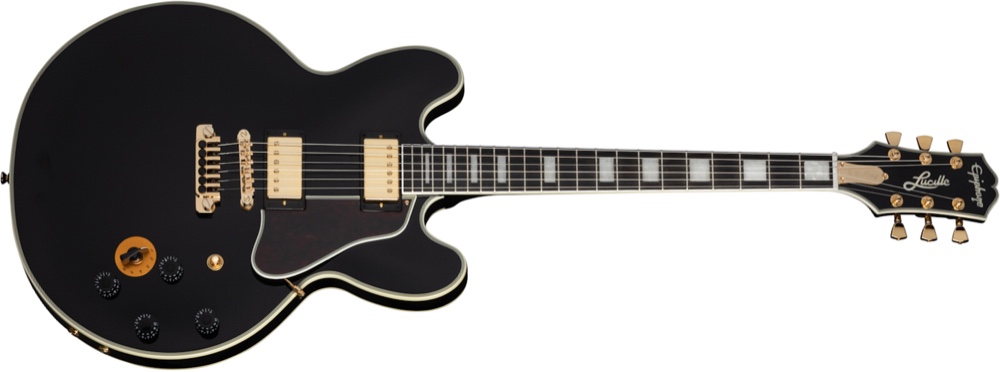
The guitar is a joy to play with a Gibson pickup installed (although I imagine a Seymour Duncan would be fine also). It's got a hot, fat tone that can be dialed in for jazz, rock or blues. The solid top (without F holes) does give the guitar more of a solid body sound. It's closer to being a chambered guitar than a semi-solid. Which is good. It would have been disappointing to have it sound too much like a Les Paul or ES. It's a bit disappointing that it weighs as much of a Les Paul.

It is a heavy guitar with an extremely angled headstock at the end of a longer than usual shallow neck. It's a feel that should be familiar to big box jazz players. It feels both solid and easy to play, yet the headstock seems more fragile. The tuners are above average, but can slip out of tune with hard playing. Upgrading is an option here.

It's a great looking axe. There's the cool “Lucille” on the headstock, the gold plated metal truss rod cover, and a nice, but easily scratched Ebony finish. The gold hardware looks good with Ebony, and on the whole it's a classy package.

The bridge is a special design and resembles a violin bridge with fine tuners and open hook type string holders. This will require the player to keep the string taut while restringing, but I accomplish that by pressing the string on the fretboard with a forearm while winding the end around the tuner post.

It's awkward at first, but once you get used to it, it's pretty easy, and handy. It's a trick I learned because most jazzboxes bridges are the same way, except upside down. You're frankly not going to use the fine tuners much unless you've played the violin and are used to that type of tuner. It's better to just get a higher ratio tuner set, so the tuning takes place in one location on the guitar.

The final reason I got it was the cool factor. Most artist series guitars look stock, but the Lucille is both distinctive and identified with a single artist. Own a Lucille, and there's no mistaking what you have. It's also one of the best guitars Epiphone has made, and you don't get the sense that you have pale imitation of a Gibson. Upgrade the pickup(s) and it'd be hard to justify the cost of getting the Gibson version. Get this guitar and you'll find that you've paid much less cost to be “the Boss.”

- Al Handa
  2007

Note: This review first appeared on the ePinions.com site in 2007. This and other reviews were short takes that accompanied the link to a business that sold the guitar. As a rule, the guitar had to be at least examined and played by the reviewer (and ideally owned). In my case, a severe case of GAS made it possible to have at least owned the reviewed instrument for a short while. I'm reprinting these as having another source on a guitar never hurts, even if the reviews aren't definitive. Other than minor corrections, these short takes are unchanged from the original text. I figure that it might be helpful to keep the older perspective.

The Quitturz by Al Handa



AVAILABLE ON KINDLE UNLIMTED


AVAILABLE ON KINDLE UNLIMTED


Here's info on some of my Vella books:


The Quitturz (title not changed on ad yet)


https://www.amazon.com/kindle-vella/story/B09PC3L6PC


I, Ivy


 https://www.amazon.com/kindle-vella/story/B0B3RCBT4D


The Forbidden Lost Gospels Of Murgatroyde


 https://www.amazon.com/kindle-vella/story/B0BJ2TW4P1


The Boogie Underground Think Tank: How To Survive The End Of Civilization


 https://www.amazon.com/kindle-vella/story/B0BG6LNXTG



The Adventures Of Queen Khleopahtra: Ruler Of Egypt, Time Traveler, and Literary Detective


 https://www.amazon.com/kindle-vella/story/B0BJC122G7


Please check out and listen to my music on Spotify, YouTube, Apple Music and other music sites. Please add any cuts you like to your playlists!

Thursday, April 4, 2024

Review: 2013 Epiphone Riviera Custom P93 Electric


Review: 2013 Epiphone Riviera Custom P93 Electric

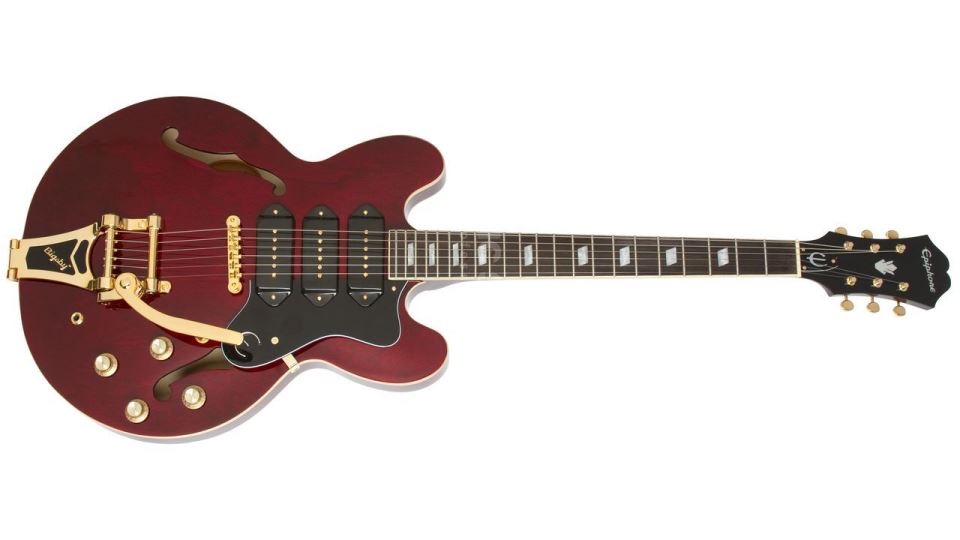
The Epiphone Riviera Custom P93 electric is one of those guitars that make you wonder how they got all of those features into a 500.00 model that looks so good. In addition, it's appearance differentiates it from pretty much 90% of the semi-solid guitars in its class.

The Riviera is a model that originated as a model to compete with the ES-335 but had no Gibson equivalent. The version here is a faithful, though lower cost recreation of that 60s model. Though the sales ads use the usual magic words “Like a Gibson ES-335” it's really a very different animal. 

For one thing, you have three closely placed P-90 style pickups instead of the usual double humbuckers, and the sound is both brighter, and more, well, loud sounding. Its sound is really a little more related to the 60s Gibson SG than an ES at full volume, but there are some similarities.  

The Riviera also has a laminate body instead of mahogany like the original version but that type of body is common in higher end jazz guitars because it reduces feedback. The use of a full plywood body changes the sound quite a bit. The original had a warmer, jazzier tone. The use of plywood isn't fatal of course, the classic Gibson ES-175 jazz guitar is all plywood also, and it frankly wasn't such a famous guitar that there's a generation of rock players out there who remember what one sounded like.

In the context that it's more likely to be used for now, which can range from alternative to retro, the plywood body and mahogany neck work just fine. The craftsmanship is good, though not impressive, but the cosmetics are very nice. You'll hear a lot that cosmetics aren't important, but of course it is. The more you like a guitar, the better it sounds and the more effort you'll invest in making it sound good.

It's a very comfortable guitar to play, and the range of tones one can get with the three pickups (each with its own volume knob) is pretty wide. Add to that a decent Bigsby tremolo, and you have a pretty fun package.

The one flaw is that the Epiphone P90s aren't as good as the Gibson type. A bit flatter and dryer in tone, but mainly in clean or low volume settings. I've noticed that from guitar to guitar, the sound of this model can be more or less resonant than the next, which can make a difference in how rich the tone is on a semi-solid, so it's important to try before you buy (unless you have 30 days to return it, etc).

The version I tried sounded OK in the store, and like I said earlier, is a very fun package with a lot of things one can do with the sound. At 500.00, it's hard to pass up.

When I tried it at home, through various size amps, and with a friend playing it (with me just sitting and listening), I got a better feel for what it's strengths and weaknesses were (to these ears, anyway).

Because the Epi P90s aren't as full as the Gibsons, the Riviera Custom sounds OK as a blues guitar in the T-Bone Walker or jazzy mode but doesn't really cut as a harder edged Chicago machine. On a small amp, it does the older raw blues just fine. Its jazz tone is pretty average, and it's not recommended for that use except maybe as a backup.

As a rock and/or alternative guitar, it's as good as you want to make it. At higher volume, the Epi P90s work fine, and give you a nice throaty sound that can sound trashy, bell toned, or raunchy in a retro way. It's too retro for metal per se, though that's why God permitted man to create effects pedals and high-tech amps (both made by industries that aren't as reactionary as guitar makers).

I thought it was a fun guitar, particularly at high volume. It's a package that is worth more than 500.00 for sure, and if you're looking for a guitar that has a different visual look, than this one is worth a try. I returned it because I happen to be old enough to remember what old P90s sound like, so it didn't measure up in terms of sound.

I could have, of course, upgraded the pickups, but my philosophy is that each guitar is designed as a package, and in this case, the cost cutting measures in a mid-priced guitar would make putting in stock Gibson P90s a gamble that would add a few hundred dollars to the cost of the guitar and perhaps not improve it enough to my liking.

In other words, upgrading the pickups would create an $800.00 or 900.00 guitar. At that price, one can get an American made Tele or Strat (at least used) and there's US made Gibsons that are in that price range. To me, not worth it.

On the other hand, like I said earlier, the Riviera has a feature set is easily worth more than 500.00, and for a younger player who plays certain styles, it's a very nice guitar with a distinctive look. I'd rather have this Riviera than an Epiphone Dot or any other ES-335 copy.

I ended up not buying the Riviera Custom, but it's the kind of guitar that if someone else bought it and thought my opinion was wrong, I wouldn't be offended. I don't love Les Pauls much either, so I'm probably wrong about a few things as it is...

- Al Handa 

  2013

Note: This review first appeared on the ePinions.com site in 2013. This and other reviews were short takes that accompanied the link to a business that sold the guitar. As a rule, the guitar had to be at least examined and played by the reviewer (and ideally owned). In my case, a severe case of GAS made it possible to have at least owned the reviewed instrument for a short while. I'm reprinting these as having another source on a guitar never hurts, even if the reviews aren't definitive. Other than minor corrections, these short takes are unchanged from the original text. I figure that it might be helpful to keep the older perspective.


The Quitturz by Al Handa


AVAILABLE ON KINDLE UNLIMTED


AVAILABLE ON KINDLE UNLIMTED


Here's info on some of my Vella books:


The Quitturz (title not changed on ad yet)


https://www.amazon.com/kindle-vella/story/B09PC3L6PC


I, Ivy


 https://www.amazon.com/kindle-vella/story/B0B3RCBT4D


The Forbidden Lost Gospels Of Murgatroyde


 https://www.amazon.com/kindle-vella/story/B0BJ2TW4P1


The Boogie Underground Think Tank: How To Survive The End Of Civilization


 https://www.amazon.com/kindle-vella/story/B0BG6LNXTG


The Adventures Of Queen Khleopahtra: Ruler Of Egypt, Time Traveler, and Literary Detective


 https://www.amazon.com/kindle-vella/story/B0BJC122G7


Please check out and listen to my music on Spotify, YouTube, Apple Music and other music sites. Please add any cuts you like to your playlists!


Tuesday, August 28, 2018

Delta Snake Guitar Review: Recording King Dirty 30s Series 7 000 Acoustic-Electric Guitar with Gold Foil Pickup Tobacco Burst


Recording King Dirty 30s Series 7 000 Acoustic-Electric Guitar with Gold Foil Pickup Tobacco Burst.

The Recording King Dirty 30s series instruments have been around for a few years, and are part of a large assortment of old time catalogue instrument revivals. Gretsch, for example, has some out that are modeled on the old Sears Silvertone guitars, and in this case, the Dirty 30s are based on the old Montgomery Ward Catalogue instruments.

This wonderful line of inexpensive guitars isn't an accident, or some attempt to create demand in a price category that became a knife fight a decade ago. It's a natural outgrowth of the superheated vintage guitar market that began in the 90s. As the top name brands like Gibson, Martin, and Fender became too pricey, many collectors moved down the scale to the older economy level brands, aided by the popularity of artists like Jack White who initially used cheapo vintage axes like Airline and Kay.

That created a mixed bag for lower level collectors and vintage lovers. Many of those guitars (that actually survived into this decade) have tangible virtues, like the better wood used when the materials were much cheaper, which after 50 years or more of aging have made some of the guitars sound as nice as lower line Gibsons, etc. of the same era.

The trade off was putting up with problems on many models, particularly worn or bad  tuning pegs, overstressed or poorly reinforced necks, and cheap frets. The wide range of inexpensive vintage recreations with decent hardware is a nice development.

The Recording King Dirty 30s series gives the average player a nice alternative to the minefield that the lower line vintage market has become. Particularly when the price of a mint Kay, for example, can go over a thousand, and everything else one can afford comes with some sort of issue. If you like the old catalogue guitar look and sound, it's available now with modern conveniences like good tuning pegs and necks.

There are some differences of course, mainly less traditional woods. The neck wood on the Recording King is nato, and the fret board is an African wood called ovangkol. Feels a bit like the baked maple Gibson used on some guitars, and has a similar sound and sustain. It feels a bit slick when bending notes, but that's really a matter of preference. I prefer a maple neck on my telecaster, so it felt fine.

The body is described as "white wood," which can mean poplar, but even a Google search didn't bring much clarity. At this price, maybe not knowing is best anyway. Guitar discussions have become as coded as sports analytics, with woods ranked in order of sound quality, types of bracing, bone or plastic nuts, and other nuances like which automatically determine if it's a pro or amateur instrument in many minds.

More than a few guitar players who own higher end stuff, while treasuring their Martins or Gibsons are finding that adding vintage replicas like these Recording Kings are a nice way to add vintage mojo without buying thousand dollar guitars that should really cost a few hundred. 

In the real world of guitars, looks count. Good vintage reissues with authentic detailing fill a real demand. What drew me to this Recording King was that I could add a long desired blues and roots music configuration to my sounds at low cost. 

I've wanted to get a smaller body acoustic with a sound hole pickup for some time, but the classic blues setup with a vintage DeArmond pickup a la Elmore James was out of reach. To get a nice vintage looking guitar with a Gold Foil pickup for two hundred was a no brainer.

The guitar itself, part of the Series 7 Dirty 30s, would run around 150.00 and would be seen as a entry level or secondary guitar for most. The laminated spruce top could be a turn off for those who prefer a solid top (or believe it wouldn't sound good without one). On the other hand, laminated bodies and tops have less feedback issues, relatively speaking, so in this model, it can be a plus.

The Gold Foil pickup, which I've discussed in an earlier blog entry, has a (modern) mythology and mojo that dates back to Ry Cooder putting one on a Fender Strat. It's a type of pickup that I've read DeArmond created (with cheaper versions made under subcontract for various Japanese guitar makers). The DeArmond pickups are justly famous so the Gold Foil is a classic design.

It's a lower output passive pickup and ideal for clean electric or low volume acoustic work, and if managed correctly on an amp, easy to overdrive for a cool vintage dirty sound. Another reason it's popular in the custom market is that it's flat (and doesn't require routing on a solid body) and ideal for surface mounting.

The guitar is a comfortable 000 size acoustic, with retro stenciled fret markers on a very playable C shaped neck, and cool two tone binding. It came well setup out of the box (though I played it in the store first) and has a nice even tone across all the strings. It doesn't boom like a dreadnaught, and sounds woody, though a bit more resonant due to the Recording King designed X bracing. It's a good package for roots folk, country, blues, and finger picking work.

It has a decent amount of volume, but if you're looking for dreadnaught level sound, a 000 size body isn't going to give you that unless it's a Martin for thousands more. 

But then...that's what the pickup is for, isn't it?

When I took the guitar out of the acoustic room and said I wanted to try it out on one of the Fender amps, the young sales guy looked puzzled and said I might prefer to try it on an acoustic amp to get a better sound. I just told him that if I wanted an accurate acoustic sound the I wouldn't want a Gold Foil pickup on it. 

The amplified sound at low volume and clean was fine. I found that the Recording King acoustically produces a balanced tone with nice woody character, great for roots music, and in my view, the amplification system takes over after that.

Through a small amp, at lower volume, I was able to get a nice range of usable tones, from clear acoustic to dirty Memphis and Blues...for my purposes, which will be for recording and some live work with the amp miked, it was just fine. At the volume I was working at, feedback wasn't an issue.

Since this guitar is available at a much lower price without the Gold Foil, it's good to also look at this as an electric instrument. One question that can come to mind, would it be better to buy a lower priced hollow or semi-solid body electric like an old Harmony, an entry level Epiphone or Ibanez or buy a purpose built acoustic with on board amplification like Fishman.

Most of those electrics are overbuilt (to reduce feedback) like with arch tops, which were originally designed to be loud enough in ensembles and naturals for electric work. However, plenty of artists simply mounted pickups on standard acoustics, which led to overbuilt box guitars with internal electronics.

All of those started off as attempts to make the acoustic sound louder, but really resulted in a variety of acoustic-based electric sounds that are manipulated via tone and volume controls. It really comes down to whether you like the sound that the configuration produces.

In the case of the Gold Foil, it will produce a nice clean sound, but to these ears, really comes to life when the mid and treble are boosted into blues or rockabilly territory. It's also a decent classic jazz guitar, as acoustics with a sound hole pickup were used by artists like Gabor Szabo and others. A purpose built acoustic with a preamp might be better for producing a louder "natural" sound.

This guitar gave me the range of folk and roots tones I wanted, and at much less than the price an old vintage catalogue guitar and pickup. The playability is several times better than any vintage beater, and it stays in tune. Things that you really would prefer to not have to think about.

These catalogue inspired instruments have a unique link with the past. The Montgomery Wards or Sears guitars brought music to people who didn't have much access to it before, or made possible a life playing music to greater numbers of people. The sound may not have filled concert halls, but it certainly enlivened the air at street corners, living rooms, small parties and juke joints. 

If guitars like this remain regarded as beginner or amateur level instruments, that's pretty much what the catalogue guitars were back then too. That the modern versions have remained cheap and accessible means that they'll do the same amount of good.

There is a lot of guitar here for the price. It's got a great vintage look, a good electric guitar style neck, with a perfect choice of pickup that will make it as fun as any old Silvertone, 60s Japanese electric, or Gretsch. It has a fun factor that's off the charts.

- Al Handa

Features:

Body:
Body type: 000 14 Fret
Cutaway: No
Top wood: Spruce
Back and sides: Whitewood
Bracing pattern: Cross Lap X
Body finish: Satin
Orientation: Right handed

Neck:
Neck shape: Thin C
Nut width: 1.69 in. (43 mm)
Fingerboard: Ovangkol
Neck wood: Nato
Scale length: 25.4 in.
Number of frets: 20
Neck finish: Black Satin

Electronics:
Pickup/preamp: Yes
Brand: Recording King
Configuration: Gold Foil Magnetic
Preamp EQ: No
Feedback filter: No
Tuner: No

Other:
Headstock overlay: Black
Tuning machines: Ivory button
Bridge: Ovangkol
Saddle and nut: Bone
Number of strings: 6
Special features:
Case: Sold separately
Accessories: Truss rod tool, printed box
Country of origin: China


AVAILABLE ON ALL MUSIC SITES


Please check out and listen to my music on Spotify, YouTube, Apple Music and other music sites. Please add any cuts you like to your playlists!

Thursday, May 8, 2014

Review: Fender Reso-Telecaster

I was actually in the local guitar store looking for something else and ran across this new variation on the Fender telecaster.

I'm not going to go too deeply into the specs on the thing, it's obviously a very new model and made in China, which accounts for it's reasonable price (for a resonator of this quality).

From what specs I can find, what you basically have here is a telecaster shape semisolid (though not a heavily built type), with a pick up under the biscuit style bridge and a standard telecaster neck pick up. Both the body and neck are maple, artificial bone nut, and plated brass tailpiece.

The most important difference is that this resonator has a C shaped telecaster neck. This is different than normal resonators, which generally have shorter scale mahogany neck and rosewood or similar fretboards boards. The main difference is the telecaster maple neck will bring out more highs in the sound, and have more attack. Having a bit of the traditional fender spank might change the way the player normally approaches slide guitar playing.

The Fender seems lighter then either the metal body resonator or most wood body dobros. Most are built heavily because the rigidness of the body, including the top (which on an acoustic guitar would normally be expected to vibrate) is what makes the resonator cone effective. 

In other words you don't want the guitar body vibrating and absorbing sound. I think Fender figures that the use of maple makes it less necessary to use a lot of wood, or more specifically mahogany, which is the traditional wood for a dobro.

Less wood and semisolid construction also mean that acoustically will have less volume. It's clearly a guitar designed to be used with an amp, but with more than enough volume to be used acoustically.

Telecaster tradition is also continued with the iconic two plain knobs, one a master volume control, the other using a Fishman chip that controls the balance between the bridge and neck pickup instead of a standard tone control. 

Resonators were actually quite popular in the 20s in the Hawaiian music scene, and later with the blues. It got a little more popular with the introduction of an electric model that was endorsed by Joe Perry of Aerosmith, but electric versions of this type of guitar been around for a while.

Being someone who's played a telecaster all his life, and knowing that one of the most popular categories of Teles are the hollow body type, I couldn't resist trying it.

The thing about a resonator guitar, as opposed to a standard acoustic, it has that aluminum cone designed to naturally amplify the sound.

I've owned a couple of electric Resophonic guitars, and found that they had the same characteristics.

Almost all are very loud without any electric assistance, and so the feature you'll end up using most often is the piezo pickup that essentially amplifies the acoustic sound from the bridge. Anything more powerful than that and you'll just get a lot of feedback.

Also unless you're playing at a loud volume, the acoustic sound of the guitar will be so loud that you can't hear what's coming out of the amplifier very well.

The other pick up  (if there is one) is almost always placed at the neck, and is generally a lipstick type. In this case they use a standard telecaster neck pick up, which is virtually the same thing.

These pickups normally have the same problem, it has to be played at fairly loud volume to be heard out the amp, and you have to be careful about your own positioning, as the guitar will feed back easily.

In other words the same problem as any acoustic guitar that has a pick up installed on it.

In this case, the feedback problem seemed less noticeable, Fender's bridge pickup seems less sensitive and microphonic. There's less acoustic volume, so the neck PU is less prone to feedback here. Which is helpful, as I like the option of having an overdriven sound, particularly for recording where volume is less important.

The key question when considering this guitar is where you intend to use it. A good quality resonator guitar frankly doesn't need an amplifier to be heard in a house, and I mean the whole house.

If you intend to mainly play it at home, then the important point is, do you like the looks, and do you like how it sounds acoustically. Also when it comes to guitars, does it have a very high cool factor. In this case it does, it looks like a very nice telecaster that happens to be converted to a resophonic system.

If you like how it sounds acoustically, and as it's priced lower than a lot of more well known guitars of this type, it's a purchase you should definitely consider.

It was a guitar developed in earlier times to be played in noisy rooms and bars and still be heard above the noise. Also it doesn't sound like a regular acoustic guitar, kind of more like a higher pitched guitar blasting out of an old cheap microphone when picked hard. Which is perfect for Hawaiian music and blues.

If you pick it softly, it can give you an excellent alternative to the usual acoustic guitar sound. That's because this Fender is not the metal body type, but closer to a dobro which has a wood body (and popular in country and bluegrass). The sound is resonant at lower volume, and the sound changes as it's picked harder.

The main reason is that Fender went with a hybrid electric .10 gauge string with bronze wrapped bass strings (like an acoustic string set). So if you pick lightly it doesn't drive the resonator cone much and the sound is more acoustic, pick harder and it begins to sound like a dobro.

It's a good sound, particularly if you use fingernails and not metal finger picks. I used an Epiphone biscuit model for years as my regular acoustic guitar, because I have to admit, I'm not a big fan of the standard acoustic six string.

Heavier strings will bring out a more traditional sound, Even moving up to a light acoustic gauge (.12 set ) will noticeably drive the cone more and give you a more standard Resophonic sound.

In fact, it's resonator sound is more similar to a metal body type than a dobro. This could be due to the maple wood body and neck, maybe a good cone, but it's an extra dimension to take into account. If I want more of a National style resonator sound, I can get it by putting on heavier strings.

Fender's use of a .10 set isn't some random decision. It's part of a different way to approach the resonator and it sound. People used to the more traditional types might find the sound almost alien at first. 

I certainly did, But decided to give it some playing time before permanently switching the thicker strings for a more standard sound.

I found that I liked the new sound. Once my ears adjusted, or more specifically, got rid of preconceived expectations about the guitar, I found myself with a new sound to play with and explore in a world where dobros and metal bodies as a rule sound pretty much the same.

If you're primarily a home player, the pickup is an added dimension in case you have to play in a larger venue like a church or club. It can also give you a distinctive new set of sounds for recording, especially if the guitar's plugged directly into the board.

It's lighter than a standard Tele, which in it's solid body form can often give a Les Paul a run for it's money in terms of weight.

The key thing to remember is that it's not your normal hollow body telecaster, it only looks like one. The reality is that it's really more of a dobro or resonator variant, though I find that due to it not being overbuilt, it's more responsive to finger style play and doesn't tend to be muddy sounding like the lower and mid priced models.

Also, if you're looking for more of a regular amplified acoustic, it's a good idea to try the Fender along with some standard acoustics that have on-board amplification. You'll be able to hear the difference, and really decide what acoustic sound you want.

It's a classic eye candy guitar that has a high remorse potential, that is to say, maybe a month later you'll find yourself regretting that you bought it.

As far as the small but very dedicated cult of guitar players who prefer this type, they just might find it a revelation. It's tone is lighter, very bright, and works well with a glass slide. 

A real world example would be that it has more of the thinner tone of Blind Willie Johnson, rather than the powerful mids and bass of a Bukka White (using the stock .10 set strings).

Fender chose exactly the right kind of guitar to convert to this type. The thick squarish body of a telecaster is ideal for mounting a resonator cone.

This is more a guitar for those who already like the old-time sound of a resonator, who wants a look that gives the person something that really stands out from the normal crowd, and wants a sound thats closer to an acoustic guitar, and perhaps, a bit like a hollow body telecaster.

In that respect, I think Fender has a success on its hands. It's on a smaller scale, but it's definitely a homerun. I had been looking for a resonator with a pickup, and wasn't liking the basic similar sound of all the alternatives, and found this one to my liking.

It's a guitar that made me want one when I saw it, it just might have that effect on you.