

 |
Vintage Review: Mid-70s Epiphone EB-98 Resonator Banjo
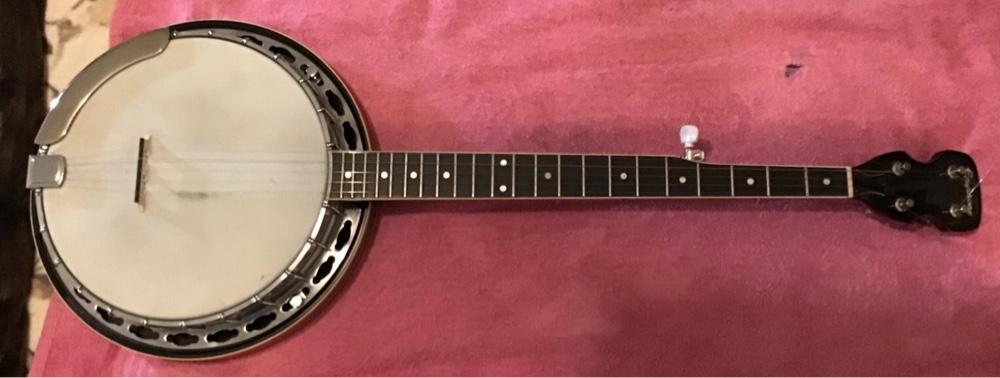
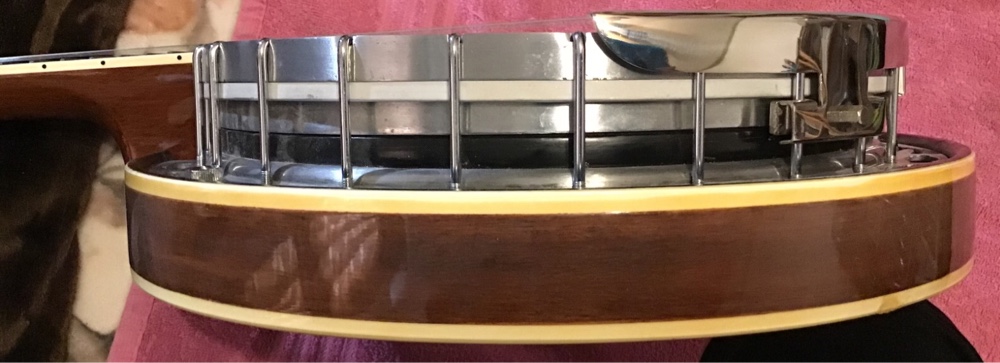
The Epiphone EB-98 in the picture is a mid-70s Japanese made resonator banjo that was probably made by Aria (likely) at the Matsumoku plant (similar ones came out under various names). It was a solid banjo with decent hardware which included geared planetary tuners, geared 5th string peg, heavy duty chromed aluminum flange and tone ring, mahogany neck, rim and resonator with a 26-¼ scale neck.
This Epiphone is one of the banjos I’ve kept after a considerable amount of turnover over the years (decades for that matter). A lot of my vintage reviews come from a severe case of GAS, which I’ve confessed to having with guitars, but that pales next to the wandering engaged in with banjos. In terms of future banjo review reviews, I’m hopelessly backlogged, but hope to catch up.
The reason this Epiphone is one of my keepers is that it has certain qualities that I like in a banjo. One, it’s cheap enough that if I go through periods of not playing it, there’s no guilt about the amount of money spent on it. I’ve spent a lot of time owning both a resonator and open back, but I found that in terms of what I actually use, having a banjo where I can simply remove the resonator to do some open back work is sufficient for now. The resonator is attached to the flange and not through wood screws which makes it easy to remove without worrying about eventually stripping the holes on a wood resonator.
 |
Most banjo players know that there is a noticeable difference in tone between a resonator and an open back banjo, so it may seem like my use of the EB-98 as a double duty or multi use banjo is a less than ideal way to have both tonalities in my collection.
That’s certainly true, however at my age I prefer a reasonable amount of versatility as opposed to having a variety of banjos. In this day and age, most of the subtleties of tone can be captured or emphasized with good mixing software as long as the banjo has a fundamentally good tone, which in my opinion, this banjo has.
It goes without saying that I’m specifying that it’s “in my opinion” because everybody has a different idea in terms of what they like in terms of tone.
There’s another nice quality that this banjo has; the well-made flange and tone ring is made of chromed aluminum, which has a different sound than a tone ring made of brass but it’s more than good enough for my purposes (and enjoyment). There’s a lot you can do with the sound in the studio, but there is a difference and the Epi tone is a bit darker or ‘echo’d” if one wants to put it into words.
 |
However, contrary to some opinions, there’s a lot about tone that’s controlled by the player and not by the hardware. After a few decades, one realizes that the idea that hardware dictates the sound isn’t really a law of nature, so to speak. Banjos aren’t any different than guitars in that respect; most of the tone is in the fingers.
The use of aluminum with the EB-98 has another benefit, which is that the banjo doesn’t have the usual resonator bowling ball weight. Certainly one trades a bit of volume when not using brass, but if you look at some players who've been using top-of-the-line resonator banjos all their lives. You can see that the weight has begun to wear down on them.
Players may not have much choice in the matter if their livelihood depends on their top of the line banjo, no matter how heavy, so again, my comments on weight is a personal preference. All that being said, having a decent resonator banjo that weighs about the same as an open back makes recreational playing a pleasure.
One of the things I like about this particular banjo, which influences my keeping it, is that in terms of intonation it’s probably one of the most accurate I’ve ever played. In other words, it generally always sounds in tune. Sure, that can have a lot to do with the bridge placement, etc., but the EB 98 has a very decent neck with a comfortable scale that’s a pleasure to play.
The tailpiece is good, perhaps not spectacular but competent. My only complaint would be that it’s not the easiest one to restring. One has to keep a good tension on a string or else it’ll keep slipping out and turn restringing into a frustrating exercise. It’s something one can learn to do well or cope with but it’s good to know for people who might be considering buying this banjo on the internet without testing it.
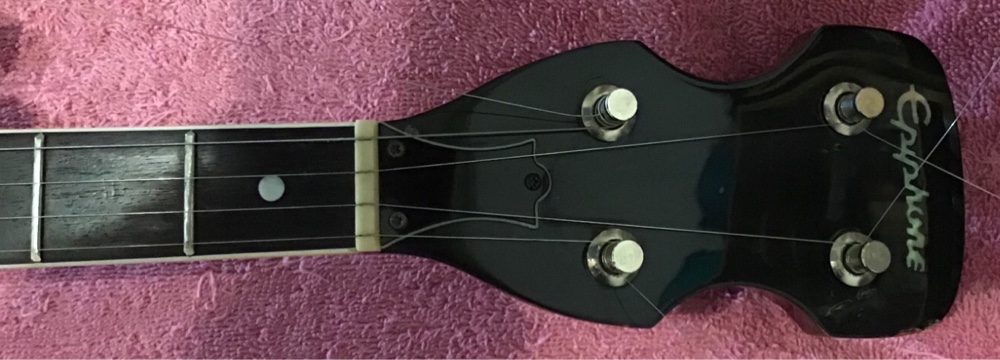
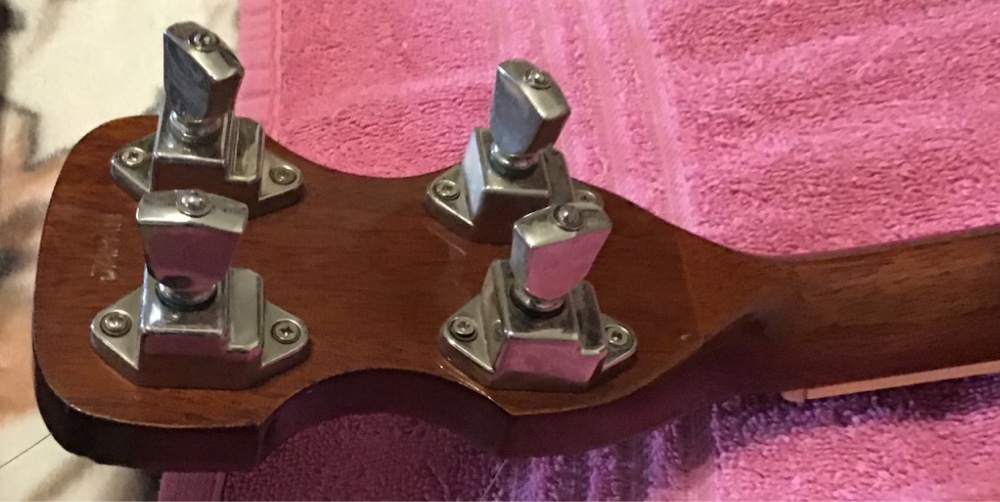
The pegs are also good but not spectacular. The main thing is that it’s important to keep those well adjusted and lubricated otherwise turning them can be a pain. Part of that is age of course, but I would definitely prefer not to have to replace them so it’s something I stay on top of. The fifth string peg is excellent.
 |
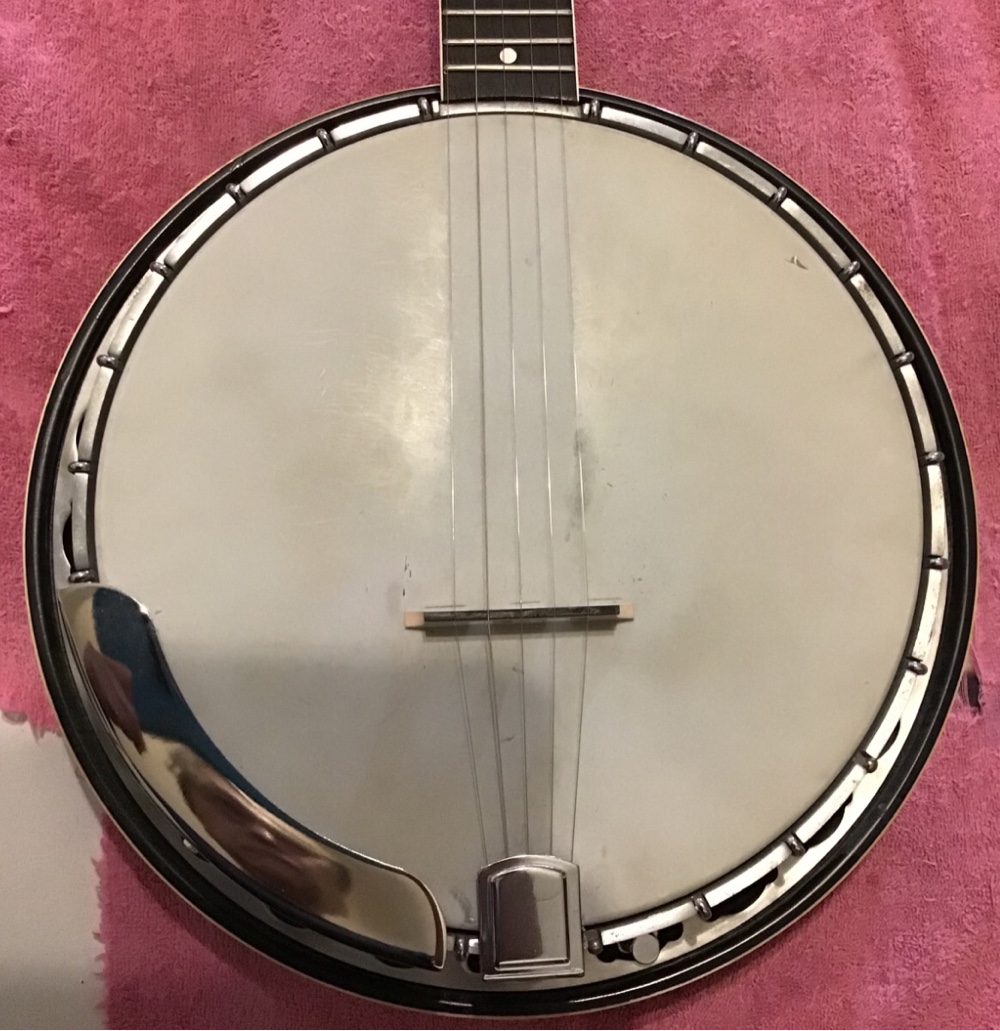
As you can see from the picture, the banjo has a standard frosted head. I have another banjo with a fiberskyn but after a couple of decades I’ve become a little burnt out on that type. I’m finding that the EB responds better to a regular Remo head and enjoy the different tone. I’ve heard resonator banjos with fiberskyn heads and I’m not sure that brings the best out in that type of banjo, especially one with an aluminum rim/tone ring.
 |
YouTube videos for this particular banjo are relatively rare so you won’t see a lot of demos in order to get a feel for the sound. From my experience with the banjo, I think if you listen to YouTube videos with banjos, say in the three to $600 range, you’ll probably hear a pretty similar tone. The EB sounds a little mellower than some that I’ve heard in this price class, like the Fender or Gretsch. In terms of Internet opinion, as a general rule, I’ve seen a lot of nice comments about this particular model.
Whether or not the Epiphone EB-98 is the right banjo depends on what kind of music you intend to play and how much money you’re willing to spend. Used EB-98s run about 350.00 to 450.00 on average, with some being priced higher. In other words, it’s a pretty reasonably priced vintage banjo And one can also find similar banjos from that era from Lida, Alvarez, etc.
One good thing to keep in mind, because of the availability of well-made banjos in virtually every price range, I really wouldn’t buy one of these unless it was in good condition with all the hardware working. Back in the 70s you might have had to struggle with a vintage banjo, or what is now a vintage banjo but that’s not the case anymore.
On the other hand, all other things being equal, I’d happily take this Epiphone over a Recording King or Fender in this price range. It was made in Japan by a well regarded company and over 50 years later, it still has a lot of music in it.
Al Handa
July 20, 2026
EB-98 Specs:
1972-1979
Made in Japan
Body: Mahogany resonator
Chrome plated heavy duty Aluminum flange
24 tension brackets
Neck: Rosewood fingerboard with dot inlays
Rosewood veneered headstock with no inlay
Binding: Single-ply binding on resonator edges
Single-ply neck binding
Chromed hardware (aluminum):
Banjo tuners with pearloid buttons
Geared 5th tuning peg
Maple bridge with ebony saddle
Chrome armrest
Tension tailpiece
 |
 |
 |
 |
 |
 |
 |
 |
 |

