

 |
Review: 2024 Roosebeck 14” x 5.5” Tunable Bodhran
The bodhran (bough-rawn) is a traditional Irish frame drum, categorized as a percussion instrument, which became more popular in the 60s when a folk revival began. It has been around longer, of course, as hand drums have existed for centuries. Virtually every country, civilization, or culture has used one for musical or ceremonial purposes.
The Roosebeck is the fourth bodhran I’ve owned and play mainly for pleasure. Hand drum music has a different quality than modern drums, more like a voice. Bodhrans can produce a large range of tonalities on the goatskin head by changes in head tension created by hands, fingers or drumming techniques. It’s an expressive drum that’s good for solo playing or along with recordings.
It would be hardly a surprise to anyone to say that this drum is primarily used in Irish or Celtic music. Anyone who’s listened to Celtic music has heard bodhrans being played.
In a nutshell, the drum is played by holding it against your body sideways, one hand goes into the drum and either holds it by the frame or moves the hand deeper to press against the drumhead to adjust the tonality. The other hand holds what is known as a tipper, a two headed drumstick.
 |
How to produce the sound isn’t easy to explain, and it’s best to see and hear a bodhran played on YouTube. Basically, the hand holds the tipper like a pencil and with a particular hand and wrist motion creates the drum beat by striking it with both heads in a sort of skipping motion. That’s a very general way to describe it; if you’re interested, I would take a look at it on video and see it visually.
I should note, that on the other hand, plenty of bodhran players also use hands or the tipper as a one headed drum stick. Like all instruments, it can be played the way you feel.
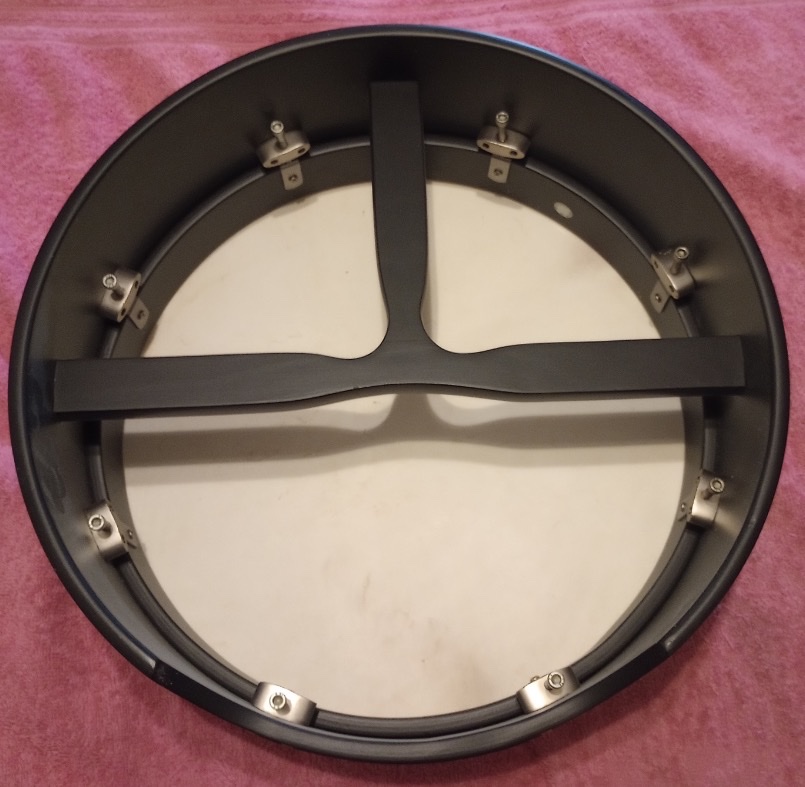
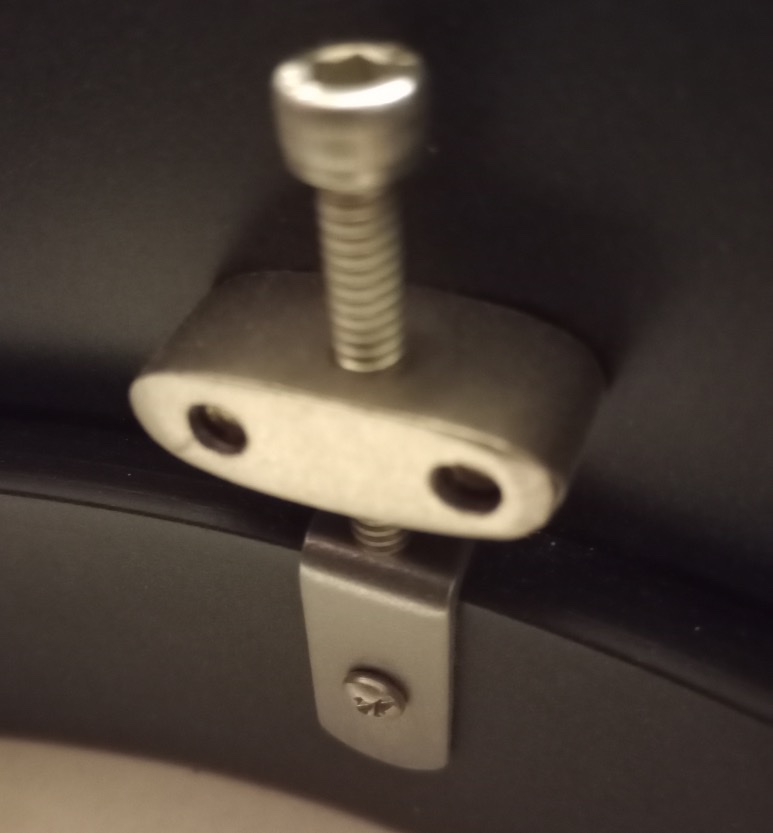
The type of bodhran in this review is tuneable by lugs pressing against a ring that tightens the drum head or loosens it. The bolt is turned with a hex wrench or whatever is used for that particular tuning mechanism. The one in the picture uses a hex wrench.
 |
These drums come in different sizes but for serious music, the most common are anywhere from 14 inches to 18, with less common sizes above and below that.
As a general rule, but not in all cases, the size of the head determines the volume and the depth of the tone. That can be accentuated with a deeper rim found on the more advanced models. A drum with a deeper rim, like one that’s 5-1/2 inches deep, can produce as much bass as a bigger one that has a 3-1/2 inch rim and isn’t tunable.
Non-tunable bodhrans are just as common, though, because not only are they cheaper but in some ways are easier to play because of the shallower rim. The framing and access to the head is the same as in tunable versions. The main thing about the latter is that you can tune the head to a key. Other than that, almost all of the different tones are produced by how you hold it and use your hand to press against the back of the head.
Original bodhrans weren’t tuneable, at least mechanically. The drumhead tone could be adjusted by lightly wetting the head with water and dried to create a sharper tone, etc. Also, as said earlier, hand technique can produce a wide variety of tones.
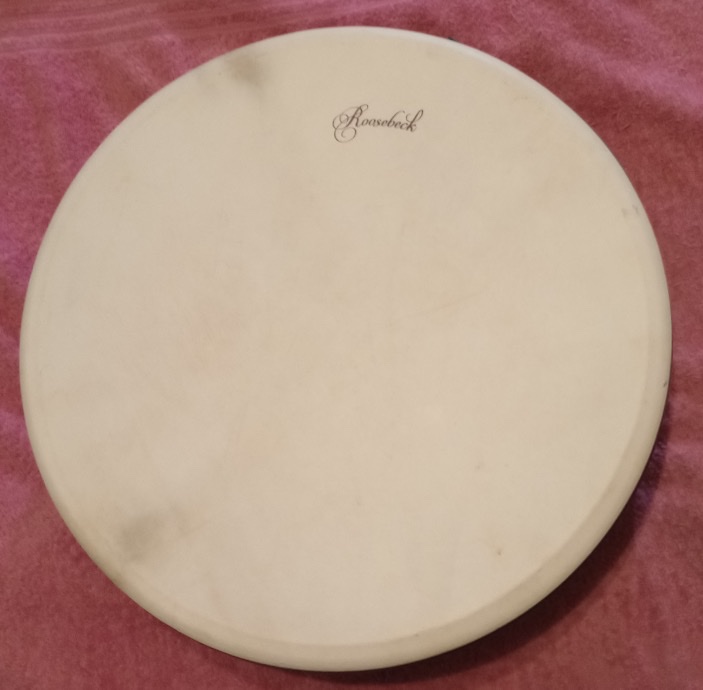
The Roosebeck in the picture is a 14 inch type, has what they call a taped rim, which produces a deeper sound (but isn’t necessarily a vital part) and has a 5-1/2 inch rim with a notch cut into it to make it easier to reach your hand into it. It’s a good brand and highly recommended.
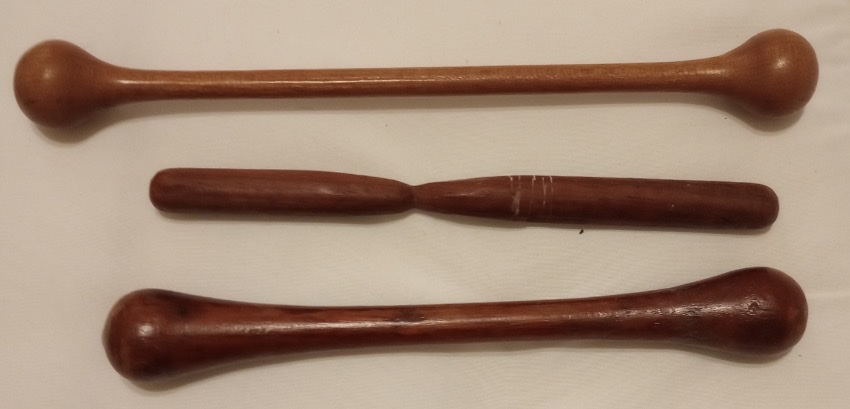
I use a set of three tippers, the middle one being hand carved. I prefer lighter sticks, but you can get sticks in all different weights and shapes. Tippers are like fishing lures or guitars; there are as many varieties as human beings can create and promise great results.
 |
The model I have runs about $150 but you can get one cheaper in the 60 to 70 range. It doesn’t go much lower than that for a playable one unless you’re buying a child’s drum or a souvenir type with a painted head (which isn’t recommended because it creates a surface that’s hard to strike consistently).
One reason for the minimum cost is because of the need for a reasonably good quality goatskin head. The construction quality of the rim makes a difference to about the same extent as a banjo or other type of drum.
As far as what bodhrans to start off on, that’s difficult to say because they’re not that common in music stores. You often have to order one online from a multitude of companies, so for a novice, it’s difficult to know which ones are good or bad. The best way is to read up on the subject and check out a lot of YouTube videos and with the various names of drums you’ll see, there’ll be certain names and brands that are used by most.
It's not a cheap hand drum but if you listen to Celtic music and you want to play it, there’s really no other type of drum used. The good thing is that beginner models are generally good well into the intermediate level and all levels of recreational play.
You’ll find that Celtic musicians are generally less snobby than about gear, which is the case in most folk and ethnic genres. If they see you walk in with a bodhran, there’s no doubting your commitment.
Al Handa
July 18, 2026
 |
 |
 |
 |
 |
 |
 |
 |
 |

