The Delta Snake Review

The Delta Snake Review

Translate

Showing posts with label guild. Show all posts

Tuesday, April 22, 2025

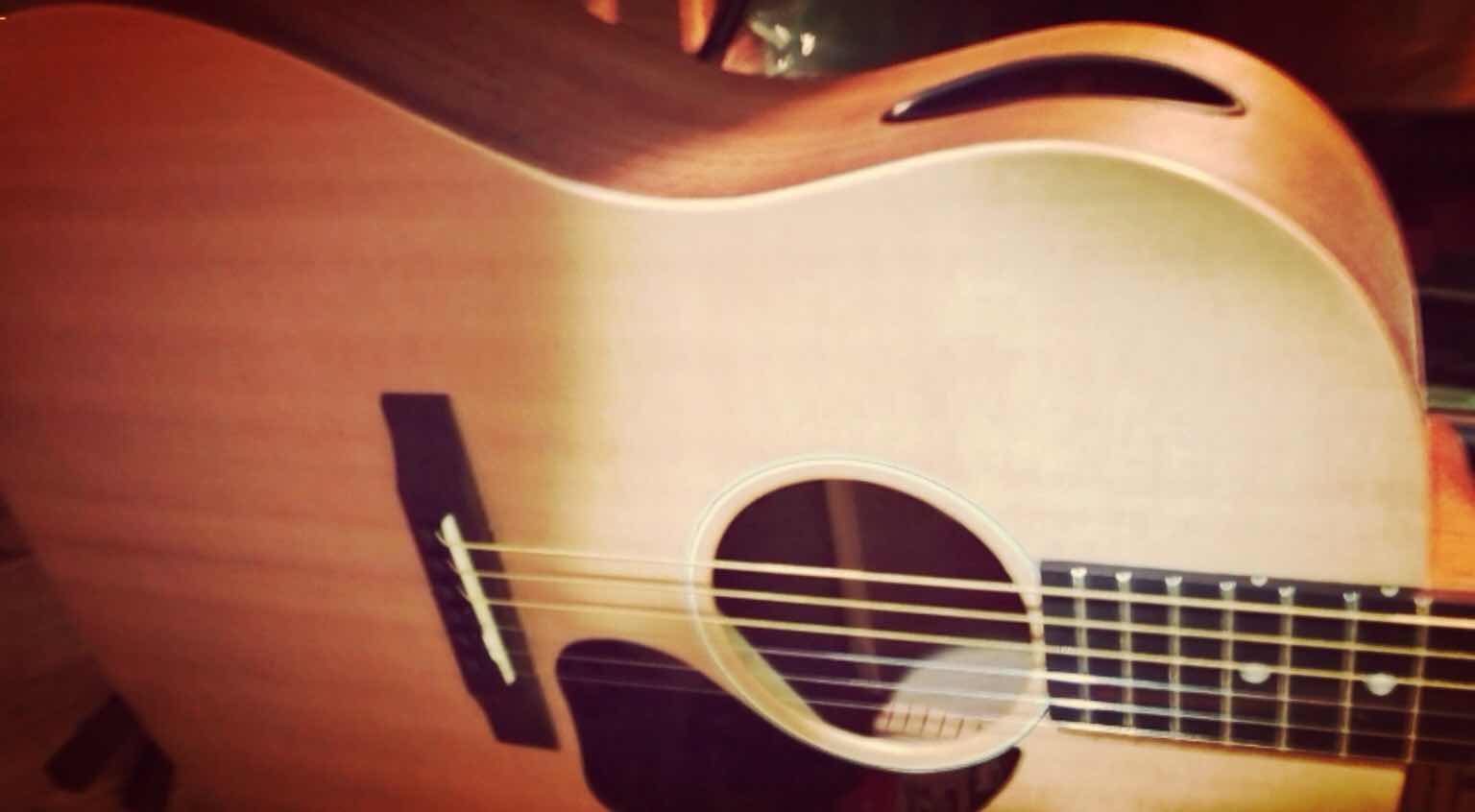
Review and Essay: 2024 Gibson G45 Six String Acoustic / The Art of Interpreting Online Reviews


Review and Commentary: The Gibson G-45 six-string acoustic and the Art of interpreting online guitar reviews 

One of the first things a savvy guitar buyer does when considering any model is to research it on the Internet. In some cases, the person may have a friend who already owns the model, and he can get a first-hand look at it or check it out at a nearby Guitar store. 

A good way to develop a preliminary judgment on a guitar is to see how many good comments it gets in user review sections. However, that can be confusing because there'll sometimes be experts or vocal guitarists in comment sections who claim those are superficial impressions from people who love the guitar they just bought.

In other words, the implication is many of these happy new customers don't know better. That can be a valid point when discussing technical specifications or judging the build quality of a particular guitar. However, it sometimes creates the dichotomy of users liking a specific model while many experts consider it mediocre or a poor buy/investment. 

The investment angle is an essential factor to consider not only for the possible future sale of the guitar but also for the type of bias it can introduce into a review. Whether or not a guitar will increase or even hold its value is a factor that can mean everything or nothing in terms of the actual pleasure and utility of a guitar. 

…contradiction…

This contradiction between consumers and experts was clear to me when I was considering the purchase of a Gibson G-45, an economy model that costs around a thousand dollars new and has received quite a few mixed or negative reviews (with many seconding opinions in the comment sections).

The reviews and commentary were particularly negative on YouTube, with some experts openly contemptuous. The main objection seemed to be the price; many commentators didn't think it was worth $1,000 and didn't really "sound like a Gibson." 

I have to admit that when I looked at the various YouTube reviews, the sound of the G45 struck me as similar to a Taylor or Guilds that I've heard, but it did have a bit of the Gibson flavor.

I wasn't looking for a traditional Gibson sound anyway. I have a vintage parlor with the old Gibson LG0 sound, so I was looking for something more "modern” in sound. There was a G45 that only cost $600, so I was only checking the reviews to see if it was a good deal.

…video reviews…

Checking out video reviews isn’t an ideal way to evaluate a guitar; it's always better to play it, but it's a good way to get a feel for a possible online purchase. It's also a good idea to check both bad and good opinions. Sometimes, a negative comment can highlight a serious flaw in an instrument.

However, checking out bad reviews is more about being thorough and open-minded because those often reflect that particular reviewer's taste or criteria, which doesn't necessarily match mine.

I remember watching a review of this particular Gibson. From the start, the reviewer showed his distaste for the guitar and played it in a public and noisy environment, which I would never do with an acoustic instrument. There's a reason why most guitar stores have a quiet room where acoustic instruments can be tested. Ambient noise can make it difficult to judge the acoustic tone, which is a complex blend of sound from different guitar parts and your technique.

The person didn't like the guitar, and that's okay, but it was clear that the guitar wasn't fairly tested. The negative opinions in agreement in the comment section were mainly from people who hadn't even personally seen or played the guitar.

I quit watching the person's reviews after that (there were other borderline reviews of his). There's a difference between being opinionated (which is okay) and being peevish or dismissive. 

Most online reviews are a single person's experience with a particular guitar. While it can't possibly be a definitive analysis of the entire line, it can be a valuable opinion from someone who has had an experience with the instrument. A reasonably careful evaluation is helpful even if you disagree with the conclusion.

If the person is opinionated, like I said, that's okay because someone with a passion for guitars will take the time to look at it (in most cases), and one can always take any bias into account when judging the content of the review. However, when a reviewer simply blows off an instrument, I consider it a waste of time to watch (or read) such a review. 

…good reviews…

It's just as important to be careful about the good reviews, too, because if those are featured on a commercial website, certain biases are always going to be there. For example, no matter how good an economy brand might be, most reviewers who work for a site will always add that it's a “beginner guitar” or similar classification that makes sure that you know it's not as good as a more expensive model.

That informal caste system is there because these sites depend on advertising from manufacturers. The reviews will be carefully worded to ensure that the advertiser's entry-level line is seen as a logical step toward the future purchase of professional-level instruments. A reviewer might note that a particular high-end model is expensive, but he or she will rarely tell people to go buy a cheaper model instead.

Another reason such reviews may not be useful is that reviewers often use language that doesn't tell you what the instrument is like. When one thinks about it, what does it really mean when someone says a guitar has "a vintage sound," "best for classic rock," or "is too quiet? " There are a lot of standard review phrases that really don't mean anything except maybe in a subjective sense.

Also, to assume that anyone or even a group of reviewers can tell you a lot about a particular product line isn't a given. In any scientific study, the researchers always want a sample size that is as large as possible. No one would ever approve a new medication based on a test on a dozen people; for such products, it can take years and tests on thousands of case subjects before anyone can conclude a new product. 

In terms of the entire product line of a guitar, it's already understood that some guitars within that line will be better than others due to construction and other factors, so it's not necessarily a good idea to base any purchase on any review or any group of reviews unless you actually can try out the instrument yourself. Or, at the least, buy it from an online site or brick-and-mortar store that has a good return policy.

That's why the recent spate of negative reviews on the new Fender Standard line, which most people haven’t seen yet, shouldn’t be taken seriously. Until a large enough group of people have real-world experience with the guitar, at least in a store or through online purchases, there's no way to know how good those guitars are.

…back to the G45…

But, getting back to the Gibson G45, I noticed that purchaser reviews were generally good. A lot of people who actually bought the guitar liked it, so the large number of reviewers who didn't like the guitar wasn't that relevant to me. 

If that group of users were mainly people who tried it out in the store and said they liked it, then that would have to be taken into account, but if people who buy it like it and want to keep the guitar, that does mean something.

One reason I looked into buying this particular model was that it was a stripped-down Walnut body version of the very popular J45 model (which uses mahogany). I should note that both have spruce tops. However, I wasn't interested in it at the new price of 1,000. In fact, I wasn't that interested in any new guitar, for that matter.

If that's what I wanted, I would have the money to buy an actual J45, but I wasn't looking for that "classic Gibson sound." I was looking for a more modern tone that would fit the instruments I've been recording with. Until I ran across the possible deal on the G45, I was looking at various used Taylors and Guilds.

Now, running across a used G45 at 600.00 was a different story. It was only a year old, and it was cheaper because the top had a repaired crack. That's a deal breaker for quite a few people, though in my case, after over 50 years of playing guitar, I don't personally treat any crack in the body of an acoustic guitar as that big a deal as long as it's been properly repaired and the price reflects it.

To make a long story short, I liked it better than the various other guitars I was looking at, so I purchased it.

…a closer look…

I held off writing a review of the instrument for a couple of months until I played it for a while. So far, it's been an excellent value, and I like the sound. I should add that the J45-size body makes it extremely comfortable to play.

One feature that was liked by many users but received mixed reviews online and in comment sections was the "Player Port" on the side of the guitar, which is intended to project more sound upwards towards the player.

The sound hole makes a lot of sense when one plays it in a room instead of watching it on a video. Most of your playing will be alone in a room, and having more mids and highs project upwards adds to the experience. One can always plug the hole up for recording if that makes a difference

I saw some comments that claim it reduces the amount of bass, but it really doesn't do that; it projects a more balanced sound that’s more like what's coming out of the front of the guitar. If a player has spent most of their time playing the guitar without a Player Port, they will hear what could be described as a deeper sound because you're not directly in front of the guitar. That can certainly give the impression that there's less Bass. 

The neck has what Gibson calls an "advanced response neck profile," which in technical terms means a soft V-neck that becomes a modern C profile by the 9th fret. It does have a slightly thicker feel in the first and second positions than some modern acoustics, but it feels easier to play as you move up the neck.

In terms of sound, it has a Gibson-like tone. The G45 has a sweet tone all the way up the neck but gets a bit quieter up there compared to a Martin or Taylor. That tonality isn’t apparent in videos because of the relatively poor sound quality in the recording and from the device, which is generally a phone or tablet.

…an honest guitar…

The G45 reminds me of a Fender Telecaster, an "honest" guitar. If you play it indifferently, it'll sound mediocre, and you'll hear every mistake. However, like a Tele, if you play it, it does certain things you usually wouldn't see from an old Gibson. 

In other words, you can get a lot of different tones, particularly when playing fingerstyle. You can make it sound like a Taylor or the kind of sharper tone you hear on many recordings these days, or you can get more of the old Gibson sound, which is very sweet and rich. The notes can be sharp or round or a little of both; it's a guitar that responds to touch and phrasing. That makes it an excellent guitar for recording.

This Gibson has a nice punchy sound when played with a pick, and players of all skill levels will find them excellent guitars for almost any genre of music. However, you might prefer a more traditional Gibson or Martin tone.

The best thing I can say about the G45 is you can make the tone as complex as you want, or you can back off, relax, and enjoy it as a leisure guitar. There are many beginner or intermediate guitars you can't say that about. Some sound quite pleasant, but they won't respond to intricate playing or give you a different sound.

One reason the tone is more versatile is that it has excellent balance across the strings. Many cheaper guitars tend to be bassier or booming because that appeals to many people who play chords or strum a lot, and that's frankly not a “bad” characteristic. It’s really just being optimized for a price range and potential.

For example, my Yamaha sounds great for relaxed playing, but the bass tends to overwhelm the mids and treble. The excellent balance of the G45 makes it a superb fingerstyle guitar, and if you flat-pick, all of your notes will come out as nice and clear as you want.

…mojo rising…

I do have to add that part of the enjoyment is mojo. In other words, I got it reasonably priced, so I can't necessarily say how I would feel about it if I paid $1,000. When you get up into that price range, even if it's considered an "economy" price for a Gibson (or other brands like Martin, Taylor, etc.), there are many excellent choices, and there were some Guilds in particular that I liked. That said, after playing the Gibson for a couple of months, I wouldn't sell it to get one of those Guilds. Also, given what I know about the guitar from experience, I would consider buying it new.

Honestly, even after a couple of months, I haven't noticed the exact specs and build quality other than looking up the data after purchase. I don't personally look at specs very closely when considering the purchase of a guitar except where they might affect the price. Those of you who've read many of my reviews will know that I assume that exact technical specs can be considered part of a thorough research on any guitar anyway.

I should note that my attention to technical detail is idiosyncratic.

…attention…

I pay attention to certain things, like whether the guitar has X or ladder bracing, etc. However, unlike some reviewers, I don't consider one or the other necessarily superior in terms of sound. Both have characteristics that make them ideal for different genres and guitar styles. X bracing is considered exceptional in terms of support, but if you're looking to get the old Blues sound, for example, you do have to consider getting a ladder-braced guitar (because that was the type with which most of the old classics were recorded).

I also can't help thinking that the mixed reviews from reviewers also helped drive the used price down, so perhaps the negative reviews ended up helping me.

In any case, my experience with the guitar just reinforces my feeling that online reviews are a helpful tool but hardly something on which I would base a decision. Your own instincts and how you feel about a guitar when you play it are always going to be more important.

It's always a good idea to review the reviewers when researching guitars online…

- Al Handa
  4/19/2025

G45 Specs:

Natural Finish
Sitka Spruce Top
Walnut Back and Sides
Scalloped X Bracing
Utile Neck Material
Richlite Fingerboard
Advanced Response Neck Profile
24.75" Scale Length
20 x Standard Fret
Tusq Nut Material
1.73" Nut Width
Richlite Bridge
Traditional Belly Up Bridge
Tusq Saddle Material
Tusq Bridge Pins
Mini Grover Rotomatic Tuners
G Series Padded Gig Bag







Friday, May 3, 2024

Review: Gibson ES-135 Archtop Electric

Review: Gibson ES-135 Archtop Electric

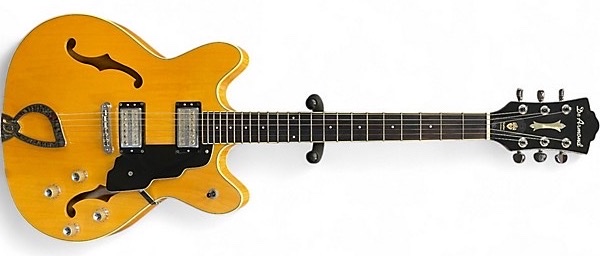
The Gibson ES-135 is an archtop model that has its roots in the old “student model” ES-125. An extra P-90 pickup was added to the thin body 125, and a sharp cutaway was incorporated.mWhich aside from the ES-175, made it one of the coolest, yet decently priced archtops around. It would have remained a pleasant memory except that George Thorogood used one on his early tours, and it's been upgraded and supported since.

First, we do have to back up a bit to the 60s, where we will see why the ES-135 didn't stay a pure hollowbody. The key thing to remember in any field, genre, or market, is that nothing happens in a vacuum. The key difference in the 135 was the addition of an ES-335-type block in the center of the body. 

The reason was to reduce feedback. The other reason? Companies like Guild took the ES-135 shape, gave it a slimmer look, and thus began the Starfire series which eventually evolved into a direct competitor the the ES-335.

In other words, everybody else was doing it, and in the guitar business, no one gives up market share to anyone...period. If people clamored for Yellow Submarine ES-175s, Gibson would make 'em. They might be wincing when no one is looking, but they would make 'em.

So, Thorogood uses an ES-135 and the line is revived with P-100 pickups instead of 90's, and with a light wood (like balsa) sound block inside. Still a light guitar, and still very cool looking.

The ES-135 has a clean look, it's not ornate like so many jazz guitars. The implied message, the money went into the guitar, not the ornaments. It has a very sweet, yet still woody tone on the front pickup. It's not warm in the sense of the old P-90, which had a livelier tone, but more like a clearer humbucker (users of 490 series humbuckers take note).

Personally, even though I love P-90s, I find the tone of the P-100 neck to my liking, quoted and quite versatile (however, the P-100 has its detractors). The Bridge 100 is another story. It's nice and powerful, and loud (it's like 3 ohms more powerful than the neck), but won't have that thick scream that Pete Townsend of the Who got on “Live At Leeds” the ultimate P-90 album. 

It has the traditional tunomatic/tailpiece arrangement of the old ES series, and the neck, fretboard, and frets are well-matched. It's an easy guitar to play and it will pull music out of you. This particular guitar was discontinued some years back, and a fire sale ensued. From a nice 1600.00 jazzer, it became a 999.00 bargain and that price drop still hasn't recovered yet. It's still the perceived original street price.

The reason for all that was the introduction of the ES-137. Essentially the same guitar, but with a heavy wood core inside and some fancy stuff to make it look more expensive. It also became a lot more similar to the ES-335 sound (which some critics called an “improvement”) and a much heavier guitar.

I once commented that time can change a guitar's context and value (like in the case of the DeArmonds). In this case, all of the change has seemed to enhance the ES-135's desirability. These come up rarely on boards like Craigslist and tend to go quickly.

The reason is simple. It's the closest you're going to get to a pure retro archtop that looks like a 175. There's no other look like it, and it's no accident that the number of Gibson models with sharp cutaways is small. 

I've been offered custom teles, stat plus's, you name it for my old trusty and cool ES-135, and it's never been a temptation to deal with it. As the years pass, I notice more looking for one as opposed to getting a 137. 

It may take a while for people to realize it, but for all the effort by companies to create another ES-175, Gibson may have done it by accident with its ES-135. It was a clean, no-nonsense jazz box, state-of-the-art for its time, and reasonably priced. Its look was cool, retro yet modern looking, and people who owned one loved it. Yep, just like the early ES-175s.

- Al Handa
  2007

Note: This review first appeared on the ePinions.com site in 2007. This and other reviews were short takes that accompanied the link to a business that sold the guitar. As a rule, the guitar had to be at least examined and played by the reviewer (and ideally owned). In my case, a severe case of GAS made it possible to have at least owned the reviewed instrument for a short while. I'm reprinting these as having another source on a guitar never hurts, even if the reviews aren't definitive. Other than minor corrections, these short takes are unchanged from the original text. I figure that it might be helpful to keep the older perspective.


Sunday, April 14, 2024

Review: 1999 DeArmond Starfire Custom Electric


Review: 1999 DeArmond Starfire Custom Electric

The DeArmond Starfire Custom is a guitar that's been out of production for some years now, yet even today it's one of the most actively traded and sold guitars in its price range. If you put one up for sale, there's a customer for it.

Its internet reputation (and mythology) is that it's a bargain 400.00 guitar that's worth twice what it costs. This is true, when it was introduced by Guild in the late 90s as a low-cost version of one of its expensive jazz guitars, and was priced around 750.00 in 1999 dollars, easily equivalent to a thousand now given its features.

At that time in the late 90s, Guild owned DeArmond, and created the Starfire from the same Korean factory that made Corts. The overall opinion of its owners (and those who want one) is that the craftsmanship was of very high quality. The binding in particular is USA-grade workmanship, and the maple finish versions look absolutely beautiful.

The main attraction was the USA-made electronics, with a pair of Dearmond Gold Tone humbuckers that was designed to have a classic PAF tone, but veered a bit more towards Gretsch territory.

At about that same time, Fender bought Guild (and thus Dearmond) and after a short time spent praising the guitar with pickups as “classics that never were,” discontinued the Guild version and put it out as a Squier with standard humbuckers. The price of the Guild version was cut to 400.00 to clear out the old stock, and it sold very well at that price.

The Fender version wasn't successful, and the line was discontinued within a couple of years. The main thing was that with standard humbuckers and less quality control, it became a rather ordinary guitar in the Epiphone price class.

The earlier Starfire Custom did have its detractors. It was perceived by many as a Gibson ES-335 copy, and it's brighter-sounding Gold Tone pickups were seen as inferior. Add to that, the usual mass of internet opinion that was both dismissive and adulatory which made it hard to get a sense of what this guitar's sound was.

What it did have was an ES-335 style body made of extremely good maple, with a neck that was more Guild-like than Gibson (slimmer, and faster). It looked like a smaller Epiphone Sheraton, but noticeably lighter, and with the Goldtone pickups had a sound that ranged from an ES-335 style jazz tone to an impressively mean growl that would have fit just fine in any old-time blues or rockabilly band.

It had the classic Guild “harp” style tailpiece, stepped pickguard, and the three-bump headstock. Very retro Guild styling that one saw in its jazz guitar line.

The sound at times could be mistaken for an ES-335, but as a rule, it sounded more like a solid body Gretsch or, some sort of hybrid Gibson-whatever, which wasn't better or worse, just different. Whether it's as good as an ES-335 is a debate best left to guitar forums, as there's no right answer.

The heart of the matter is the pickups. Old-time Gretsch lovers find these pickups uninspiring, though, there's plenty of disagreement there with those who use these pickups (which were also put on other Dearmond guitars). Most of the criticism, from what I can see, comes from those who love the Gibson sound, and find most other brands inferior.

Interestingly enough, one of the biggest groups of admirers of this guitar is Fender guitar owners, who find it to be a nice addition to a collection, and find the middle setting (both pickups on at once) to be like a thick-sounding Telecaster (which I agree with, it can sound like that for sure).

In my case, I find it to be a great player guitar. It fits just fine either standing or sitting, its balance is perfect, and its neck just seems to play itself. I've been disappointed in a few Gretsch models that I've bought and modified, and find that the Starfire Custom is essentially the Gretsch that I've always wanted. It can do excellent jazz, Link Wray trash guitar, and everything in between.

Which probably reflects how I use it, the amps I run it through, and the settings I like. A friend of mine played it and got a jazzier sound out of it than I ever got, for example, but that's how it often works in the guitar world.

If you're looking for an inexpensive alternative to the Gibson ES-335, this could be it. That same aforementioned friend showed me how to make it sound like a Gibson with a few twists and turns of some knobs and pedals, but he also shrugged and said that there was no point in working that hard, as the guitar had its own voice, and it was an excellent one.

In fact, it’s the voice of a guitar that is easily worth twice what it costs now.

- Al Handa
  2013

Note: This review first appeared on the ePinions.com site in 2013. This and other reviews were short takes that accompanied the link to a business that sold the guitar. As a rule, the guitar had to be at least examined and played by the reviewer (and ideally owned). In my case, a severe case of GAS made it possible to have at least owned the reviewed instrument for a short while. I'm reprinting these as having another source on a guitar never hurts, even if the reviews aren't definitive. Other than minor corrections, these short takes are unchanged from the original text. I figure that it might be helpful to keep the older perspective.


The Quitturz by Al Handa


AVAILABLE ON KINDLE UNLIMTED


AVAILABLE ON KINDLE UNLIMTED


Here's info on some of my Vella books:


The Quitturz (title not changed on ad yet)


https://www.amazon.com/kindle-vella/story/B09PC3L6PC


I, Ivy


 https://www.amazon.com/kindle-vella/story/B0B3RCBT4D


The Forbidden Lost Gospels Of Murgatroyde


 https://www.amazon.com/kindle-vella/story/B0BJ2TW4P1


The Boogie Underground Think Tank: How To Survive The End Of Civilization


 https://www.amazon.com/kindle-vella/story/B0BG6LNXTG


The Adventures Of Queen Khleopahtra: Ruler Of Egypt, Time Traveler, and Literary Detective


 https://www.amazon.com/kindle-vella/story/B0BJC122G7


Please check out and listen to my music on Spotify, YouTube, Apple Music and other music sites. Please add any cuts you like to your playlists!

Tuesday, April 2, 2024

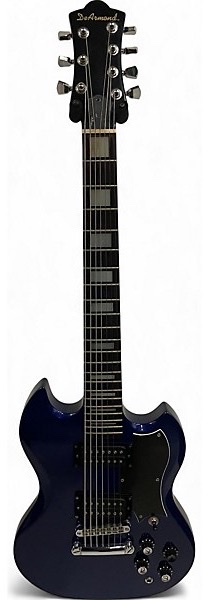
Review: 2006 DeArmond S-67 Seven String Electric


Review: 2006 DeArmond S-67 Seven-String Electric

The DeArmond S-67 was created to give beginners and intermediates an entry level seven string, a type of guitar that was popular in 2000 for the hybrid metal/rap/thrash music that was in vogue back then.

The seven-string guitar has always had a cult following with some jazz players who utilized the extra bass string to create more complex chords and basslines, but it was never common in rock. The extra string on the DeArmond is intended to be tuned down to D or even lower, giving someone who was cranking out powerful chords that extra bottom, and some “churn” as one rakes the bottom strings. The heavy Gibson SG-like body adds the right atmosphere for the edgy sound this type of guitar was intended to create.

The S-67 has an agathis body, a bolt-on nato neck (often called an Asian type of mahogany) and average hardware. It’s pretty heavy, but the pickups are excellent DeArmond passive humbuckers. The street price was around 280.00, but when Fender took over DeArmond and put their inventory on fire sale, the price dropped to 200.00 (or even lower).

I should digress a moment and explain the DeArmond mystique. DeArmond pickups have always been esteemed, and the brand name was associated with Guild, one of the great 50-60's guitar makers. When Fender took over DeArmond, the guitars were sold off at amazingly low prices, and thus the name has come to denote a quality guitar that is a bargain.

It should be noted that this guitar didn't drop that much in price except to become rare, and so it's important to realize that is a case of a guitar that's still priced close to it's real value (unlike it's fine X-500 hollow body jazz guitar) 

The guitar was an interesting reversal of what someone would do with, say, an Epiphone. An Epiphone tends to be a well-made guitar for the price with the best possible woods used, but the costs seemingly cut on the electronics. Thus, many who buy one upgrade to new pickups.

The S-67 is a pretty cheaply made guitar but with its pickups already upgraded. This makes the guitar sound much better than it would have with cheaper stock pickups. DeArmond pickups are almost always an upgrade over most stock pickups. At its current average price of 200.00 or so (I wouldn't pay much more for one), it's a good one-dimensional tool when you want to thrash out some really bottom-heavy metal.

Also, given that DeArmonds are essentially undervalued guitars (being all cut-outs by Fender), it's hard to go wrong with one, particularly a used one obtained at an even cheaper price. The one I got was 200.00 new, and 180.00 after some haggling. Also, given the “aura” that DeArmonds have, the guitars do tend to go fast when up for resale. After all, it's difficult to come up with a list of electric guitars in the 200.00 range that are better in terms of pickups and basic package. 

However, the thing to keep in mind is that the guitar is very much a period piece, and designed to play music that is a sub-genre of metal. Its clean tone is very average, even with DeArmond pickups, and anyone buying should know it's intended to be played both loud and aggressively (otherwise, the seventh bass string doesn't add much to the sound).

To be fair, it's a well set-up guitar, and the fatter neck is offset by good, low string action and decent frets. The guitar stays in tune well, and the pickups perform well at high volume. You can generally find these guitars at a pretty good price, and given the pickups, if you intend to play music requiring this type of guitar, it's as good as any that are much more expensive. Also, the DeArmond brand has that image of a fine guitar that's a bargain, so it's a cheap guitar with a certain “cool” to it. 

So, what do you get for the money? Seven strings, wood you'd find on a pretty cheap guitar, but plenty of it and crafted well, and pickups you'd be happy to have on just about any guitar in the 600.00 and below range. 

Not a bad deal, but be sure you need that seventh string, and more importantly, know what you're supposed to do with it.

- Al Handa 

  2006 

Note: This review first appeared on the ePinions.com site in 2013. This and other reviews were short takes that accompanied the link to a business that sold the guitar. As a rule, the guitar had to be at least examined and played by the reviewer (and ideally owned). In my case, a severe case of GAS made it possible to have at least owned the reviewed instrument for a short while. I'm reprinting these as having another source on a guitar never hurts, even if the reviews aren't definitive. Other than minor corrections, these short takes are unchanged from the original text. I figure that it might be helpful to keep the older perspective.


The Quitturz by Al Handa


AVAILABLE ON KINDLE UNLIMTED


AVAILABLE ON KINDLE UNLIMTED


Here's info on some of my Vella books:


The Quitturz (title not changed on ad yet)


https://www.amazon.com/kindle-vella/story/B09PC3L6PC


I, Ivy


 https://www.amazon.com/kindle-vella/story/B0B3RCBT4D


The Forbidden Lost Gospels Of Murgatroyde


 https://www.amazon.com/kindle-vella/story/B0BJ2TW4P1


The Boogie Underground Think Tank: How To Survive The End Of Civilization


 https://www.amazon.com/kindle-vella/story/B0BG6LNXTG


The Adventures Of Queen Khleopahtra: Ruler Of Egypt, Time Traveler, and Literary Detective


 https://www.amazon.com/kindle-vella/story/B0BJC122G7


Please check out and listen to my music on Spotify, YouTube, Apple Music and other music sites. Please add any cuts you like to your playlists!