The Delta Snake Review

The Delta Snake Review

Translate

Showing posts with label sg. Show all posts

Wednesday, July 22, 2026

Aftermarket Review: 2024 Epiphone Power Player SG


Aftermarket Review: 2024 Epiphone Power Player SG

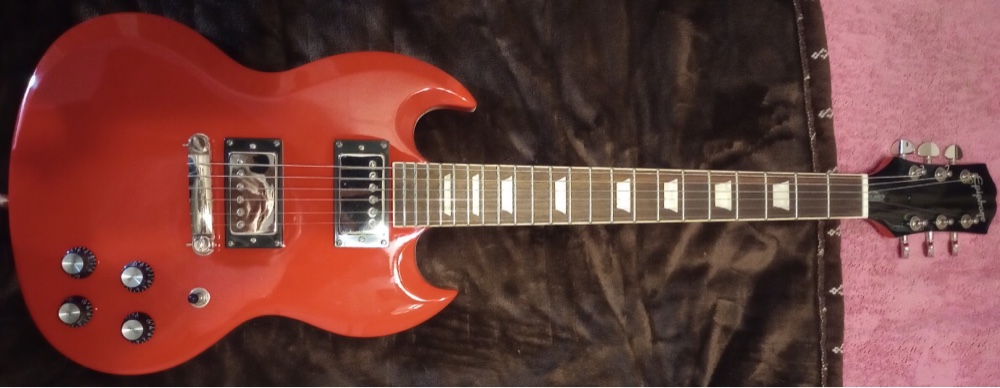
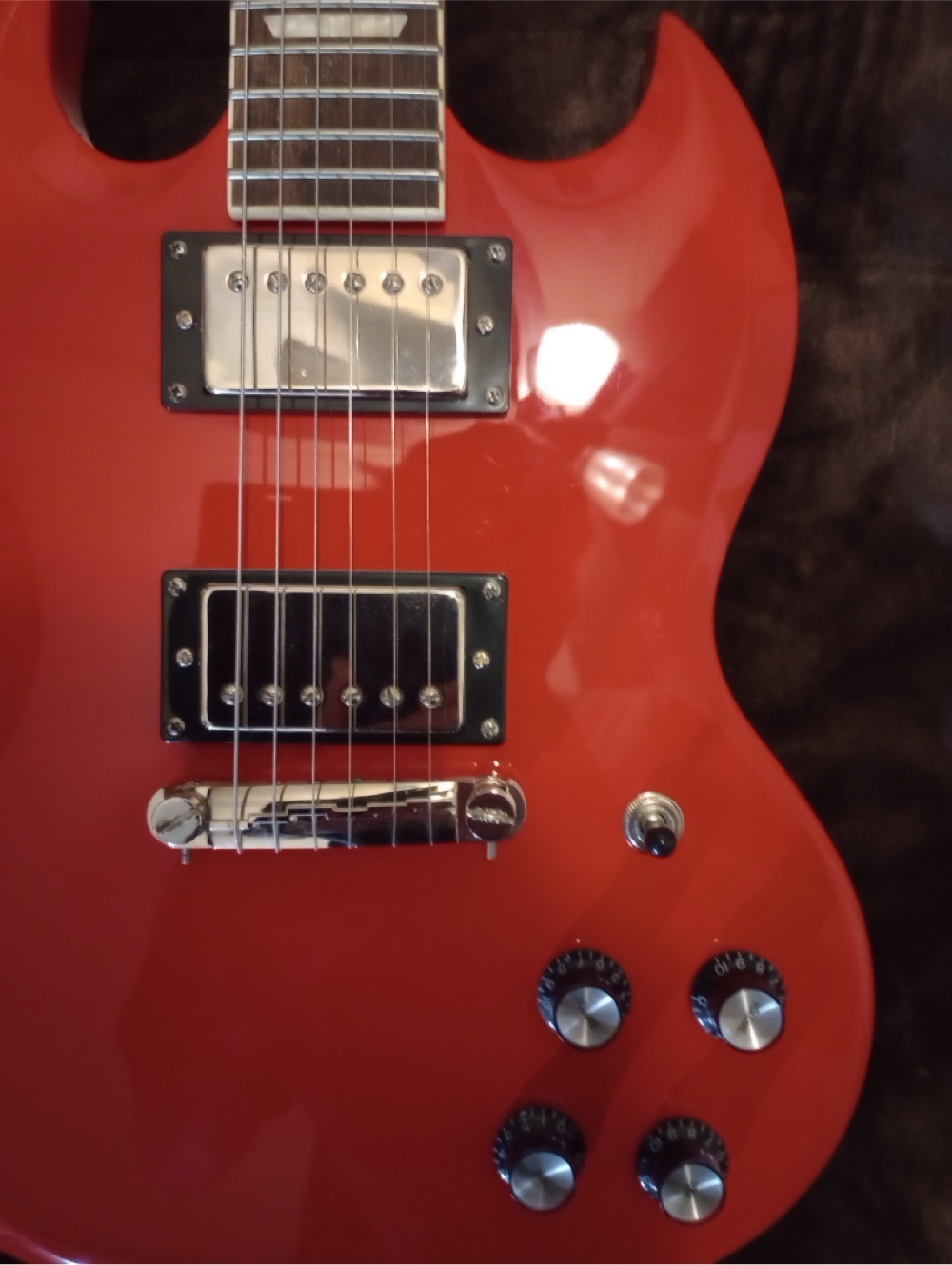
The Epiphone Power Players SG is a 3/4 size electric with a 22 fret, 22.73” scale and a slim profile D bolt-on neck. The SG has a 650R neck humbucker and a 700T bridge. The Power Player SG was introduced in 2022 and is still being manufactured. So, obviously this is a guitar that has already been extensively reviewed on YouTube and the web. I’m reviewing it here since I’ve had a recent experience with it having purchased one back in December 2025. 

I’ll stress what I bought it for and you can consider this an aftermarket review about how the guitar has performed since the initial introduction and hype.

I bought it because I was intrigued by the idea of getting an SG that had a shorter scale and no neck dive; I figured the shorter scale one would do the trick. That turned out to be true. It’s a nicely balanced, quality guitar that has the solid feel of a full size. I’m not sure about it being a good travel guitar; the  ¾ length is, in my opinion, more suited for a car trip, etc.

After six months, the positives are that the ergonomics are very good, a very comfortable guitar to play. The pickups are good enough to keep on the guitar as opposed to needing to be upgraded.

As far as it being an SG, or more specifically, sounding like one, that is a little difficult to quantify. The earliest SGs had P90 pickups and the next generation with humbuckers sounded different than ones I personally heard later. In other words, you can’t really say that this SG has “the classic sound.”  Any model that's been around for over 50 years is likely to have quite a few variations. Telecasters and other Fenders are in a similar situation; there is no one classic sound anymore.

As I’ve said in other blog entries, there are certain types of superlatives and descriptions that don’t really tell the reader what the guitar sounds like. It’s best to simply refer everybody to YouTube or elsewhere on music sites to actually hear the sound of a particular model. 

One thing I can do is give you an immediate comparison, or at least the one I noticed, and that's that this particular Epiphone is similar in sound to the Les Paul version. The pick ups are quite good, clear and very articulate, both in clean and high gain. 

As we all know the louder the guitar gets the more similar it becomes to other guitars at the same volume level. In this case, my impression is that the sound is more along the lines of what they get in this price range with the Les Paul copies. If you want a sound that's closer to a Gibson SG, I would recommend getting one of the excellent G series models. Also, If you have a particular sound in your head, then definitely try both the P90 and humbucker versions.

In the case of the Power SG, there’s a lot to like about it as a beginner guitar, travel guitar or a second or third in one’s collection. The guitar has excellent pick ups, and sounds versatile enough to cover quite a few different genres. It’s not quite a time machine in the sense that it can reproduce some of the classic 60s sounds, but that’s an esoteric application in 2026. For a lot of players, the type of music they want to play developed a lot later in the 70s onwards.

In terms of the SG sound I was looking for, I went ahead and just stuck with the IYV (reviewed in this blog) because after sitting with it for a few months, I realized that the neck length and any tendency to dive doesn’t really matter that much when you’re sitting down. 

The type of sound you get with a full size SG due to the neck length, etc, isn’t going to be present in a short scale version. In fact, the P90 version of the Epi Les Paul Special 1 has more of the sound I was looking for along with the IYV.

As far as any recommendation, it may not have been what I was looking for, but it has plenty of virtues for those who want to use it as an entry level guitar and beyond.

Al Handa

July 22, 2026


Specs


Binding. Single-ply, Fretboard

Body Finish  Gloss

Body Material  Mahogany

Body Shape  SG

Body Styles. SG


Fingerboard Material  Laurel

Fingerboard Radius  304.8mm / 12.0in

Fret Count  22

Frets  Medium Jumbo

Inlays  Pearloid Trapezoid

Joint  Bolt-on with Sculpted Heel and Ferrule Inserts

Neck Material  Mahogany

Nut Material

White Plastic  Nut Width

41.0mm / 1.61in

Profile  SlimTaper D

Scale Length  22.73in


Bridge Pickup  Epiphone 700T Humbucker

Controls  2 Volume, 2 Tone

Neck Pickup  Epiphone 650R Humbucker

Lightning Bar Compensated Wrap Around

Nickel Tuning Machines

Die Cast with Kidney Buttons



Sunday, May 5, 2024

Review: 2013 Gibson Faded SG Special

Review: 2013 Gibson Faded SG Special

With the faded SG Special, we have that odd situation that Gibson and Epiphone seem to get into every few years. Which is that their mid-price products clash and are in open competition.

The most famous instance is the Epiphone Casino, which was essentially a Gibson ES-330 body (but with P90s) but the latter model faded while John Lennon rocketed the Casino into a clear victory for the economy model (at least at that time). 

At this time, you can get a faded Gibson SG for around 570.00, and the Epiphone 400 model has dropped to as low as 299.00 (a very good deal also, it's an underrated guitar). This can create some confusion, as about the only thing you can do to an SG is change its color. If it's any other wood than mahogany, it's not an SG, period.

So what Gibson has done is produce an SG that saves you the trouble of buying the Epiphone, and buying good pickups for it.  Also, I'm sure Gibson's a little tired of seeing all those competitor SGs and Flying copies selling well at the 400-500 price point.

This particular SG is not the classic configuration. This one is like a special version of the Les Paul. The pickups are standard Gibson 490s, which are more midrangy and dirty than the classic '57s (which are like the Seymour Duncan Seth Lover for another example). There are two camps on this now classic pickup, one hating it, the other liking it. 

Personally, I think on any Les Paul Special, faded SG, or any pure mahogany guitar, the 490s are a very good fit. The rear pickup is pretty hot and sharp, yet thick sounding, and the front gives you anything from a classic hard rock sound like AC/DC, or a little on the jazzy/blues side).

Remember, Muddy Waters' first guitar player used an SG (in case you don't know, it was Buddy Guy). Guitars at this level, which have the same standard pickups that the company puts on its high-end stuff, should frankly be bought that way as a package. 

If you don't like the pickups, you shouldn't buy the guitar (used or at a close-out price, that's a different situation). The reason? You're going to just add another 200.00-300.00 (if you install the things yourself) to the price. Put that 300.00 with the 579.00 and tax and buy an SG Standard.

Or, even if it gives you a guitar that others think is lame, upgrade to an Epi SG and it'll cost a bit less. Since the 400 model has dropped to 299.99 (due to the Faded coming into the market I imagine) it's a feasible idea. 

The faded Gibsons are often a mixed bag, but the lowest-priced ones are as good a deal as any. It's a mid-priced package that emphasizes the key parts of the guitar, the neck, and pickups. The Walnut finish in particular actually has the advantage of looking vintage also.

At 579.00, it's as good as you'll get with Gibson. A decent mahogany guitar, their top-line pickups and a nice neck and fretboard. Also, as we all know, even the cheap Gibsons keep their value better than a lot of other brands, including Epiphones.

So instead of an Epiphone or Agile Les Paul copy, buy a faded SG, and let that Gibson magic rub off on you which is now at a price for the masses.

- Al Handa
  2013

Note: This review first appeared on the ePinions.com site in 2013. This and other reviews were short takes that accompanied the link to a business that sold the guitar. As a rule, the guitar had to be at least examined and played by the reviewer (and ideally owned). In my case, a severe case of GAS made it possible to have at least owned the reviewed instrument for a short while. I'm reprinting these as having another source on a guitar never hurts, even if the reviews aren't definitive. Other than minor corrections, these short takes are unchanged from the original text. I figure that it might be helpful to keep the older perspective.


 Also by Al Handa:


Tuesday, April 16, 2024

Review: Epiphone G-400 Custom SG (3 PU)

Review: Epiphone G-400 Custom SG (3 PU)

I have to admit, this was one guitar that almost triggered a major GAS attack, and on that day, I was going to buy it on sight. Luckily I didn't, although not for the reasons you might think.

It's a guitar that nowadays you can get for around 450.00 on sale in most places, and it never did replace the standard two-pickup SGs or even dent its popularity. I'm not sure why, from a distance, it's an imposing and impressive guitar. Big, mean-looking, three gold humbuckers, everything about it says turbo-charged SG.

The problem is, when you play it, it's obviously a nice guitar, but it doesn't necessarily give you a compelling reason to buy it over the traditional SG.

The traditional SG is a light guitar, easy to play (except for being neck-heavy due to its lighter body). It has a wonderful tone, warm, but biting, and it's one of the classic rock guitars. Also, it has a more unknown, but very definite presence in the classic blues. One of Muddy Waters' guitar players used an SG for example, as did one of the Blues Brothers band. 

Right off the bat, you notice the guitar's weight. The Custom is a heavier guitar, which compared to the Les Paul is nothing, but given that it's an SG model, perceptions tend to count. The neck is a good one, a bit thicker, but very playable, and the tuners are just fine.

Also, the pickups are good, but whether it's the cost of putting on three instead of two, these don't seem to be as good as Epiphone's top-of-the-line SG model. This may not be a fair comparison, as the reason you have three pickups isn't necessarily to sound like a regular SG.

The key to all three pickup guitars is the middle pickup. It can be combined with the bridge or neck pickups to give you a bigger range of tones. By itself, like most middle pickups, it's supposed to give you the most "acoustic" of all the settings.

The problem here is that the pickups are very close to one another and come close to being there just for show. I did notice some sound differentiation in the various combinations, but the louder I got, the less it showed (and let's face it, most SGs are played loud).

Earlier I mentioned how attractive it was at a distance. That wasn't a casual remark. When you look at it up close, the cutaways look stubbier and less graceful. The extra thickness and weight make it a more awkward guitar to handle than the more traditional SG.

In stock condition, it's still a pretty good buy at 450.00, and I see some used ones selling in the 350.00-400.00 range. At its original price point years ago, I probably wouldn't have recommended it. When a guitar has extra features (like a third pickup), you always have to ask yourself, what did they take away to keep the price down? Better two good pickups than three not-so-bad ones, for example.

To be fair, it isn't a pure SG and taken as that, there are positives. It is a unique offshoot of a classic design, and it has an attractive finish. Its sound isn't quite up to Epiphone's best SG, but it's not bad. The clean tone is its strongest suit.

Also, at its lower price point, it can be a good upgrade model. Given that the pickups are a bit too close, one can upgrade with different types instead of three of the same.

Try maybe a Duncan '59 as the neck pickup, experiment with the middle, and put maybe a '57 classic or hotter type in the bridge. Since it's pre-routed for three pickups, the possibilities are endless, and it's a solid piece of wood to mount it all on.

I don't say that to mitigate the review, but sometimes a guitar finds a second life when it's older (and less expensive, DeArmonds being an excellent example), and this guitar has possibilities of a regular SG or lots of other two pickup models don't have. If it were up to me now, if the price point hit a sweet spot, I'd buy it in a second over a regular SG type. 

Guitars are interesting things. One person can look at one and not like it, or see it as a bad fit for their style of music. Another can look at the same guitar, and see it as a vehicle to get that unique sound that keeps sounding in one's brain.

The G-400 Custom started life as what some might see as an overvalued guitar. As the years have passed, and as its price drops and used ones keep hitting the market, its value goes up for what it is, and what it can be. Funny how that works.

- Al Handa
  2006

Note: This review first appeared on the ePinions.com site in 2013. This and other reviews were short takes that accompanied the link to a business that sold the guitar. As a rule, the guitar had to be at least examined and played by the reviewer (and ideally owned). In my case, a severe case of GAS made it possible to have at least owned the reviewed instrument for a short while. I'm reprinting these as having another source on a guitar never hurts, even if the reviews aren't definitive. Other than minor corrections, these short takes are unchanged from the original text. I figure that it might be helpful to keep the older perspective.

The Quitturz by Al Handa


AVAILABLE ON KINDLE UNLIMTED


AVAILABLE ON KINDLE UNLIMTED


Here's info on some of my Vella books:


The Quitturz (title not changed on ad yet)


https://www.amazon.com/kindle-vella/story/B09PC3L6PC


I, Ivy


 https://www.amazon.com/kindle-vella/story/B0B3RCBT4D


The Forbidden Lost Gospels Of Murgatroyde


 https://www.amazon.com/kindle-vella/story/B0BJ2TW4P1


The Boogie Underground Think Tank: How To Survive The End Of Civilization


 https://www.amazon.com/kindle-vella/story/B0BG6LNXTG


The Adventures Of Queen Khleopahtra: Ruler Of Egypt, Time Traveler, and Literary Detective


 https://www.amazon.com/kindle-vella/story/B0BJC122G7


Please check out and listen to my music on Spotify, YouTube, Apple Music and other music sites. Please add any cuts you like to your playlists!

Tuesday, April 2, 2024

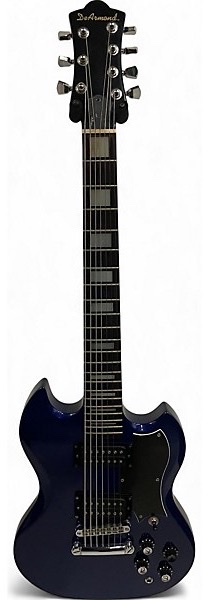
Review: 2006 DeArmond S-67 Seven String Electric


Review: 2006 DeArmond S-67 Seven-String Electric

The DeArmond S-67 was created to give beginners and intermediates an entry level seven string, a type of guitar that was popular in 2000 for the hybrid metal/rap/thrash music that was in vogue back then.

The seven-string guitar has always had a cult following with some jazz players who utilized the extra bass string to create more complex chords and basslines, but it was never common in rock. The extra string on the DeArmond is intended to be tuned down to D or even lower, giving someone who was cranking out powerful chords that extra bottom, and some “churn” as one rakes the bottom strings. The heavy Gibson SG-like body adds the right atmosphere for the edgy sound this type of guitar was intended to create.

The S-67 has an agathis body, a bolt-on nato neck (often called an Asian type of mahogany) and average hardware. It’s pretty heavy, but the pickups are excellent DeArmond passive humbuckers. The street price was around 280.00, but when Fender took over DeArmond and put their inventory on fire sale, the price dropped to 200.00 (or even lower).

I should digress a moment and explain the DeArmond mystique. DeArmond pickups have always been esteemed, and the brand name was associated with Guild, one of the great 50-60's guitar makers. When Fender took over DeArmond, the guitars were sold off at amazingly low prices, and thus the name has come to denote a quality guitar that is a bargain.

It should be noted that this guitar didn't drop that much in price except to become rare, and so it's important to realize that is a case of a guitar that's still priced close to it's real value (unlike it's fine X-500 hollow body jazz guitar) 

The guitar was an interesting reversal of what someone would do with, say, an Epiphone. An Epiphone tends to be a well-made guitar for the price with the best possible woods used, but the costs seemingly cut on the electronics. Thus, many who buy one upgrade to new pickups.

The S-67 is a pretty cheaply made guitar but with its pickups already upgraded. This makes the guitar sound much better than it would have with cheaper stock pickups. DeArmond pickups are almost always an upgrade over most stock pickups. At its current average price of 200.00 or so (I wouldn't pay much more for one), it's a good one-dimensional tool when you want to thrash out some really bottom-heavy metal.

Also, given that DeArmonds are essentially undervalued guitars (being all cut-outs by Fender), it's hard to go wrong with one, particularly a used one obtained at an even cheaper price. The one I got was 200.00 new, and 180.00 after some haggling. Also, given the “aura” that DeArmonds have, the guitars do tend to go fast when up for resale. After all, it's difficult to come up with a list of electric guitars in the 200.00 range that are better in terms of pickups and basic package. 

However, the thing to keep in mind is that the guitar is very much a period piece, and designed to play music that is a sub-genre of metal. Its clean tone is very average, even with DeArmond pickups, and anyone buying should know it's intended to be played both loud and aggressively (otherwise, the seventh bass string doesn't add much to the sound).

To be fair, it's a well set-up guitar, and the fatter neck is offset by good, low string action and decent frets. The guitar stays in tune well, and the pickups perform well at high volume. You can generally find these guitars at a pretty good price, and given the pickups, if you intend to play music requiring this type of guitar, it's as good as any that are much more expensive. Also, the DeArmond brand has that image of a fine guitar that's a bargain, so it's a cheap guitar with a certain “cool” to it. 

So, what do you get for the money? Seven strings, wood you'd find on a pretty cheap guitar, but plenty of it and crafted well, and pickups you'd be happy to have on just about any guitar in the 600.00 and below range. 

Not a bad deal, but be sure you need that seventh string, and more importantly, know what you're supposed to do with it.

- Al Handa 

  2006 

Note: This review first appeared on the ePinions.com site in 2013. This and other reviews were short takes that accompanied the link to a business that sold the guitar. As a rule, the guitar had to be at least examined and played by the reviewer (and ideally owned). In my case, a severe case of GAS made it possible to have at least owned the reviewed instrument for a short while. I'm reprinting these as having another source on a guitar never hurts, even if the reviews aren't definitive. Other than minor corrections, these short takes are unchanged from the original text. I figure that it might be helpful to keep the older perspective.


The Quitturz by Al Handa


AVAILABLE ON KINDLE UNLIMTED


AVAILABLE ON KINDLE UNLIMTED


Here's info on some of my Vella books:


The Quitturz (title not changed on ad yet)


https://www.amazon.com/kindle-vella/story/B09PC3L6PC


I, Ivy


 https://www.amazon.com/kindle-vella/story/B0B3RCBT4D


The Forbidden Lost Gospels Of Murgatroyde


 https://www.amazon.com/kindle-vella/story/B0BJ2TW4P1


The Boogie Underground Think Tank: How To Survive The End Of Civilization


 https://www.amazon.com/kindle-vella/story/B0BG6LNXTG


The Adventures Of Queen Khleopahtra: Ruler Of Egypt, Time Traveler, and Literary Detective


 https://www.amazon.com/kindle-vella/story/B0BJC122G7


Please check out and listen to my music on Spotify, YouTube, Apple Music and other music sites. Please add any cuts you like to your playlists!