

 |
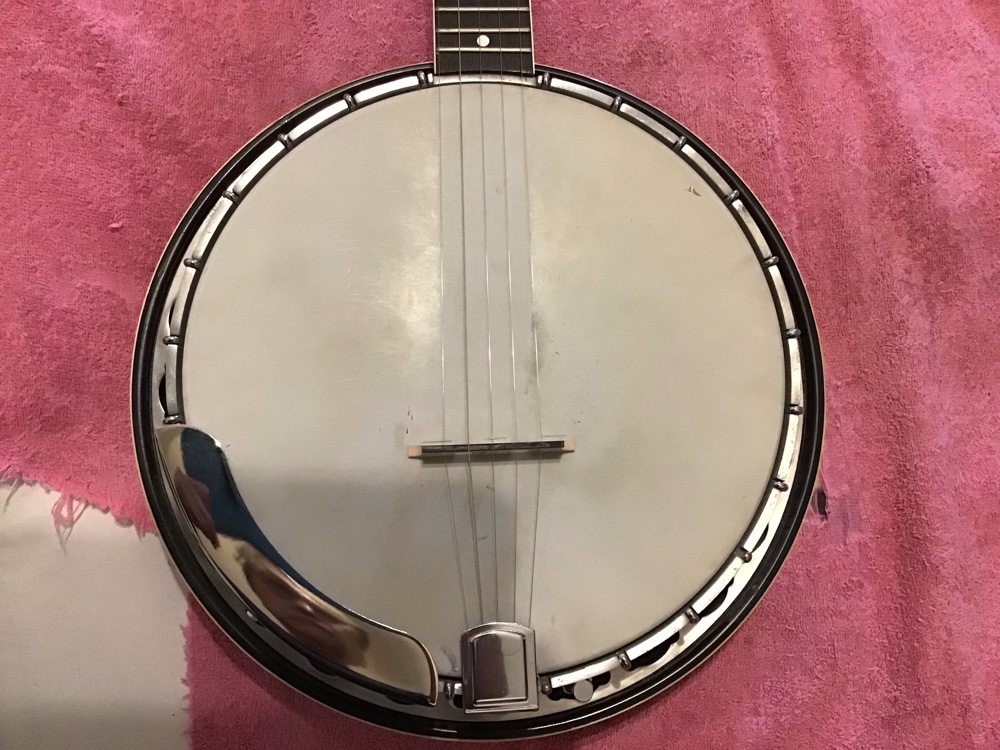
Essay: An Informal Essay on the Blues Banjo by Al Handa
Note: Originally ran in the June '87 Delta Snake E-zine. This is an abridged and revised version.
".....banjo is bondage, it's the instrument of slavery. Banjo is Dixie. The Dixie of the land of cotton and massa and missus and black mammy. We colored have got to get away from all that in these enlightened progressive days...let the white folks play the banjo if they want to keep remembering all the Black Joes singing and the hell they made them live in..."
-from "Banjo" by Claude McKay (1929)
The above quote was written by the great Black Poet and writer during the "Harlem Renaissance." It captures the then current attitude towards the primary Black music instrument from the late 1700's to the early 1800's. It was also the instrument of some of the most popular Black artists of the1920's. However, by then, the banjo player in a Black jazz band was most likely to be a white musician. Even Louis Armstrong had a white banjo man, and the reason may have run deeper than simple racial brotherhood. It was probably harder than hell to find a black banjo player by that decade.
Few instruments have disappeared from a culture so completely as the banjo, or "banjar" as it was called by Thomas Jefferson. In fact, In fact; the forerunner of the modern five-string version was invented by a white man named Joe Sweeney in 1831, only 50 years after it became the chief instrument of the Black slave. These days, the most famous players are white, with a notable exception being Taj Mahal, who still incorporates it in his stage act (when performing solo).
I won't go into the sociological reasons for the shift, as McKay pretty much says it all. Suffice to say, the banjar was gradually abandoned by its inventors and is now associated with white culture. A major reason wasn't the instrument. The Banjo is a fine instrument. There was a repellant caricature that became associated with it and McKay was repudiating the Minstrel Show clown as much as anything else. In fact, even in the country music field, banjo players were as often as not portrayed as wacky clowns.
The shift in emphasis didn't occur overnight, with post-slavery revolutionaries burning banjars in huge pyres to purge Uncle Tom revisionism. The banjo's final successes in Black culture were in the 20's. Artists such as Papa Charlie Jackson and Gus Cannon were very successful and their hits were later performed by later (guitar playing) Blues greats. Songs like "Shake that Thing," "Viola Lee Blues" (covered in the 60's by the Dead), "Walk Right In," and "Feather Bed" (forerunner of Rock Island Line) all began existence as banjo hits.
I'll focus on such artists (and Taj Mahal), and the music they made. The blues banjo's heyday is long since past, but the contributions were significant. The influence these artists had is wider than you might think.
First off, a little background:
The banjo is considered the only truly native American instrument by most experts. The idea of using a drum as a soundbox over which strings are plucked or picked is actually a universal one. For example, the Japanese counterpart would be the shamisen. However, in terms of what became the banjar in America, the origin can be traced back from the then Moslem-controlled northern regions of Africa. It was called the "Bania."
A Bania was a three-stringed instrument constructed out of hollowed out gourds. The skin used to cover the hollow part was made from any available animal. Pig or possum skins became the most common later on in the American South. As with any device made by man (and not patented), there were variants. Some altered the gourd and made it larger, and some increased the number of strings.
In the 1700s, the Moslem controlled northern regions of Africa also meant another thing; The slave trade. Some of those shipped to the Southern states included bania players and makers. That is pretty much how the early versions of the instrument made it to America.
The reason for the popularity of the instrument is obvious (that is,unless you hate banjo). It has a bright, attractive tone that lends itself well to uptempo numbers. It is also a very loud instrument and in an age without PA systems and amplifiers, a very suitable one for gatherings and dances.
In 1831, Joe Sweeney added a fifth string on the left side of the neck, which could serve as a drone or extra melody note in a picking pattern. This version caught on, and was the forerunner of the modern five string. The four string type survives also, but now is primarily used inmtrad-jazz rhythm sections.
The banjo was played "clawhammer" style for most of it's early history. The technique involves stroking the strings downwards with the fore or middle finger or fingernail, with the thumb dragged across the 5th string on the third or fourth beat. It's a "dum-dum-dum-diddydumdum-dum" rhythm (I'm oversimplifying a bit).
Other names for the Black banjo style include "rapping," "frailing," "down-picking," "old-timey’ and a very racist term that leaves no doubt as to the origins of the technique. This style of music became a staple of the infamous Minstrel Shows in the Antebellum South, and the blackface routines became one of the strongest and most repugnant images associated with the instrument.
Through the 1900's, banjo technique in the Black culture continued to evolve. Styles emerged based on two and three finger picking, and with the plectrum (or pick). These approaches have evolved into specialties today, but a hallmark of the Black banjo player in the 20's was the ability to combine all of the styles, often within the context of a single song.
The 1920's was the last hurrah of the banjo soloist in the popular Black music culture. The 4-string, or tenor banjo continued to be used in jazz bands as part of the rhythm section, but the guitar and piano replaced the 5 string banjo as the common accompaniment to the solo performer.
There wasn't a sudden decline, though. The banjo player entered the decade as a strong commercial force. Many of the hot players were found playing what was called the "Hokum" style, which typically sung the praises of hot wieners wrapped in tight buns. To the further chagrin of modern Afrocentric scholars, this street poetry was often accompanied by a lot of mugging and eye rolling that later entered the canon of offensive images for sophisticated Blacks and assorted liberals. Perhaps not as offensive as a modern Heavy-metal star with spandex pants and no panty-lines, but these things aren't merely a matter of degree.
On record, and stripped of its images, the Hokum was actually a very entertaining (in a saucy sort of way) and humorous form. Except when the kazoos come in, then it can border on massively irritating.
One of the best Hokum artists was Gus Cannon, who as far as I can see, didn't engage in much of the "knockers up" stuff. His material can be racy at times, but rarely "blue" in nature.nGus played an eclectic style of banjo that incorporated single note runs, chords, and pattern picking (with more than one finger). One of the best examples of this was his "Minglewood Blues." The song opens with a two-note riff (that later became a standard way the Bluegrass soloist vamps during another's solo), then continues with very active riffing in tandem with the vocal lines. Some songs of his that have survived to the present day include "Viola Lee Blues" (covered by the Dead) and "Walk Right in," which Leadbelly made famous with his twelve-string guitar arrangement.
The first commercially successful self-accompanied artist in the "race field" was Papa Charlie Jackson, who played a banjo strung like a guitar. His style had a jazz flavor with lightning fast chording that would have made Kenny Burrell look twice. Charlie incorporated a variety of melodic devices. One song would start with single note runs (flatpick style) and fingerpicking patterns and then fly into chords played so fast that it seemed like the rhythm was actually the melody line. He was probably one of the most
technically proficient artists of his time in any genre.
His biggest hit was "Shake That Thing," which has been covered by numerous artists since. My favorite is probably the Lightning Hopkin's version. Bela Fleck fans who hear this song might find that eclectic jazz-flavored banjo isn't such a new thing after all.
Jackson, and others like him are often called "songsters" or "entertainers." Which is a polite way of saying that he isn't considered a "real" blues artist. I doubt he'd have disagreed. In those days, a "blues" was just one style of song in a varied set of performances. His vision reached considerably further than the Delta. That range included ragtime, show pieces, blues (in the jazz sense) and hokum-derived material. One song, "Feather Bed," has a vocal line that clearly became "Rock Island Line" in its modern form.
The recording boom of the 20's began to fade towards the 30's and by the 40's, a definite shakedown occurred. One of the hardest hit was hokum and pretty much anything to do with the banjo. The Black culture was moving on, and the banjo fell out of favor. It survived during this time mainly in some of the Southern mountain regions (clawhammer style) and revived in the 50s as a predominantly white instrument with the advent of Bluegrass.
The 60's folk boom did feature some Banjo players playing in the old Black style (notably Pete Seeger), but most of the Black Bluesmen rediscovered in that era were guitar or piano players. Reverend Gary Davis play-
ed the banjo occasionally, but not as his primary instrument.
One notable exception was Taj Mahal in the late 60's, who incorporated the banjo in his stage act and recordings. One good example of this was his "De Ole Folks At Home" double record. One disc featured electric music, and the other acoustic performances. The acoustic side does suffer from an extreme stereo mix. Instruments on one side, vocals on the other. Sounds fine coming out of a single speaker but disjointed on any setup with speakers more than three feet apart. The stereo effect can be minimized by listening from the other side of the room.
There's four banjo tunes on the disc. First is "Light Rain Blues," in which the five-string banjo is used purely as accompaniment to a pleasingly languid vocal. "Candyman" follows later, and is based on Reverend Gary Davis's arrangement. I can't help but think of the Hot Tuna version myself. It is an immortal song and riff.
Side two features an old chestnut, "Cluck Old Hen," which is to banjo what train sounds are to harmonica. Seems like no other instrument ever captured the chicken's song like the banjo. Just like harp players who must master chugging like a choo choo, the banjarist must be able to do the funky chicken.mThe second number is a masterful performance called "Colored Aristocracy." I still feel chills when I hear it. It's majestic work.
Taj never did put so much banjo in a record again, but most later sets had at least some. He plays a lot of Calypso and such now but his live act still incorporates the banjo now and then. You have to hear him play "Haul the Woodpile Down" live to experience how exciting the banjo can still be in the Black style.
After Taj Mahal, I personally can't think of any prominent Black artists who play the banjo. There might be, but I'm not aware of any. I'm sure a trip through the South might turn up some, but these days, it's not really considered a Black instrument any more.
I'm not trying to be nostalgic. Times and tastes change. The Black Culture simply evolved a different vision, one more expressive of its times and rhythms. However, those early rap artists created a new art with boom boxes and their wits. That isn't very far from some 19th century black man frailing a banjo and following a path where those sharp echoed tones led.
Note: I got the background from various sources. Mostly from banjo music books. It is significant that the primary point, that the early banjo styles originated from the Black Culture is clearly stated in books by Pete Seeger and Earl Scruggs.
Al Handa
June 1987
 |
 |
 |
 |
 |
 |
 |
 |
 |
 |

